
Schizoporaceae
Schizoporaceae
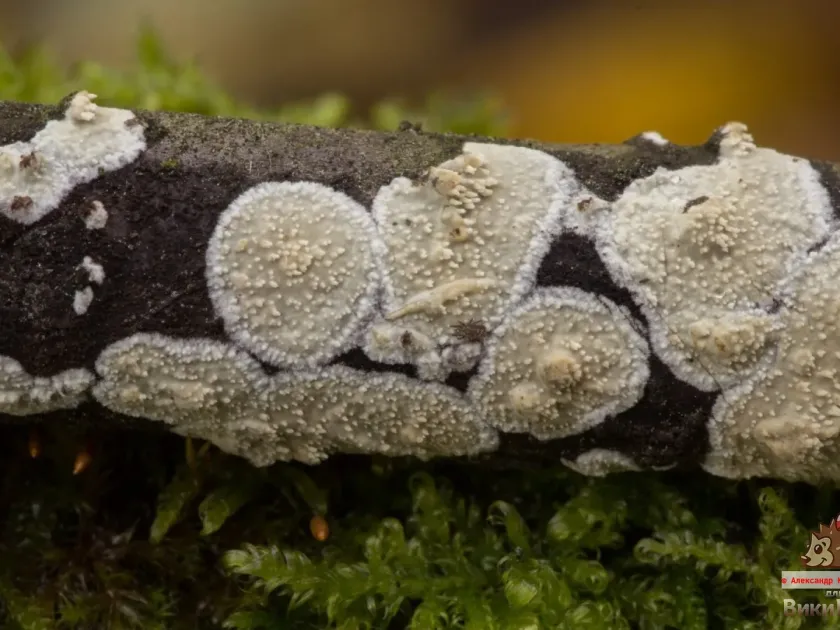
Description
Symptoms
The primary symptom of infection is the emergence of characteristic fruiting bodies on trunks or large branches. They often appear as pale, porous crusts with irregular, lace-like edges.
Inside the wood, the fungus causes white rot. The wood tissue becomes soft, turns a whitish or yellowish color, and loses its structural integrity.
As the disease progresses, the infected wood begins to crumble. In severe cases, the heartwood turns into dust, making the tree highly susceptible to windthrow.
Leaves on infected branches may turn yellow and fall prematurely, and shoot growth slows significantly due to the disruption of the tree's vascular system.
Visual inspection of the bark often reveals hidden infection centers through discoloration or peeling around the points where the fungal fruiting bodies are attached.
Pathogen
The Schizoporaceae family includes a group of basidiomycete fungi belonging to the order Hymenochaetales or Polyporales. These organisms are primarily saprotrophic, although many species can adopt a parasitic lifestyle on weakened trees.
The pathogen attacks internal wood tissues, decomposing cellulose and lignin. One of the most well-known representatives of this family is Schizopora paradoxa, a common fungus responsible for stem wood degradation.
The mycelium of the pathogen penetrates the tree through mechanical bark damage, pruning wounds, or frost cracks. Once inside, the fungus spreads throughout the sapwood and heartwood.
The reproductive stage of the fungus manifests as fruiting bodies, which are typically resupinate or effused-reflexed. These structures form on the surface of the bark and release basidiospores to spread the infection.
The mycological classification of this family is complex and constantly evolving based on molecular research, which allows for more accurate identification of species affecting agricultural crops and forests.
Conditions for development
High humidity and the presence of bark injuries significantly promote the development of Schizoporaceae fungi. They are most commonly found on deciduous trees in shaded environments.
The optimal temperature for active mycelial growth ranges from +15 to +25 degrees Celsius. Under these conditions, the pathogen can quickly colonize damaged areas of the wood.
An abundance of dead wood in orchards or forests provides an ideal substrate for spore accumulation. Infection occurs primarily during periods of high moisture when spores are spread by wind or rain splash.
Weakened tree health, caused by drought, waterlogging, or pest infestation, increases the risk of successful fungal colonization of living tissues.
Poor orchard hygiene, such as leaving stumps or failing to properly treat pruning wounds, remains a primary risk factor for the spread of the disease.
Why it matters
The harmfulness of Schizoporaceae fungi lies in the gradual loss of the tree's load-bearing capacity. White rot destroys the stem structure, often leading to the premature death of perennial plantings.
For orchard owners, this translates into yield losses and the need for tree removal. Infected specimens become a continuous source of inoculum for healthy nearby plants.
In forestry, the activity of these fungi reduces the commercial quality of timber, rendering it unsuitable for construction or fine woodwork.
Infection is often latent for several years, meaning that by the time fruiting bodies are visible, the tree may already be beyond saving. This poses a danger of sudden tree falls near roads or structures.
Economic damage includes costs associated with tree removal, stump grinding, and replanting with new saplings.
Protection
The primary control method is strict adherence to cultural practices. Timely sanitary pruning and disinfection of cut surfaces using wound dressings or copper-based fungicides are critical.
It is essential to avoid mechanical bark damage during soil cultivation and harvesting. All wounds must be treated with antiseptic agents to prevent spore entry.
If fruiting bodies are detected at an early stage, the infected area should be excised until healthy wood is reached, followed by the application of copper-based fungicides.
- Removal of dead and diseased branches from the orchard.
- Grinding out old stumps that serve as fungal reservoirs.
- Maintaining high tree vigor through proper fertilization.
- Timely control of bark-boring insects.
- Monitoring bark condition after harsh winters.
In cases of severe infestation, the entire trunk should be removed and destroyed to prevent further spread of the pathogen throughout the orchard or forest stand.
Discussion
No discussions yet — be the first.