
Schizopora paradoxa
Schizopora paradoxa
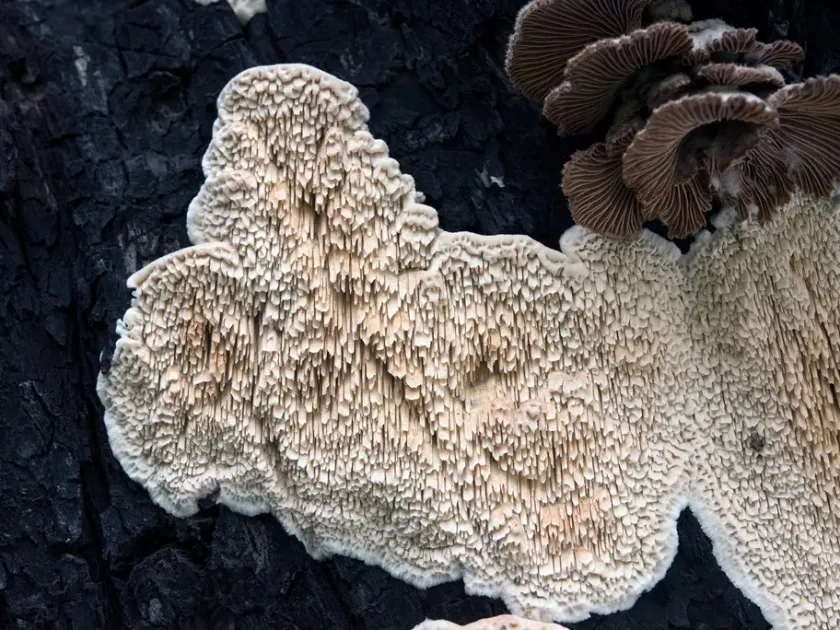
Description
Symptoms
The primary symptom is the appearance of specific, creamy to yellowish fruiting bodies on the trunks or large branches of affected trees.
Infected wood becomes soft, exhibits a bleached appearance, and develops a fibrous texture, making it prone to breaking under physical stress.
Affected fruit-bearing trees show signs of general decline, including premature leaf yellowing and a significant reduction in overall yield.
In advanced stages of infection, deep cracks and necrotic patches appear on the bark surface, sometimes oozing exudate during periods of high humidity.
A distinctive feature is that the internal wood can be severely decayed while the bark remains deceptively healthy, complicating early detection.
Pathogen
Schizopora paradoxa is a basidiomycete fungus classified as a wood-decay organism that causes white corrosive rot in various tree species.
The fungus's mycelium penetrates the wood structure, breaking down lignin and cellulose, which eventually destroys the mechanical integrity of the host.
The fruiting bodies are highly variable in shape, ranging from resupinate to pileate forms, with a porous hymenophore that changes from tubular to labyrinthine with age.
Reproduction is facilitated by basidiospores, which are spread by wind currents over long distances and land on damaged parts of the tree bark.
It acts as a facultative parasite, capable of surviving as a saprotroph on dead wood but transitioning to a parasitic lifestyle when the host plant is weakened.
Conditions for development
The development of this pathogen is most intense under high humidity and moderate temperatures, which are common in dense forests or neglected orchards.
Primary infection points are usually mechanical injuries to the bark caused by hail, pest activity, or improper pruning techniques.
Lack of sanitary maintenance and the presence of rotting stumps or dead wood near healthy trees provide a constant source of inoculum.
Overcrowded planting layouts that restrict airflow around the trunks and branches significantly increase the risk of secondary infections.
The fungus is most active when trees are stressed by environmental factors, such as drought, waterlogging, or nutrient deficiencies.
Why it matters
The main danger lies in the deep decay of the wood, which leads to structural instability and the risk of catastrophic branch or trunk breakage.
The rot process is irreversible; long-term infection renders the tree unproductive and leads to its eventual death.
The infection spreads rapidly to adjacent plants, posing a serious threat to the integrity of entire orchards or forest stands.
Economic losses are driven not only by lower harvests but also by the costs associated with tree removal and complex curative treatments.
Reduced biological resilience makes the tree highly susceptible to secondary pests, which further accelerate the decline process.
Protection
The most important preventative measure is regular sanitary pruning, with all cuts immediately treated with wound paint or copper-based fungicides.
Infected wood, including stumps and dead branches that might harbor the fungus, must be removed and destroyed to minimize spore production.
Maintaining high standards of agronomic practice, including balanced fertilization and proper irrigation, significantly improves a plant's natural resistance.
If fruiting bodies are detected, infected areas should be carefully scraped down to healthy tissue and treated with appropriate systemic fungicides.
- Ensure optimal airflow and ventilation in the orchard.
- Use sharp, sterilized tools for all pruning operations.
- Perform regular inspections of tree trunks for cracks and injuries.
Discussion
No discussions yet — be the first.