
Schizopora flavipora
Schizopora flavipora
Description
Symptoms
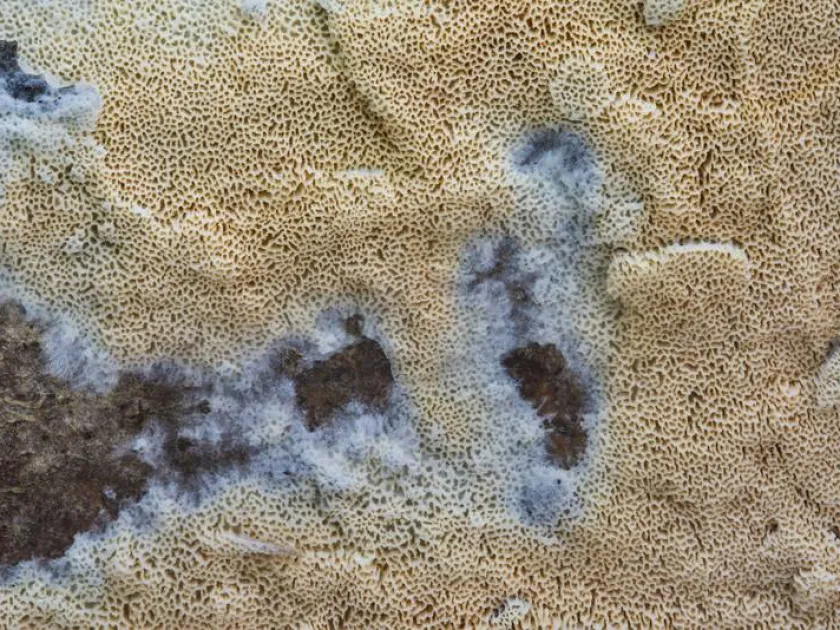
The primary symptom of Schizopora flavipora infection is the formation of flat, resupinate fruiting bodies on the surface of trunks, stumps, and fallen wood. These bodies adhere firmly to the substrate and appear white, cream, or light yellow.
The hymenium of the fungus has a specific structure consisting of small, often sinuous or irregularly rounded pores. As it matures, the surface may acquire a yellowish or ochraceous hue, which serves as a key identifying characteristic of the species.
Affected wood exhibits an intense white corrosive rot. Over time, the tree tissues lose mechanical strength, becoming soft, fibrous, and eventually turning into a loose, bleached mass.
Infected areas are often covered with mycelium that penetrates deep into the sapwood and heartwood. In cracks or fractures, one can frequently observe white mycelial mats filling the voids.
In advanced cases, multiple fungal colonies form on the tree trunk, eventually merging into extensive necrotic zones that cover large areas of the bark surface.
Pathogen
The pathogen responsible for the disease is the wood-destroying fungus Schizopora flavipora, a member of the Basidiomycota division. It is a saprotrophic, or occasionally facultatively parasitic fungus, specializing in the degradation of lignin and cellulose.
The fungus typically attacks weakened or dead hardwood trees but is capable of colonizing living specimens if open wounds, frost cracks, or other mechanical damages are present.
Fungal spores (basidiospores) are dispersed by wind, water, and insects. Upon landing on exposed wood surfaces, the spores germinate, forming mycelium that begins the active enzymatic breakdown of the tissue.
A notable biological trait of this species is the high plasticity of its enzymatic system, allowing it to function effectively across a wide range of temperatures and humidity levels.
The life cycle of the pathogen is closely tied to substrate moisture, where it can persist for years in a mycelial state, continuing the slow decomposition of wood even under adverse external conditions.
Conditions for development
The development of Schizopora flavipora is most active under high humidity conditions, typical of dense forest stands, shaded park areas, and riparian zones.
The optimal temperature for mycelial growth ranges from 18 to 25 degrees Celsius, although the fungus demonstrates significant resistance to short-term temperature fluctuations.
A critical factor in its spread is the presence of mechanical bark damage, through which the infection easily penetrates the tree, creating a primary infection focus.
Poor aeration and moisture stagnation in the lower parts of the trunk create an ideal microclimate for spore germination and the development of new fruiting bodies.
Neglected tree stands, characterized by an accumulation of deadwood and decaying stumps, significantly increase the infectious pressure, promoting epiphytotic development of the fungus.
Why it matters
The primary impact of the fungus is the intensive destruction of the structural integrity of the trunk, leading to significant losses in timber value.
By causing deep white rot, the fungus weakens the tree's resistance to wind loads, resulting in frequent windthrows and stem breakage within forest stands.
Infected trees become breeding grounds for other dangerous pathogens and wood-boring insects, further worsening the phytosanitary condition of the area.
In fruit-bearing crops, Schizopora flavipora can cause premature dieback of scaffold branches, reduced yields, and the eventual decline of the entire tree.
Long-term exposure to the pathogen disrupts nutrient and water transport, making the host plant highly susceptible to drought stress or severe winter weather.
Protection
The primary preventive measure is strict adherence to sanitary forest management practices, including the regular removal of deadwood, decaying stumps, and dying trees.
It is essential to promptly treat all mechanical bark injuries and pruning cuts using wound dressings, oil-based paints, or specialized fungicidal pastes.
Providing optimal care for trees, including proper irrigation, fertilization, and soil aeration, enhances natural immunity and resistance to fungal infections.
If isolated fruiting bodies are detected, immediate excision of the infected area down to healthy tissue is recommended, followed by disinfection with copper or iron sulfate solutions.
To prevent the spread of infection in orchards, it is advisable to use prophylactic broad-spectrum fungicide sprays during the early spring period, prior to the onset of active growth.
Discussion
No discussions yet — be the first.