
Schizopora
Schizopora
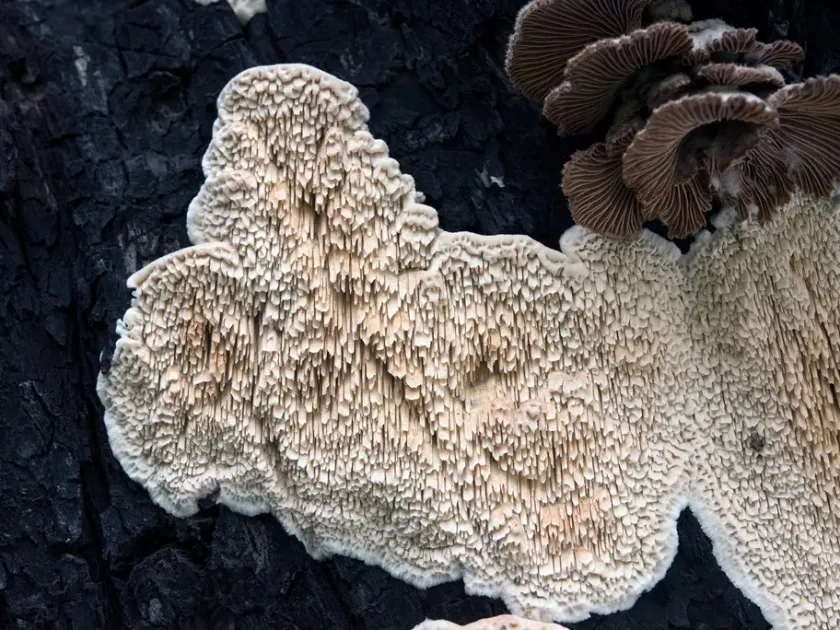
Description
Symptoms
The most visible sign of infection is the appearance of characteristic fruiting bodies on the bark or exposed wood. These structures usually appear as spread-out, occasionally reflexed plates, ranging in color from white to creamy or yellowish.
Infected wood exhibits typical white rot symptoms. The internal tissue becomes significantly lighter in color, softer in texture, and loses its structural integrity, often crumbling under mechanical stress.
As the disease progresses, internal cracks develop within the wood, often filled with mycelial mats. These white or yellowish films or cords are a clear indicator of the pathogen's presence and activity.
The bark covering the infected areas may blister, crack, or peel off, revealing the decay underneath. Older fruiting bodies may harden and darken over time as they mature and continue to release spores.
Microscopic diagnosis is often used to confirm the species. The hyphae possess specific morphological features, such as clamp connections at the septa, which are characteristic of this genus.
Pathogen
The disease is caused by fungi of the genus Schizopora, with Schizopora paradoxa being the most representative species. These fungi belong to the group of wood-decaying organisms responsible for white rot.
Biologically, these fungi act as saprotrophs, efficiently decomposing lignin and cellulose within wood tissues. The fungal mycelium penetrates deep into the tree structure, utilizing enzymatic complexes to break down complex polymers.
The fungus produces fruiting bodies on the surface of infected wood, often displaying a porous or sometimes tooth-like structure. These bodies are the primary source of basidiospores responsible for spreading the infection.
Infection occurs mainly through basidiospores that are dispersed by air currents. Once they land on fresh wounds, cracks in the bark, or exposed timber, they germinate and initiate a new infection cycle.
The pathogen thrives by secreting specialized enzymes that oxidatively degrade wood components. This process enables the mycelium to establish a strong colony within the host, leading to progressive tissue degradation.
Conditions for development
The development of Schizopora is strongly dependent on wood moisture levels. Moisture content exceeding 20-25 percent is considered optimal for colonization, making weakened trees or poorly stored timber highly susceptible.
Temperature plays a crucial role in the fungus's biological activity. While it can survive various conditions, it shows the most intense growth during warm, moderately humid periods typical of spring and autumn.
Mechanical damage to the bark, caused by pests, frost, or forestry operations, acts as a critical entry point for the fungus. Any exposure of the inner wood significantly increases the infection risk.
Poor ventilation and high stand density create microclimates with increased humidity, which facilitate the rapid spread of spores between trees and accelerate the colonization process.
The presence of dead wood, stumps, and logging debris provides a continuous reservoir for spores. If left unmanaged, these materials support large fungal populations that threaten neighboring healthy trees.
Why it matters
The primary damage caused by Schizopora is the severe degradation of wood strength. This poses a major safety risk in forestry, as infected trees can break suddenly under wind stress or their own weight.
In economic terms, the fungus causes significant losses in timber production. Infected wood loses its market value as it becomes unsuitable for construction or carpentry due to the decay caused by white rot.
In orchards, the fungus can lead to the gradual decline of trees. By disrupting the tree's vascular system, the infection limits nutrient transport, causing weakened growth and eventual mortality.
Improper storage of timber is another major concern. If stored in damp conditions, Schizopora can turn valuable wood products into unusable scrap in a relatively short period.
Furthermore, the fungus acts as a secondary degrader that accelerates the decay of trees already stressed by other factors like drought or insect infestations, thereby altering forest ecosystem dynamics.
Protection
Sanitation is the cornerstone of managing Schizopora. Regularly removing and destroying dead wood, infected trees, and stumps is essential to reduce the infectious spore load in the environment.
Proper timber storage is vital for preventing post-harvest decay. Keeping wood dry, using spacers for airflow, and protecting materials from ground contact are effective strategies to prevent fungal establishment.
In orchards, painting pruning cuts and bark wounds with wound sealants or fungicidal pastes is crucial. This physical barrier prevents spores from entering the tree through exposed areas.
Avoiding mechanical damage during thinning or harvesting operations helps preserve the tree's natural defenses against pathogen entry.
- Conduct periodic sanitary forest inspections.
- Burn or safely dispose of infected wood material.
- Maintain tree vigor through proper fertilization and watering.
- Apply fungicides to wounds on fruit trees.
Discussion
No discussions yet — be the first.