
Schizophyllum rot
Schizophyllum
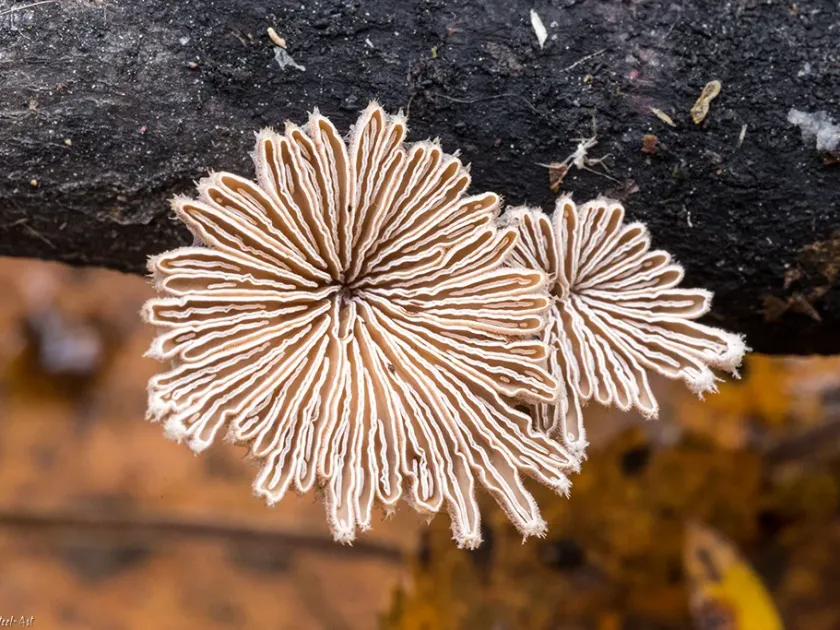
Description
Symptoms
The most evident sign of infection is the presence of the fungus's fruiting bodies on the trunks, scaffold branches, or stumps of the trees. These often appear in groups or clusters.
Internal wood decay begins long before any external symptoms manifest. As the infection progresses, the wood loses its structural integrity and becomes brittle.
Infected areas typically exhibit signs of white rot, where the wood becomes light, soft, and crumbly as the fungus depletes the woody tissue components.
Bark in the affected regions may crack or develop necrotic lesions, providing further evidence of the internal degradation taking place within the woody tissue.
On affected trees, one might observe premature wilting or yellowing of foliage, as the fungus interferes with the tree's ability to transport water and nutrients efficiently.
Pathogen
The causative agent of the disease is the basidiomycete fungus Schizophyllum commune, commonly known as the split gill fungus. This organism is classified as a xylotroph, meaning it specializes in breaking down wood components.
The fungus develops a robust mycelium that penetrates deep into the tissues of stems and branches, effectively decomposing lignin and cellulose. While it is primarily a saprotroph, it can act as a weak parasite under stressed conditions.
The fruiting bodies of this fungus are easily recognizable by their fan-like shape and grey-white appearance. A key diagnostic feature is the split gills on the underside, which curl when dry.
The spores of Schizophyllum commune are extremely resilient to environmental stressors, allowing them to remain viable for long periods. They are efficiently dispersed by wind currents over long distances.
The biological nature of this pathogen allows it to colonize a wide variety of tree species, making it a ubiquitous organism in both forest and orchard environments worldwide.
Conditions for development
The development of the disease is facilitated by mechanical wounds to the bark, such as those caused by frost, sunscald, or improper pruning, which serve as entry points for spores.
Trees that are under stress, suffering from poor nutrient availability, or drought are significantly more susceptible to successful colonization by the fungus.
High relative humidity and moderate temperatures provide optimal conditions for spore germination and the rapid growth of the mycelium throughout the host's woody structure.
Poor orchard sanitation, including the presence of deadwood, logging debris, and untreated pruning residues, creates an environment where the pathogen can thrive.
Poor airflow within the canopy, often resulting from inadequate pruning or overcrowded planting, helps maintain the moisture levels necessary for the fungus to reproduce.
Why it matters
The primary damage caused by this fungus is the rapid and severe decay of the tree's internal structure, which can compromise the stability of the entire plant.
Structural weakening of limbs leads to branch breakage, especially during high winds or when laden with fruit, which significantly diminishes the tree's overall yield.
By disrupting the vascular system, the fungus reduces the tree's vigor, making it less productive and shortening its overall lifespan in the orchard.
In commercial orchards, widespread infection may necessitate the removal of affected trees, leading to significant economic losses and management challenges.
Infected trees act as continuous spore generators, potentially spreading the pathogen to neighboring healthy trees and requiring rigorous management protocols.
Protection
The most effective strategy involves strict sanitation measures, such as the immediate removal and destruction of all infected wood and dead branches to limit spore production.
All pruning wounds and mechanical injuries should be protected with appropriate wound sealants or fungicidal treatments to prevent the entry of fungal spores.
Maintaining tree health through proper fertilization and irrigation is crucial, as vigorous trees are better able to compartmentalize wounds and resist fungal infections.
Implementing regular inspections of the bark and canopy allows for early detection and intervention before the rot becomes systemic and irreparable.
- Apply white wash to trunks to prevent sunscald.
- Disinfect all pruning tools between trees.
- Avoid overcrowding to ensure good airflow.
Discussion
No discussions yet — be the first.