
Sarocladium blight
Sarocladiaceae
Description
Symptoms
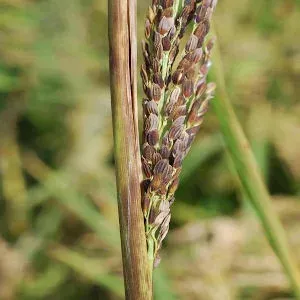
Initial symptoms of Sarocladium blight often appear as small, oblong lesions on the leaf sheaths that gradually enlarge and merge to cover larger areas.
A distinctive feature is the emergence of a white or salmon-colored powdery mycelium on the surface of the lesions, which is a sign of prolific fungal sporulation.
As the disease progresses, the sheaths become necrotic, preventing the emergence of the inflorescence and resulting in partial panicle blight or grain sterility.
Infected plants frequently exhibit discoloration, stunted growth, and a general decline in vigor, which is visible across infested field patches.
- Lesions on leaf sheaths and stems.
- Presence of white or pinkish fungal mycelium.
- Incomplete or blighted inflorescence emergence.
- Poor grain development and shriveling.
Pathogen
The disease is caused by fungi of the genus Sarocladium, with Sarocladium oryzae being a prominent example known for causing sheath rot in cereal crops.
These pathogens produce conidia that serve as the primary inoculum, spreading through wind, water splashes, and insect vectors during the growing season.
The fungus can survive as a saprophyte on plant debris, providing a persistent source of infection in fields that are not properly managed after harvest.
Biological studies show that the pathogen invades host tissues by colonizing intercellular spaces, secreting enzymes that break down plant cells to extract nutrients.
The infection cycle is closely linked to the physiological stage of the plant, often becoming more severe during the reproductive phases of growth.
Conditions for development
High humidity levels and warm temperatures are the most critical environmental drivers for the rapid development and spread of Sarocladium species.
Frequent rainfall, especially during the flowering stage, creates a moist microclimate within the crop canopy that facilitates high rates of infection.
High planting density often restricts airflow, creating a damp environment that significantly favors the onset and progression of the disease.
Nitrogen over-fertilization can lead to lush, succulent vegetative growth, making the plants more susceptible to penetration by the fungal pathogen.
Poor soil drainage and the presence of abundant crop residues are additional factors that sustain and increase the pathogen population in the field.
Why it matters
The primary harm caused by this disease is the reduction in grain yield and quality, as it disrupts the supply of nutrients to the developing panicle.
Infection results in reduced grain weight, lower milling quality, and decreased seed viability, which negatively impacts the economic return for farmers.
The disease can lead to grain discoloration, making the harvested product less acceptable for commercial markets and reducing its trade value.
Indirectly, the loss of photosynthetic leaf area shortens the plant's life cycle, limiting the time available for proper grain filling and maturation.
Management of the disease adds significant costs to crop production due to the necessity of fungicide applications and rigorous field sanitation protocols.
Protection
Integrated disease management begins with the use of certified, disease-free seed and the selection of varieties with proven resistance to Sarocladium.
Proper crop rotation practices, planting only after a sufficient interval, help to reduce the inoculum density of the fungus in the soil environment.
Effective field sanitation, including the destruction or deep incorporation of crop debris, is essential to minimize the carry-over of the pathogen.
Timely application of appropriate systemic fungicides, particularly before the onset of the flowering stage, is an effective strategy to suppress infection.
Monitoring and controlling insect populations that may damage plants or act as vectors for fungal spores is a necessary component of holistic crop protection.
Discussion
No discussions yet — be the first.