
Sargassum
Sargassum
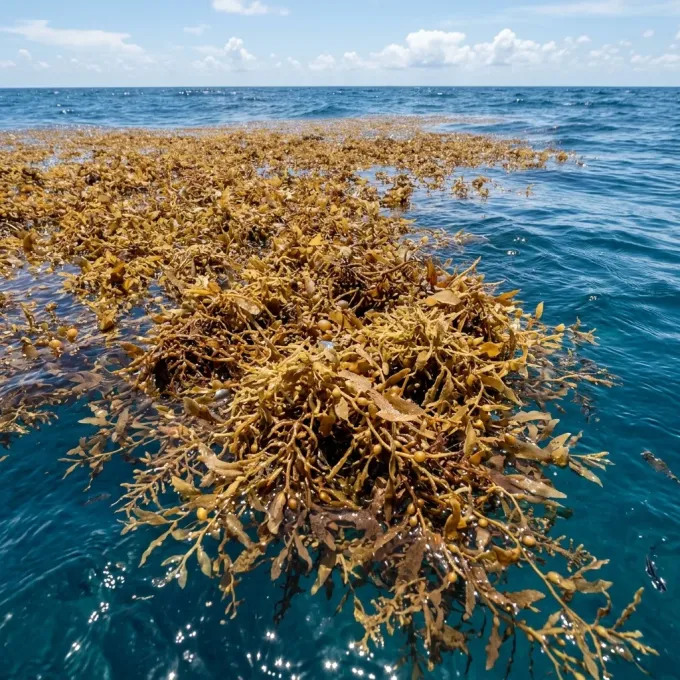
Description
Pathogen
Sargassum (genus Sargassum) is a type of brown macroalgae that, while not a disease of terrestrial plants, acts as a major ecological stressor affecting coastal agriculture.
These organisms are free-floating algae that thrive in the open ocean. They do not infect crops in the traditional sense, but their biological presence can disrupt local ecosystems.
The genus includes numerous species characterized by their leaf-like structures and gas-filled bladders, which allow them to stay buoyant in the water column.
In agronomic science, the accumulation of Sargassum on land is studied as a source of environmental disturbance that impacts the soil-plant relationship.
Understanding the biology of these algae is essential for managing their presence near farmland, as they are not pathogens but biological entities that decay rapidly.
Conditions for development
The growth of Sargassum is primarily driven by rising sea temperatures and the enrichment of ocean water with agricultural nutrients, such as nitrogen and phosphorus.
Large-scale blooms are triggered by nutrient runoff from rivers into the ocean, fueling the proliferation of these algae over vast maritime areas.
Ocean currents and atmospheric wind patterns transport the mats of algae towards shorelines, where they eventually beach in massive quantities.
Environmental conditions that favor excessive Sargassum growth are often linked to human activity in land management and nutrient leaching from nearby croplands.
Monitoring seasonal ocean shifts is key to predicting when and where these algae will impact coastal areas, allowing for preemptive management actions.
Why it matters
The primary concern with Sargassum is the release of hydrogen sulfide and ammonia during its decomposition, which creates toxic conditions for plant life.
These gases can cause acute foliar damage to nearby crops, reducing photosynthetic efficiency and overall plant vitality in coastal fields.
When left to decay on the soil surface, the algae create an anaerobic layer that blocks oxygen, leading to soil degradation and root stress for agricultural plants.
The high salinity of the seaweed can cause soil salinization, making it difficult for sensitive crops to thrive in affected zones.
Finally, decaying algae provide a breeding ground for pests and secondary soil pathogens, further complicating the maintenance of a healthy crop environment.
Protection
Effective management begins with the prompt removal of stranded seaweed from the shoreline to prevent the onset of anaerobic decomposition.
If processed correctly—through thorough washing to remove salt and long-term composting—Sargassum can serve as a beneficial soil amendment.
Utilizing composting technologies helps stabilize the organic matter, turning it into a nutrient-rich fertilizer that can be applied to fields.
The installation of offshore barriers is a proactive measure that prevents the massive ingress of seaweed onto agricultural land and public beaches.
Long-term prevention requires regional efforts to minimize nutrient runoff from agricultural practices, effectively cutting off the fuel source for these blooms.
Discussion
No discussions yet — be the first.