
Sarea
Sarea
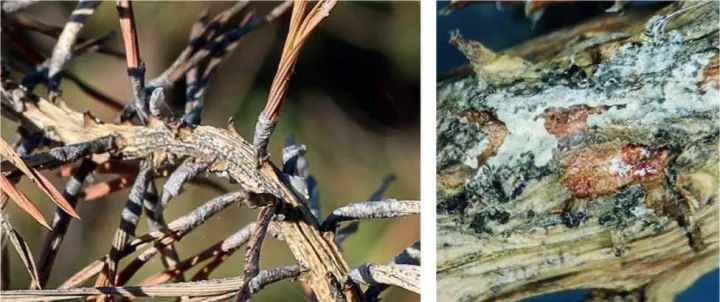
Description
Symptoms
The primary symptom of a Sarea infection is the presence of hardened, dark, or black resinous growths on the bark or branches of coniferous trees.
These growths often appear as small, dense, wart-like structures that form on top of natural or injury-induced resin flows.
Infected areas often exhibit structural changes in the resin, making it appear crumbly or dark, which contrasts with the clear, golden appearance of fresh sap.
Bark tissue surrounding the infection site may show signs of discoloration or localized necrosis due to the penetration of fungal hyphae.
Over time, the cumulative presence of these growths may cause the affected branch or segment of the trunk to lose its vigor and appearance.
Pathogen
Sarea is a genus of fungi belonging to the class Dothideomycetes, typically found colonizing the resinous secretions of coniferous trees. The most well-studied species is Sarea resinae.
This fungus is biologically adapted to survive in environments with high concentrations of terpenes and resin acids, which serve as its primary growth substrate.
Unlike many other plant pathogens, this fungus thrives on the very defense mechanisms that trees use to seal wounds, namely the resin flows.
The mycelium of the fungus penetrates the resinous masses, facilitating the decomposition of organic material contained within the resin.
Reproduction is carried out through the production of small, black fruiting bodies known as pycnidia or apothecia, which appear directly on the surface of the resin.
Conditions for development
The development of Sarea is facilitated by the presence of bark wounds that induce significant resin flow, providing the necessary substrate for the fungus.
High relative humidity and moderate temperatures provide optimal conditions for spore germination and colonization of the resinous surface.
The fungus tends to colonize trees that are already stressed, such as those suffering from drought, soil compaction, or poor growth conditions.
Spore dispersal occurs via wind currents, allowing the pathogen to spread across forest stands or gardens to new susceptible hosts.
The peak periods for infection usually coincide with the active growing season, when trees produce the most resin in response to environmental fluctuations.
Why it matters
The main danger posed by Sarea is the compromise of the tree's natural wound-healing process, which leaves the host vulnerable to secondary pests and pathogens.
By inhabiting the protective resin, the fungus prevents the tree from properly sealing its wounds, potentially allowing wood-boring insects to enter.
In ornamental settings, the visible black growths on the trunk or branches significantly diminish the aesthetic value of the trees.
In timber production, the presence of these fungi can be a sign of poor tree health, and their impact on the bark layers can be detrimental to the vascular tissue.
Continued stress caused by the presence of the fungus can eventually contribute to the decline of the tree's overall health and vitality.
Protection
Effective management begins with maintaining high tree vigor through proper fertilization and watering, which reduces the need for the tree to rely solely on resin defense.
Prevention of mechanical damage to the bark during maintenance activities is the most effective way to limit the entry points for the fungus.
If wounds occur, they should be cleaned and protected with appropriate wound-sealing agents or fungicidal pastes to prevent colonization.
In cases where the infection is widespread, pruning of the affected branches and the application of copper-based fungicides can help manage the fungal population.
- Regular inspection of bark for resin damage
- Sanitary pruning of heavily infected branches
- Proper wound dressing with fungicidal agents
Discussion
No discussions yet — be the first.