
Sarcogyne
Sarcogyne
Description
Symptoms
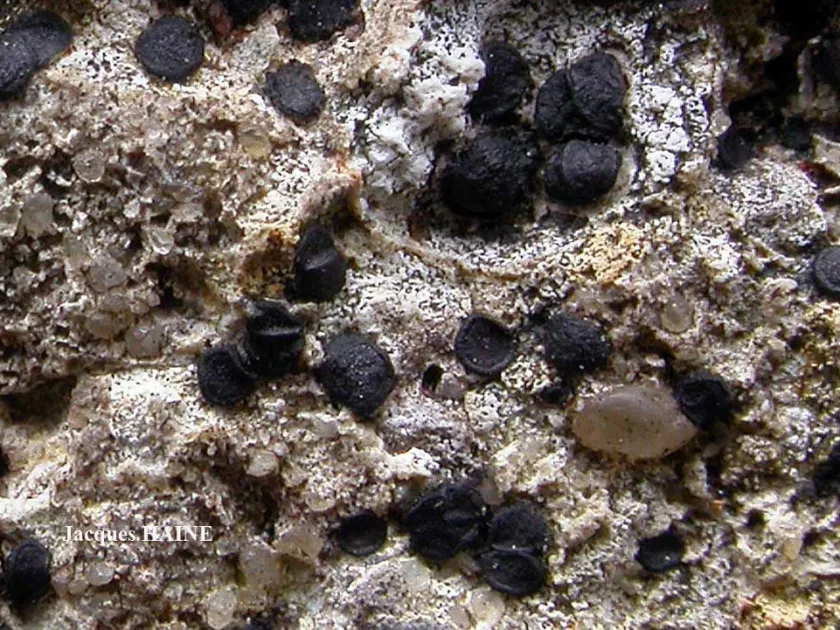
The signs of Sarcogyne colonization include the appearance of small, dark, often disc-shaped fruiting bodies known as apothecia, scattered across the bark.
These structures often look like dark, crusty spots that are slightly embedded in the bark surface, sometimes giving it a mottled or granular appearance.
Colonization is typically most prevalent on the shaded or northern sides of tree trunks, where moisture levels remain consistently higher.
Unlike parasitic fungi, the bark underneath Sarcogyne remains firm and dry, showing no signs of decomposition, lesions, or sap bleeding.
Visible colonies are usually a slow-growing process and are most commonly observed on mature or senescent trees with deeply fissured bark.
Pathogen
Sarcogyne is a genus of lichenized fungi belonging to the family Acarosporaceae. It is not a plant pathogen, but rather an epiphyte that lives on various surfaces, including tree bark.
These organisms are a complex symbiosis between a fungus and algae. They do not feed on the plant's tissues or sap, meaning they do not cause "disease" in the medical sense.
While many Sarcogyne species are saxicolous (growing on rocks), some have adapted to colonize the rough, weathered bark of old or stagnant trees.
Reproduction occurs via spores dispersed by wind or water, which easily settle in the crevices of a tree's outer bark layer.
In agronomy, the presence of Sarcogyne is considered a secondary phenomenon, often appearing on trees that lack vigorous growth or have neglected bark conditions.
Conditions for development
The development of Sarcogyne is highly dependent on ambient humidity and moisture, as it requires intermittent hydration to carry out its biological functions.
The genus is known to be an indicator of clean air; it is highly sensitive to atmospheric pollutants, particularly sulfur dioxide, and will not thrive in industrial zones.
Limited sunlight and poor ventilation within the tree canopy create an ideal microclimate for the growth and spread of these lichen communities.
Denser planting arrangements and the absence of crown thinning promote higher relative humidity around the trunk, facilitating easier colonization.
The most active growth periods occur during cool, damp seasons when consistent moisture availability allows the lichen to extend its thallus.
Why it matters
Sarcogyne causes no direct physiological damage to the host plant as it does not parasitize the tree's vascular system.
However, dense lichen cover can serve as a refuge for various orchard pests, including mite overwintering stages and small insect populations.
In cases of extremely heavy coverage, the lichen might slightly inhibit the gas exchange of the bark, which is a minor factor in the overall health of aged trees.
From an aesthetic perspective, heavy colonization is often perceived as a sign of neglect, which can lower the visual value of ornamental or garden trees.
The presence of lichen can also mask the early stages of genuine bark diseases, making it difficult to detect cracks or necrotic tissue promptly.
Protection
No aggressive control measures are necessary, as Sarcogyne does not actively harm healthy, vigorous trees. Proper cultural care is the best strategy.
Regular crown pruning to increase airflow and light penetration is the most effective way to create a drier environment that is unsuitable for lichen colonization.
Mechanical cleaning of the bark using soft-bristled brushes during dormancy can help remove excess lichen buildup without injuring the tree’s cambium.
Applying iron sulfate solutions to the trunk is a common prophylactic practice to inhibit lichen development on trees with high susceptibility.
Maintaining tree vigor through proper fertilization and irrigation promotes healthy bark renewal, which naturally discourages the long-term attachment of lichen thalli.
Discussion
No discussions yet — be the first.