
Saprolegniasis
Saprolegnia
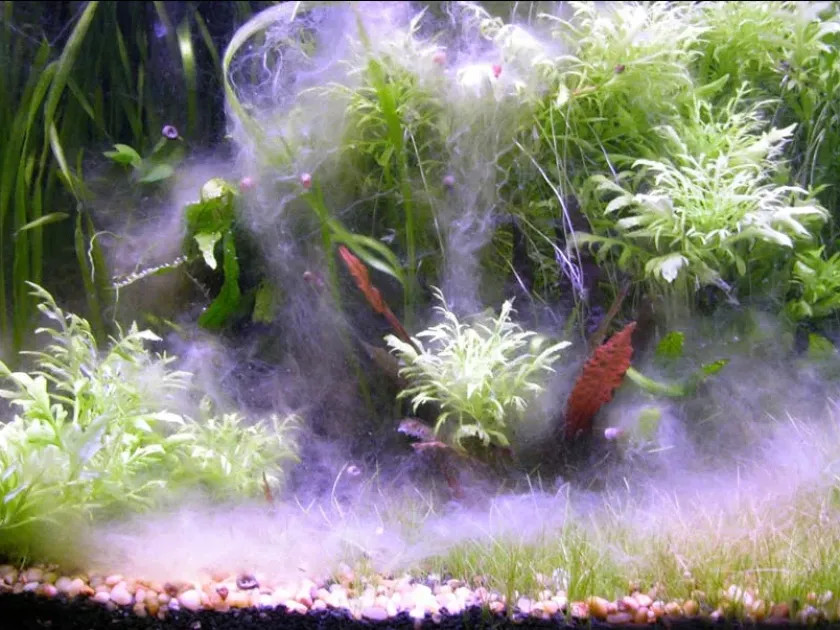
Description
Symptoms
The most prominent sign of the infection is the appearance of a fluffy, white to grayish fungal-like mat on the surface of seeds or seedlings. This mat consists of a dense network of fungal hyphae.
Infected seeds quickly become soft, lose their viability, and are covered by the characteristic "cottony" growth. This leads to poor germination rates and patchy seedling emergence.
Affected plant tissues become water-soaked and slimy. As the infection progresses, young roots and hypocotyls darken and collapse, often resulting in seedling mortality before or immediately after emergence.
Microscopic examination reveals that the mycelium lacks cross-walls (non-septate), which is a key diagnostic feature distinguishing oomycetes from true fungi.
The disease spreads in distinct clusters within trays or fields, as the mobile zoospores can easily move through films of surface water to infect adjacent healthy seedlings.
Pathogen
Saprolegniasis is caused by fungus-like organisms classified as oomycetes within the genus Saprolegnia. These are typically facultative parasites that exist in soil and water as saprotrophs, feeding on decaying organic matter.
Biologically, these organisms are more closely related to algae than to true fungi. They reproduce via motile zoospores that navigate through aquatic environments using flagella to locate susceptible tissues.
The life cycle includes both asexual and sexual reproduction. The latter results in the formation of oospores, which have thick walls and allow the pathogen to survive in harsh environmental conditions within the soil.
The pathogen is characterized by rapid mycelial growth when moisture levels are high. It easily transitions from feeding on non-living debris to infecting weakened plant tissues, particularly during the germination phase of seeds.
In agricultural practice, saprolegniasis is often associated with the damping-off complex, where multiple soil-borne pathogens contribute to the failure of seeds to establish successfully.
Conditions for development
Excessive moisture is the primary driver of saprolegniasis outbreaks. Waterlogged soil or growing media creates the ideal aquatic environment for zoospores to swim and infect host tissues.
Development is favored by cool temperatures, typically ranging from 5°C to 15°C. This makes early-season plantings particularly susceptible when the soil remains cold and slow to warm.
Poor aeration and high humidity in greenhouses or nurseries prevent surface drying of the soil, allowing the pathogen to thrive on the surface and easily access the base of emerging seedlings.
Heavy, poorly structured soils that impede rapid germination extend the time during which a seedling is vulnerable to infection, providing a larger window for the pathogen to attack.
The presence of decomposing organic matter provides the necessary energy for the pathogen to multiply, leading to a high inoculum density in the growing environment.
Why it matters
Saprolegniasis causes significant economic losses by drastically reducing seed germination rates and the overall quality of seedling production across various vegetable and ornamental species.
High seedling mortality often necessitates costly reseeding procedures, increasing labor and material expenses for nursery operators and farmers.
Even seedlings that survive the initial infection often exhibit stunted growth and compromised root systems, making them more prone to secondary infections from other soil-borne pathogens.
In protected cultivation, the disease can spread rapidly and decimate entire trays of seedlings within a short period, leading to major production delays and missed market windows.
Ultimately, the loss of plant vigor during the early growth stages significantly diminishes the potential yield and overall uniformity of the final crop.
Protection
Effective management requires strict control of irrigation practices. It is crucial to avoid overwatering and ensure adequate drainage in all containers and nursery beds.
Using high-quality, pasteurized substrates is a vital preventive measure to eliminate potential inoculum from the growing environment before planting begins.
Seed treatment with specific fungicides provides a protective barrier during the critical germination phase, preventing the initial colonization of tissues by the pathogen.
- Ensure optimal aeration and reduce high humidity.
- Use certified and treated seeds to prevent initial outbreaks.
- Sterilize planting equipment and trays between uses.
- Monitor soil temperature and avoid planting in excessively cold conditions.
Biological control agents, such as specific strains of beneficial bacteria, can also be employed as preventative measures to outcompete the pathogen for resources in the soil zone.
Discussion
No discussions yet — be the first.