
Saccorhiza dermatodea
Saccorhiza dermatodea
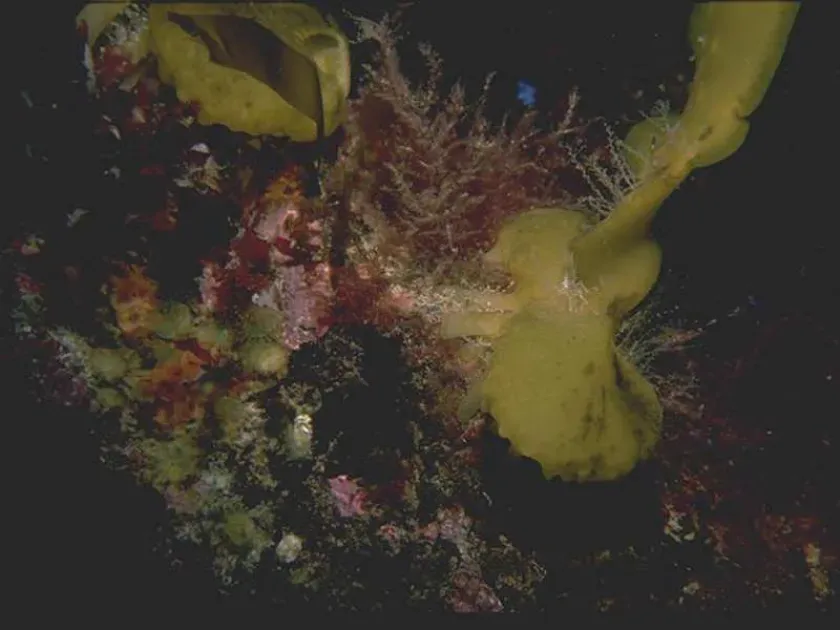
Description
Symptoms
The physical appearance of Saccorhiza dermatodea includes a smooth, olive-to-brown blade that is not ruffled or folded at the base.
The absence of lesions, spots, or decaying tissue is normal, as these are healthy, intact living marine organisms.
The holdfast provides a secure attachment to substrate, which is a structural characteristic of this species.
Depending on environmental conditions, the color may vary, but the overall structure remains consistent with the typical morphology of the genus.
It is distinct from other species of the same order due to its lack of complex, wart-like growth on the attachment base.
Pathogen
Saccorhiza dermatodea is not a plant disease or a pathogen. It is a well-known species of brown algae belonging to the order Laminariales.
These organisms are primary producers in marine ecosystems, converting sunlight into energy, and do not cause infections in terrestrial crops.
The morphology of the species consists of a blade, a stipe, and a holdfast used to anchor itself to rocky substrates in cold coastal waters.
From an agricultural perspective, it has no relation to fungal, bacterial, or viral plant diseases that affect agricultural fields.
The organism is an integral part of the marine environment, contributing to the biodiversity of cold-water kelp forest ecosystems.
Conditions for development
This species thrives in cold, nutrient-rich marine waters, typically found in temperate to sub-arctic coastal regions.
Stable rocky substrates are essential for the survival of the sporophyte stage, providing protection against water turbulence.
High levels of light penetration are crucial for photosynthesis in the shallow coastal zones where the algae grow.
Seasonal fluctuations in water temperature directly impact the growth cycle and reproduction of the species.
Environmental stability and moderate water currents are preferred to ensure a steady supply of dissolved minerals.
Why it matters
Saccorhiza dermatodea does not pose any risk to agricultural crops, as it is strictly a marine-dwelling organism.
It cannot infect plants, nor does it compete with land crops for resources, nutrients, or light.
On the contrary, seaweed-derived products are commonly used in agriculture as natural bio-fertilizers and plant growth promoters.
The only potential nuisance occurs when large amounts wash ashore and decompose, which may affect local water quality briefly.
There are no recorded cases where this species acts as a pest or a disease agent in any agricultural setting.
Protection
No control measures are required because the species is not a pest or a pathogen to crops or human health.
For beach management, simple mechanical removal of large decaying accumulations is sufficient if it becomes an issue.
Sustainable harvesting practices are encouraged if the species is collected for agricultural fertilizer or feed additives.
There is no need for chemical treatment or protective measures, as the organism does not threaten agricultural productivity.
Professional interest should be focused on the beneficial use of its biomass as a sustainable resource for farming.
Discussion
No discussions yet — be the first.