
Annosum root rot
Russulales
Description
Symptoms
External symptoms often become noticeable only at the stage of severe tree decline. Foliage on infected trees typically develops a yellowish tint before premature shedding.
Specific decay develops on the roots and the root collar. Examination of the lower stem reveals wood degradation, often accompanied by the presence of white fungal mats or films under the bark.
Conifers often exhibit excessive resin flow (pitch soaking) around the root collar as a defensive response to the fungal invasion.
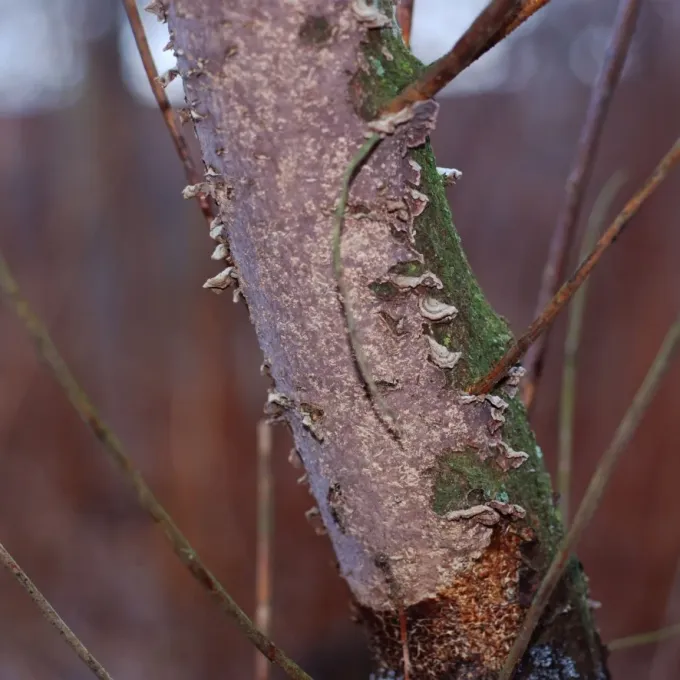
Fruiting bodies of the fungus may form at the base of the trunk or on root flares. These appear as spreading or bracket-like conks, often hidden beneath layers of forest litter.
In advanced stages, the disease causes extensive brown or white rot that travels up the stem, rendering the tree highly susceptible to windthrow and breakage.
Pathogen
The disease is caused by the fungus Heterobasidion annosum, which belongs to the order Russulales. It is a highly destructive pathogen that attacks the root system and the lower stem of woody plant species.
The fungus functions as both a parasite and a saprotroph. In forest ecosystems, it can persist for years on stumps and decaying root systems, maintaining its viability for long periods.
The fungal mycelium spreads actively through the soil and transfers to adjacent healthy trees upon root system contact. This behavior makes the disease extremely aggressive in monoculture plantations.
The pathogen's biology involves the production of basidiospores, which are wind-dispersed and colonize fresh stumps or damaged bark areas, allowing the fungus to invade new territories successfully.
The infection cycle begins with spore penetration into the wood, followed by mycelial invasion into the cambium and sapwood, gradually dismantling the tissue structure of the tree.
Conditions for development
Annosum root rot development is favored by specific soil types, particularly sandy and loamy sands, which facilitate the spread of mycelium between tree roots.
Silvicultural operations, especially thinning, are critical risk factors as fresh stumps serve as entry points for spores. Humid and moderately warm weather conditions promote active sporulation.
Densely planted stands established on former agricultural lands or clear-cut areas are at the highest risk of experiencing massive infestation.
Any damage to the tree bark, caused by wildlife or logging equipment, significantly eases the infection process into the plant tissues.
The primary condition for widespread propagation is the close contact between the root systems of trees, which allows the pathogen to migrate through the underground stand layers.
Why it matters
The primary damage is the widespread mortality of forest stands, leading to significant economic losses in the forestry and landscaping sectors.
Infected trees lose structural integrity, becoming prone to windthrow, which creates gaps in the canopy and complicates forest management and harvesting.
Timber quality is severely degraded due to core rot, which makes the affected wood unusable for commercial or structural purposes.
The disease triggers a gradual degradation of forest communities, altering species composition and stand structure, which negatively impacts local biodiversity.
In forest nurseries, annosum root rot can destroy a large proportion of seedlings, posing a major challenge to effective reforestation efforts.
Protection
The primary preventive measure is the strict adherence to forestry guidelines, including the timely treatment of fresh stumps with protective fungicides.
Biological control using the antagonist fungus Phlebiopsis gigantea is highly effective, as it competes with the pathogen to colonize stump surfaces.
During reforestation, it is recommended to plant mixed-species stands, incorporating deciduous trees that are generally less susceptible to this specific pathogen.
Sanitary logging is essential, requiring the immediate removal of infected trees and the proper disposal of logging residues to reduce the overall inoculum load.
Continuous monitoring of forest health and prompt detection of infection hotspots are crucial to containing the spread of the fungus at early stages.
Discussion
No discussions yet — be the first.