
Russula rosea
Russula rosea
Description
Symptoms
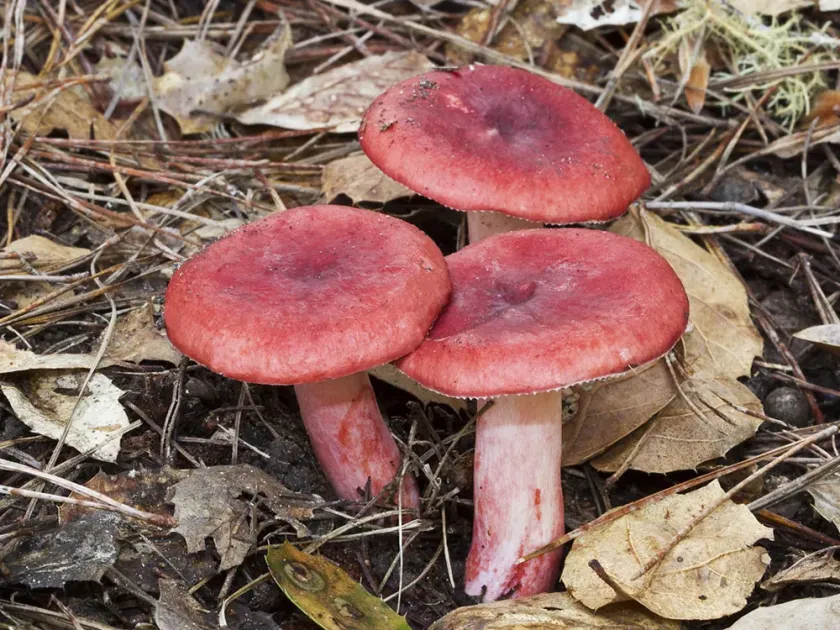
Russula rosea is a species of mushroom in the Russulaceae family, characterized by its vibrant red or pink cap which can reach up to 10 centimeters in diameter.
The cap often has a velvety texture, and the gills underneath are initially white, transitioning to a creamy color as the mushroom matures.
The stem is robust and solid, typically white or flushed with a light pink tint, lacking any ring or volva, which is a key identification feature for the genus.
The flesh is dense and brittle, lacking a milky latex, and has a mild, non-peppery taste, making it distinguishable from other similar-looking species.
It is crucial to clarify that this fungus does not function as a plant pathogen and causes no diseases in agricultural or garden crops.
Pathogen
Russula rosea is a mycorrhizal fungus, meaning it forms a mutually beneficial symbiotic relationship with the root systems of specific tree species.
It is not a parasite; it does not infect, degrade, or consume the tissues of living plants, and therefore cannot be classified as a disease-causing agent.
Incorrect labeling of this species as a plant disease stems from a misunderstanding of the ecological role of macrofungi in forest and garden ecosystems.
The mycelium of this fungus facilitates nutrient and water uptake for trees, essentially acting as an extension of the plant's root system rather than an aggressor.
There is no evidence in mycological or agricultural literature of Russula rosea causing any necrotic or wilting symptoms in crops.
Conditions for development
The development of Russula rosea fruiting bodies requires specific environmental conditions, typically found in well-established forests or wooded areas.
It thrives in soils that are moist, rich in organic matter, and well-aerated, often appearing during the mid-to-late summer and autumn months.
Temperatures ranging from 15 to 22 degrees Celsius are optimal for the growth of its subterranean mycelial network and subsequent emergence of the cap.
The fungus is sensitive to soil disturbance and chemical contamination, often disappearing from areas subjected to intensive tillage or heavy pesticide use.
Stable forest floor conditions, including a layer of leaf litter, are essential for the survival and seasonal reproduction of this species.
Why it matters
There is no economic or physiological harm caused by Russula rosea to any agricultural or horticultural crop.
The presence of this fungus does not result in yield loss, quality reduction, or the spread of any plant health issues.
As it is not a pathogen, it does not disrupt the physiological processes of plants, nor does it secrete any compounds that could be considered toxic to neighboring crops.
Agronomically, this species is considered benign and even beneficial, as it contributes to the overall health and biodiversity of the soil environment.
Any attempt to manage or remove this fungus from a field or garden is unnecessary and represents an inefficient use of agricultural resources.
Protection
No control measures are necessary, as Russula rosea is not a threat to plant health or farm productivity.
If the appearance of mushrooms is unwanted for aesthetic reasons in landscaped areas, simply improving soil drainage and reducing irrigation is sufficient.
The application of fungicides to treat this species is strongly discouraged, as such chemicals can harm the beneficial soil microbiome and mycorrhizal fungi.
- Maintaining proper soil drainage.
- Avoiding excessive irrigation.
- Preserving natural soil biodiversity.
The recommended approach is to accept the presence of this fungus as a sign of a healthy, functioning ecosystem on the site.
Discussion
No discussions yet — be the first.