
Quelet's brittlegill
Russula queletii
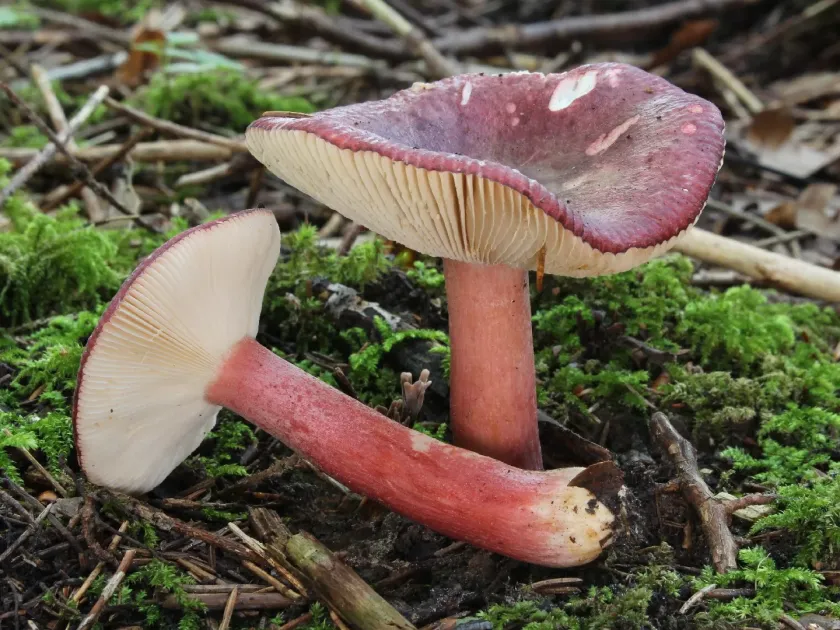
Description
Pathogen
Quelet's brittlegill (Russula queletii) is not a plant pathogen and does not cause diseases in agricultural crops or plants. This organism is classified as a mycorrhizal basidiomycete fungus within the Russulaceae family.
Biologically, this mushroom acts as a symbiont, establishing mycorrhizal associations primarily with coniferous trees, most notably spruce (Picea).
The fungus does not infect living plant tissues and possesses no pathogenic properties that would lead to tissue necrosis, rot, or wilting of agricultural or garden plants.
Its life cycle is closely linked to tree root systems, where it develops extensive mycelium in the leaf litter, exchanging water and mineral nutrients for carbohydrates provided by the host tree.
From an agronomic and forestry perspective, Russula queletii is considered a beneficial component of forest ecosystems, contributing to tree health through essential mycorrhizal symbiosis.
Conditions for development
The development of Quelet's brittlegill fruiting bodies is directly dependent on environmental conditions typical of temperate coniferous forests.
Key factors promoting the growth of this fungus include moderate soil moisture levels and the presence of a thick layer of leaf litter rich in organic matter.
The temperature optimum for mycelial growth and fruit body production occurs during the late summer and autumn seasons, characterized by stable, warm, and humid weather conditions.
Typical habitats include spruce forests, where the fungi are found either individually or in small clusters among mosses and coniferous needles.
The high sensitivity of the mycelium to changes in soil pH and anthropogenic impact makes this species a reliable bioindicator of coniferous forest ecological health.
Discussion
No discussions yet — be the first.