
Beechwood sickener
Russula nobilis
Description
Symptoms
The Beechwood sickener, known scientifically as Russula nobilis, is a gilled mushroom species that primarily forms symbiotic relationships with forest trees.
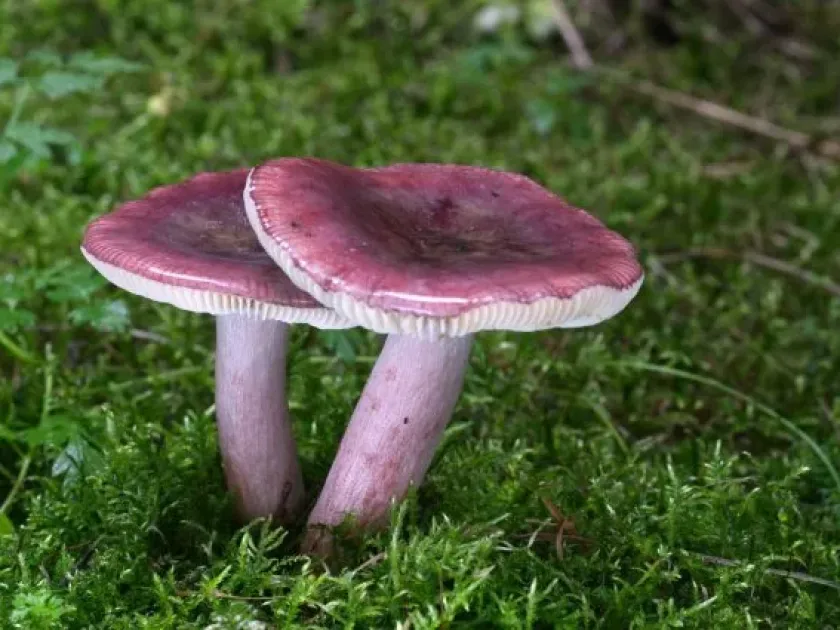
Its identification relies on the bright red or reddish-cherry cap, which often exhibits a brownish center as the mushroom matures, typically spanning 5-10 cm.
The gills are initially whitish in appearance, transitioning to a yellowish tint with age, which serves as a key diagnostic feature for field recognition.
A distinctive feature of this species is the tendency of the flesh to turn brown upon injury or bruising, providing a reliable method for visual identification.
The stipe is dense, cylindrical, and white, sometimes displaying subtle pink or reddish pigments, which contrasts with its firm and relatively sturdy texture.
Pathogen
The organism Russula nobilis is a basidiomycete fungus that acts as an ectomycorrhizal partner, specifically interacting with roots of various tree species.
In a biological context, it operates by forming a network of fungal hyphae around the roots, facilitating the exchange of nutrients between the soil and the host plant.
It is not classified as a destructive pathogen, as its relationship with the tree host is essentially mutualistic, promoting healthy growth in established ecosystems.
The mycelium resides within the soil and leaf litter, and its biological role includes the decomposition of organic matter, which contributes to overall soil fertility.
Although typically beneficial, the intensive growth of the mycelial network in forest nurseries may occasionally interfere with the root space of vulnerable seedlings.
Conditions for development
Russula nobilis thrives under high humidity conditions, typically following seasonal rainfall, which triggers the production of its fruiting bodies.
The optimal temperature range for the development of its reproductive structures is generally between +15 and +22 degrees Celsius in forest environments.
Acidic to neutral soil conditions, combined with a significant layer of organic debris, create the ideal environment for the mycelium to establish itself.
Adequate shade and protected microclimates found within dense tree stands are critical for maintaining the stability required for its lifecycle progression.
Excessive soil saturation can accelerate the development of the fungus, leading to a higher density of fruiting bodies appearing across the forest floor.
Why it matters
Russula nobilis does not present a direct threat to agricultural crops, as it lacks the physiological traits required to infect or damage plant tissue.
The primary concern in specialized forestry or seedling production is the competition for resources in the rhizosphere if the fungus spreads uncontrollably.
Secondary effects, such as changes in the chemical balance of the soil due to enzyme activity, may theoretically impact the uptake of nutrients by delicate root systems.
It is rarely considered harmful, but its presence is an indicator of specific soil types and moisture levels that might not be suitable for all types of ornamental plants.
No economic damage to the agricultural industry has been attributed to this species, as it is primarily a component of healthy woodland ecosystems.
Protection
Given that this mushroom is not a plant pathogen, there is no requirement for chemical intervention or the use of fungicides in agricultural or forestry practice.
Effective management strategies focus on cultural practices, such as maintaining proper drainage in nurseries to prevent the excessive accumulation of moisture.
Removing decaying organic matter or leaf litter near sensitive plantations can help discourage the establishment of dense mycelial colonies around plant roots.
If the appearance of the fungus is undesirable, soil pH adjustment via liming can create an environment that is less favorable for the growth of this specific species.
Regular aeration of the topsoil layers helps maintain soil health and prevents the environmental conditions that favor the prolific growth of woodland mushrooms.
Discussion
No discussions yet — be the first.