
Russula luteotacta
Russula luteotacta
Description
Symptoms
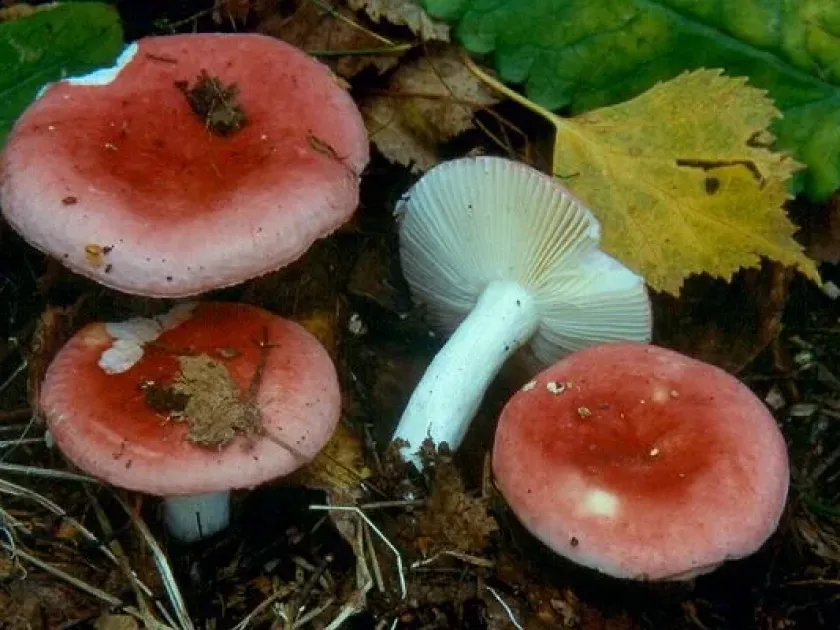
Russula luteotacta is a member of the Russulaceae family, characterized by a bright red or orange cap that typically ranges from 3 to 8 centimeters in diameter.
The most prominent macroscopic feature of this fungus is its rapid reaction to injury: the flesh and gills turn an intense yellow color when bruised or cut.
The gills are white or cream-colored, usually adnate or decurrent. This sharp color contrast between the white gills and the yellowing reaction is a key identification tool for mycologists.
The stipe is firm, white, and cylindrical, though it may develop yellow spots as the fungus ages or if it is subjected to mechanical pressure.
It is important to note that these visual color changes are a natural biochemical property of the fungus and are entirely unrelated to necrosis or chlorosis caused by plant pathogens.
Pathogen
It must be clearly stated that Russula luteotacta is not a plant pathogen. It does not cause diseases in agricultural crops, cereals, or horticultural plants.
This fungus is an ectomycorrhizal species, forming symbiotic relationships with the roots of forest trees. It plays a vital role in forest health by facilitating nutrient exchange.
It lacks the enzymatic machinery required to infect living plant tissue. Consequently, it cannot cause diseases such as wilts, blights, or rots in economic crops.
Any confusion regarding its status as a "disease" likely stems from the descriptive name "yellowing," which observers may misinterpret as a symptom of a diseased plant leaf.
Scientific consensus classifies this species strictly as a forest fungus, posing zero risk to the agricultural or horticultural sectors.
Conditions for development
This fungus thrives in moist, shaded environments, primarily within broadleaf forests where it can form mycorrhizal associations with trees like oak, beech, or hornbeam.
Its development is highly dependent on a stable forest floor and specific humidity levels. It typically appears during the warmer months, specifically from mid-summer through early autumn.
Unlike invasive plant pathogens, this species does not spread via infected crop debris or agricultural machinery. It relies on spore dispersal by wind within its natural woodland habitat.
The fungus is sensitive to soil disturbance and habitat fragmentation, which is why it is rarely found in intensively cultivated fields or commercial farmlands.
Optimal growth requires consistent soil moisture and an intact mycorrhizal network, conditions that are fundamentally different from those found in crop production systems.
Why it matters
Russula luteotacta causes no economic damage to agricultural production. It does not compete with crops for resources and does not produce toxins harmful to plants.
There are no recorded instances of yield loss or quality degradation associated with this species. It is effectively invisible to the agronomist as a potential threat.
Farmers do not need to implement any monitoring protocols for this fungus. It is a beneficial component of forest ecology and does not require mitigation efforts.
Furthermore, it does not act as a vector for other pathogens. It lives out its lifecycle in the soil and leaf litter without interacting with agricultural plant hosts.
Given its ecological role, it is considered a harmless bystander in the landscape, having no negative impact on the commercial viability of plant harvests.
Protection
No protection or control measures are necessary, as Russula luteotacta is not a plant pest or a pathogen. It does not require fungicide applications.
If encountered near a field edge, the best approach is to ignore it. Attempting to eradicate forest fungi is unnecessary and could harm the soil's natural microbial balance.
For agronomists, the focus should remain on verified phytopathological threats like rusts or powdery mildews rather than on non-pathogenic forest species.
If you suspect a plant disease is present, please ensure that you perform a laboratory analysis, as it is highly unlikely that this species is the cause of any observed symptoms.
Maintaining a healthy forest buffer around agricultural land is a good practice, and the presence of such fungi is merely an indicator of an intact, healthy ecosystem.
Discussion
No discussions yet — be the first.