
Russula alutacea
Russula alutacea
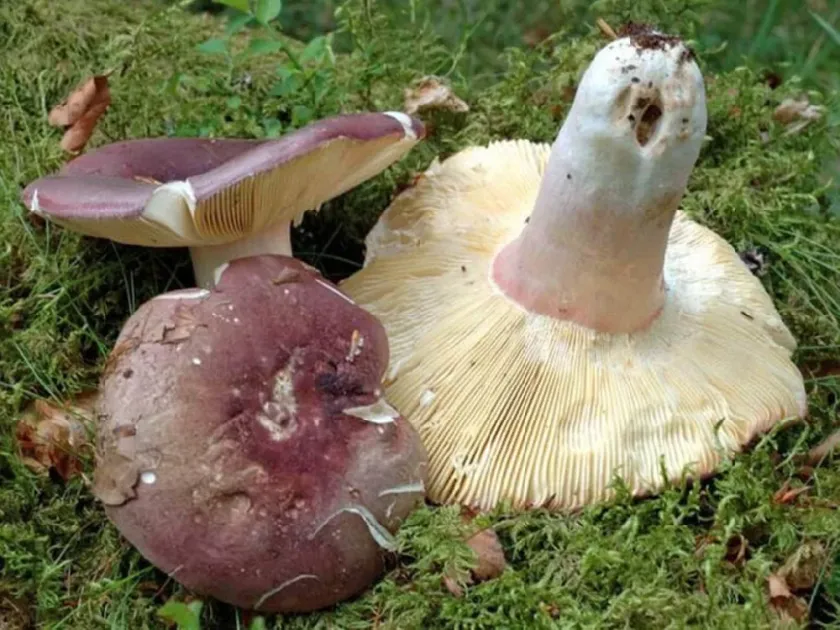
Description
Pathogen
Russula alutacea, commonly known as the leather brittlegill, is not a plant pathogen and does not cause any diseases in crops or agricultural plants.
This fungus is a member of the Russulaceae family and functions primarily as a mycorrhizal partner to various deciduous trees, including oaks and beeches.
It does not produce toxins, infect plant roots, or cause decay in agricultural systems, distinguishing it from harmful pathogens.
The fungus plays a beneficial role in forest ecosystems by facilitating nutrient exchange between the soil and tree root systems through mycorrhizal symbiosis.
It is classified as a decomposer and a symbiotic organism rather than a disease-causing agent, posing no threat to gardening or industrial farming.
Conditions for development
Russula alutacea typically develops in moist forest habitats, favoring environments where it can form symbiotic relationships with host trees.
The optimal development of the fruiting bodies occurs from late summer through autumn when conditions remain humid and cool.
Fungal growth is heavily dependent on soil moisture levels and the presence of organic matter found in leaf litter within wooded areas.
Moderate temperatures, generally ranging from 15 to 22 degrees Celsius, are ideal for the rapid emergence of the mushrooms from the soil.
Stable forest microclimates provide the necessary conditions for the mycelium to maintain its structure and continue its biological cycle year after year.
Discussion
No discussions yet — be the first.