
Green Russula
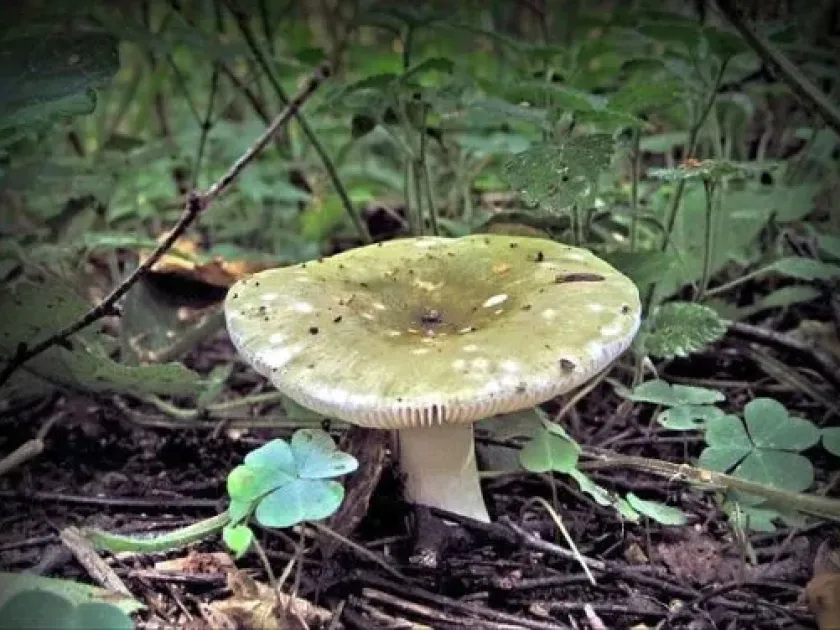
Russula aeruginea
Description
Pathogen
The Green Russula (Russula aeruginea) is a basidiomycete fungus commonly found in birch-dominated woodlands. It is imperative to note that this fungus is absolutely not a plant disease or a pathogen.
This species is a mycorrhizal fungus, meaning it lives in a symbiotic relationship with the roots of certain trees. It provides the tree with minerals and water, while receiving carbohydrates in return.
Unlike parasitic fungi that cause plant diseases, Russula aeruginea does not invade plant cells, damage crops, or cause decay in agricultural systems.
Agronomists classify this mushroom as an ecologically beneficial organism that supports forest health. It lacks the ability to infect or negatively impact garden crops or commercial plants.
Any classification of this fungus as a plant disease is biologically incorrect and lacks scientific foundation in modern mycology and plant pathology.
Conditions for development
The development of the Green Russula is intrinsically linked to the presence of host trees, typically birches. It thrives in soils that are rich in organic matter and forest humus.
Optimal growth conditions include high humidity levels and mild temperatures ranging from 15 to 22 degrees Celsius during the late summer and autumn seasons.
Unlike pathogenic fungi that seek weakened plants, this species prefers stable, healthy forest ecosystems where it can maintain its symbiotic network without interference.
Spore dissemination occurs via air currents once the fruiting bodies have matured. These spores land in the soil, searching for compatible root systems to begin their colonization cycle.
The presence of this fungus is often an indicator of a healthy environment, rather than a symptom of an outbreak or a biological threat to surrounding vegetation.
Discussion
No discussions yet — be the first.