
Russula adusta
Russula adusta
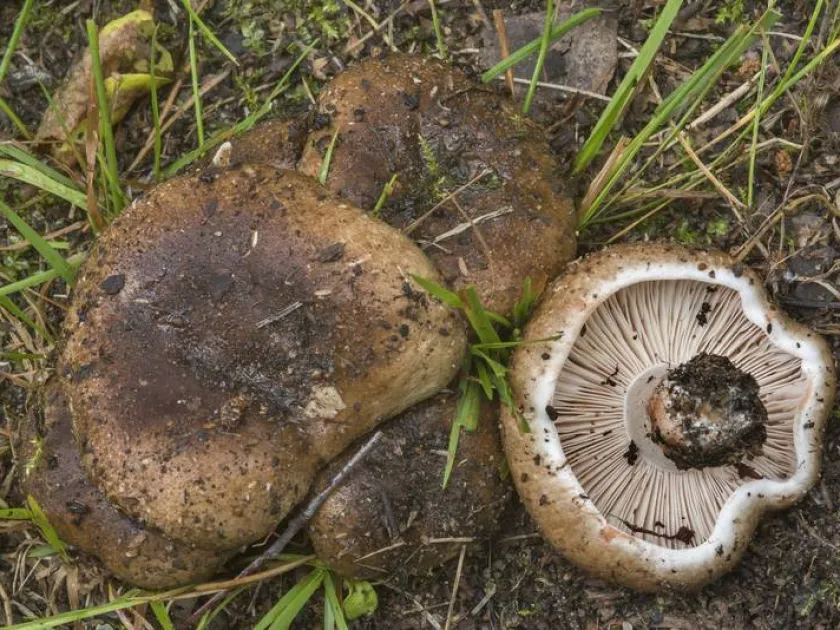
Description
Pathogen
Russula adusta, commonly known as the blackened brittlegill, is a basidiomycete fungus belonging to the Russulaceae family. Within the field of agronomy and forest pathology, this organism is not classified as a disease-causing agent or a pathogen for agricultural crops.
This fungus acts as a natural symbiont, forming mycorrhizal associations with the root systems of various woody species. These symbiotic relationships are essential for nutrient exchange, where the fungus provides minerals and water to the host tree in exchange for carbohydrates.
Biologically, Russula adusta functions as a soil inhabitant and decomposer, playing a key role in the breakdown of forest litter and supporting the vitality of trees like pine, spruce, and beech through mycorrhizal connections.
The morphology of the fungus is characterized by a firm consistency. The cap color ranges from whitish to grayish-brown, and it notably turns black when bruised or as the fruit body ages, which is the origin of its common name.
As it does not infect plant tissues to extract nutrients in a parasitic manner, it poses no threat to field crops, orchards, or horticultural plants, and thus it is not a concern for phytosanitary control.
Conditions for development
The development of Russula adusta fruit bodies is heavily dependent on specific environmental factors, primarily the presence of suitable host trees and consistent soil moisture levels. It is typically found in conifer, mixed, or deciduous forests.
Favorable conditions for the mushroom’s emergence occur during late summer and autumn, when moderate temperatures and higher humidity allow the mycelium to produce fruit bodies effectively.
Soil composition, specifically the presence of deep forest litter and an acidic to neutral pH, supports the growth of the mycelial network. The fungus thrives in stable forest ecosystems that have not been overly disturbed by human activity.
The spread of the fungus is facilitated by spores released from the gills, which can be dispersed by wind or carried by small soil fauna, ensuring its colonization of favorable forest micro-habitats.
Excessive land management practices, such as deforestation or rapid changes in groundwater levels, can disrupt the mycorrhizal balance and negatively impact the survival of the fungus in a given area.
Why it matters
Russula adusta is not considered harmful to agriculture or forestry. It does not cause root rot, necrosis, or systemic plant diseases that would lead to crop loss or significant economic damage.
In fact, the mycorrhizal relationship it forms is beneficial to forest health. By enhancing nutrient absorption efficiency, the fungus helps host trees survive in varying soil conditions and increases their general vigor.
Any perceived "harm" is typically due to misidentification by non-specialists, who might confuse the presence of a fungus with an active infection. This can lead to the dangerous misuse of fungicides in forest areas.
The use of chemical agents to eliminate such beneficial mycorrhizal fungi can degrade soil fertility and weaken the health of forest stands by breaking the vital symbiotic links between the soil and the tree roots.
For human use, the mushroom is considered edible but of low culinary quality, meaning its economic value is negligible beyond its ecological contribution to forest soil processes.
Protection
No control measures are necessary for Russula adusta because it is a beneficial mycorrhizal component of the forest ecosystem. Protection efforts should instead focus on maintaining ecological stability.
If plant health issues are observed in an area, proper laboratory diagnostics are essential. It is critical to distinguish between mycorrhizal fungi, which are part of a healthy ecosystem, and pathogenic fungi that cause disease.
Avoid applying broad-spectrum fungicides in forest or garden areas unless a specific, diagnosed pathogenic infection is present, as such chemicals can disrupt beneficial soil biodiversity.
Management should prioritize healthy forest practices, such as the protection of soil structure and the prevention of excessive chemical runoff, to keep symbiotic processes functioning correctly.
- Confirm fungal identification through expert analysis.
- Prevent unnecessary chemical interventions in soil.
- Promote biodiversity to maintain natural plant-fungal symbioses.
Discussion
No discussions yet — be the first.