
Roussoella hysterioides
Roussoella hysterioides
Description
Symptoms
Symptoms usually manifest as dark, necrotic lesions on leaves and stems. As the disease progresses, these spots may coalesce, leading to larger blighted areas on the plant surface.
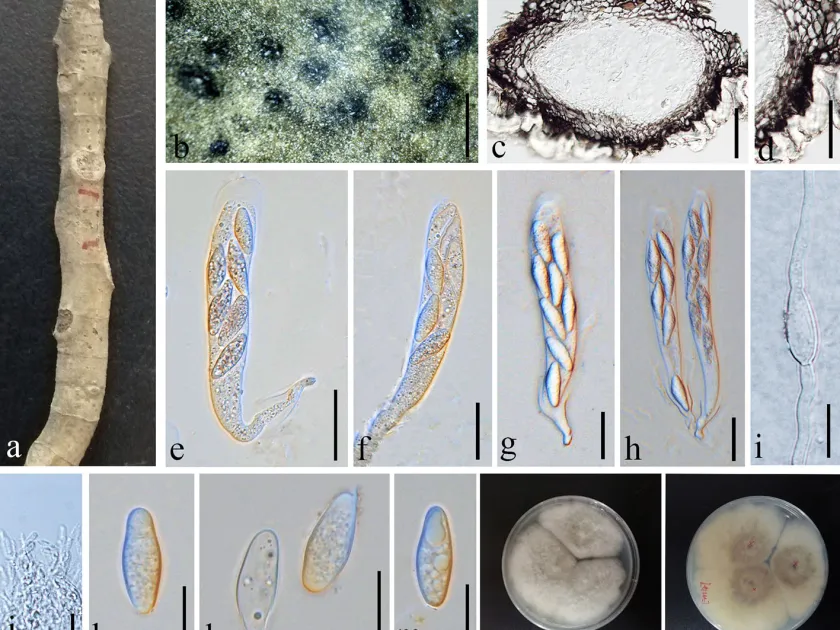
A distinctive feature of Roussoella hysterioides is the appearance of tiny, black, elongated fruiting bodies (pseudothecia) puncturing the epidermis of the infected stems or leaves.
Plants often exhibit yellowing (chlorosis) around the necrotic spots, indicating a stress response due to the fungal metabolic activity and potential toxin production.
In advanced stages of infection, premature drying of the foliage is common, which disrupts the plant's ability to photosynthesize effectively and hinders fruit or seed development.
Symptoms are often most visible on the lower or older parts of the plant, where microclimatic conditions favor the prolonged presence of moisture.
Pathogen
The pathogen Roussoella hysterioides is a fungus belonging to the Ascomycota phylum and the Roussoellaceae family. It is typically recognized as a saprotrophic organism that can become pathogenic under favorable conditions.
The fungus produces pseudothecia, which are small, elongated fruiting bodies embedded within the host's plant tissue. These structures are the defining characteristic of the genus.
Reproduction occurs through the release of ascospores. These spores are spread through wind and splashing rain, allowing the fungus to colonize healthy plants effectively during the growing season.
The fungus possesses enzymes capable of breaking down complex plant cell wall materials, enabling it to colonize stems, petioles, and other fibrous parts of the plant host.
Survival is achieved through hardy fungal structures on plant debris, making old crop residue a primary source of inoculum for subsequent seasons.
Conditions for development
The development of Roussoella hysterioides is heavily dependent on high humidity and rainfall. Periods of prolonged fog or dew are particularly conducive to spore germination.
The fungus thrives within a temperature range of +18°C to +25°C. Within this range, fungal growth and infection rates reach their maximum efficiency.
Dense crop canopies that limit airflow promote high relative humidity at the base of the plants, creating a perfect environment for the pathogen to establish and spread.
Plants that are stressed due to poor soil conditions or nutrient deficiencies show a significantly higher susceptibility to colonization by this opportunistic fungus.
Inadequate field sanitation, such as leaving crop debris on the surface, facilitates the overwintering of the fungus and guarantees a high inoculum load for the following year.
Why it matters
The primary harm is the reduction in crop yield and quality caused by the loss of photosynthetic tissue and structural damage to the plant's vascular system.
Severe infestations can lead to lodging or premature plant death, which significantly complicates harvesting processes and reduces the total marketable yield.
The disease weakens the host plant, making it more susceptible to secondary bacterial or fungal infections, which further complicates diagnosis and management.
Economic losses arise not only from reduced output but also from the increased cost of fungicide applications and the implementation of specific remedial agronomic practices.
In cases of widespread outbreaks, the overall vigor and future productivity of the crop are compromised, leading to long-term financial consequences for farmers.
Protection
Crop rotation is the most effective cultural control method. By alternating susceptible hosts with non-host crops, the life cycle of the pathogen is broken, reducing soil-borne inoculum.
Deep plowing and residue management are crucial for accelerating the decomposition of infected plant material, which reduces the sites available for fungal survival.
Fungicidal treatments, particularly those using triazoles or strobilurins, should be applied when weather forecasts predict extended periods of wet conditions.
Selecting resistant cultivars and maintaining balanced soil fertility ensures that the crop has the necessary vigor to withstand initial infection attempts.
- Monitor fields regularly for signs of necrotic spots or fruiting bodies.
- Avoid over-fertilization with nitrogen, which can lead to succulent growth susceptible to infection.
- Improve air circulation through optimal spacing of plants in the field.
Discussion
No discussions yet — be the first.