
Cercospora leaf spot of rose
Rosisphaerella rosicola
Description
Symptoms
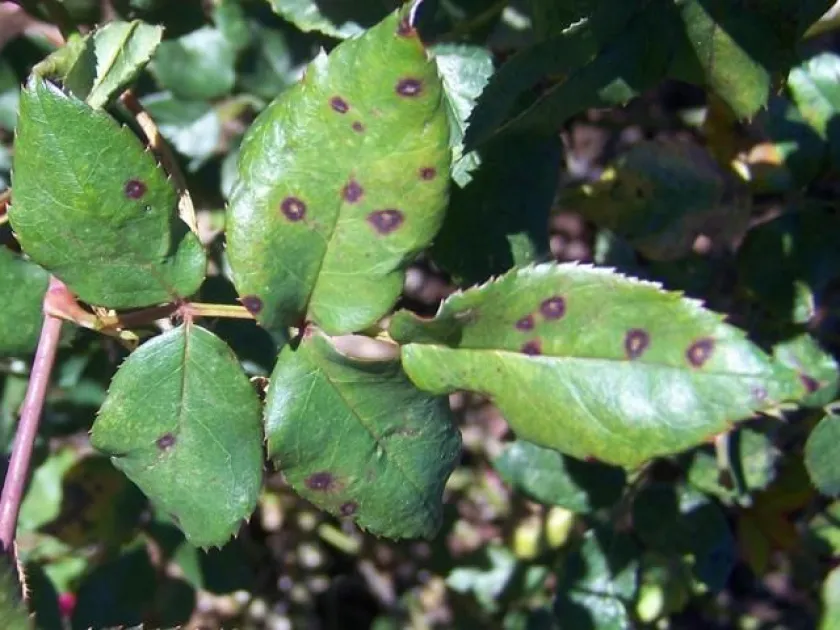
The initial symptoms appear as small, circular or irregular spots on the leaf blades, usually ranging from 1 to 5 millimeters in diameter. The spots often show a reddish-brown or dark-brown coloration.
A distinctive feature of this disease is the presence of a dark-purple or black halo surrounding the necrotic spot. As the lesion matures, the central part often turns gray or ashen.
Under conditions of high humidity, a fine, olive-gray fuzzy growth may appear on the undersides of the leaves, which consists of the fungus's conidiophores and massed conidia.
As the infection progresses, multiple spots may coalesce, covering larger areas of the leaf surface, which subsequently leads to generalized chlorosis and premature leaf drop.
- Appearance of small spots with dark margins.
- Lightening of the centers of the leaf spots.
- Fuzzy fungal growth during wet weather.
- Premature defoliation of rose bushes.
- Loss of aesthetic value in ornamental roses.
Pathogen
The causal agent of Cercospora leaf spot in roses is the fungus Cercospora rosicola. In its life cycle, the pathogen utilizes the sexual stage known as Rosisphaerella rosicola, which assists in its survival during dormant periods.
This fungus is highly host-specific, infecting only plants within the genus Rosa. The pathogen propagates via conidia, which are disseminated by wind, rain splashes, and movement of equipment or garden tools.
The mycelium enters the plant tissue through the stomata or tiny openings in the epidermis. Once inside, the fungus colonizes the leaf tissue, disrupting nutrient uptake and leading to the characteristic development of necrotic spots.
The pathogen overwinters primarily in infected fallen leaves, where it persists as mycelium and fruiting bodies until the environment becomes suitable for new infections in the spring.
Understanding the biology of Cercospora rosicola is vital, as the fungus is capable of rapid sporulation when temperature and humidity conditions align favorably for the pathogen.
Conditions for development
The development of Cercospora leaf spot is favored by warm temperatures, ideally between +20 and +28 degrees Celsius, coupled with prolonged periods of high humidity.
Rainy weather, morning mists, and heavy dews provide the necessary moisture for the conidia to germinate and penetrate the host tissue. Air stagnation in dense plantings exacerbates the problem.
Poor airflow through the plant canopy is a critical risk factor, as it keeps the leaf surfaces moist for longer periods, facilitating the infection process.
Overhead irrigation systems can act as a catalyst for disease spread by splashing contaminated water onto healthy foliage, creating an environment conducive to rapid epidemic development.
Plants that are physiologically stressed, whether by poor soil fertility, drought, or insufficient pruning, are significantly more susceptible to infection by Cercospora rosicola.
Why it matters
The primary impact of the disease is the degradation of the plant's ornamental quality. The premature loss of foliage causes the rose bushes to look sparse and unattractive during the growing season.
Defoliation reduces the plant's ability to photosynthesize, which in turn weakens the entire shrub, leading to stunted growth and poor flower production throughout the summer.
Persistent infections deplete the plant's carbohydrate reserves in the root system, which significantly lowers its winter hardiness and increases the likelihood of mortality during harsh winters.
Chronic infestation weakens the rose's natural defenses, making it more prone to secondary attacks by other pathogens and insect pests, complicating the management of the plant.
In professional nurseries, Cercospora can lead to significant economic losses, as infected stock may be deemed unfit for sale due to poor health and appearance.
Protection
Sanitation is the cornerstone of management. Removing and disposing of all fallen leaves is essential, as they serve as the primary reservoir for the fungus to survive the winter.
Proper pruning techniques are crucial to improve airflow and increase light penetration within the shrub, which helps keep the foliage dry and inhibits fungal development.
Chemical control involving fungicides, particularly those containing copper or systemic active ingredients like triazoles or strobilurins, is effective if applied early upon the first sign of symptoms.
Balanced fertilization, especially focusing on adequate potassium and phosphorus, strengthens plant cell walls and enhances the rose's overall resistance to fungal infection.
Implementing proper spacing between plants and avoiding overhead watering where possible will drastically reduce the humidity levels that favor the spread of the pathogen.
Discussion
No discussions yet — be the first.