
Rhytisma umbonatum
Rhytisma umbonatum
Description
Symptoms
The infection initially appears as small, chlorotic spots on the leaf surface, often mistaken for early autumn discoloration or nutrient deficiencies.
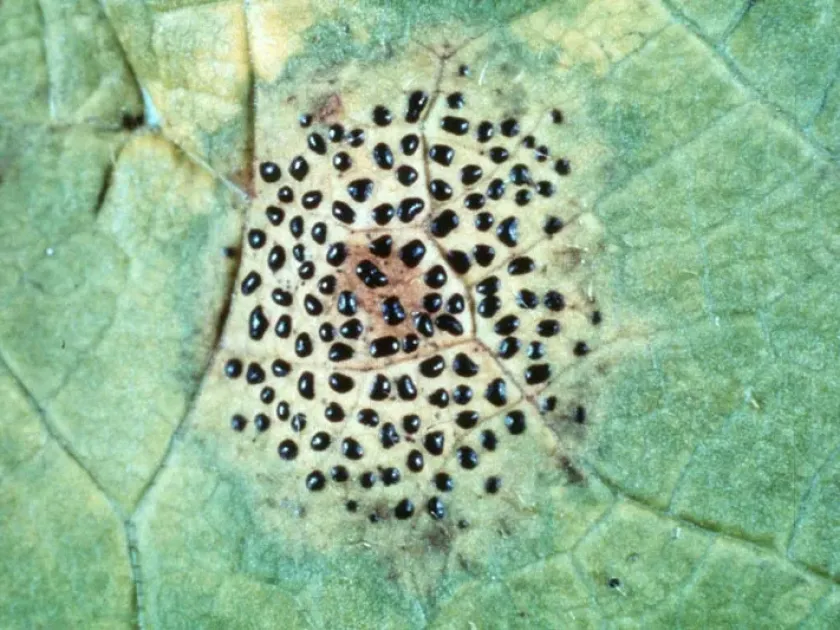
As the disease progresses, these spots develop into raised, dark, and glossy black stromata, which often feature a central umbo or bump, characteristic of this species.
These black spots are firm and well-defined, contrasting significantly with the surrounding green or yellowish leaf tissue.
In severe cases, the affected leaves may show signs of premature senescence, wilting, or yellowing long before the typical dormant season.
If the infection intensity is high, the spots can coalesce, leading to significant necrotic areas that eventually destroy the photosynthetic capacity of the leaf blade.
Pathogen
The causal agent of this disease is the ascomycete fungus Rhytisma umbonatum, which typically infects the leaves of various host plants.
The fungus maintains its presence in the environment by overwintering on fallen foliage, where it develops its characteristic fruiting structures, known as apothecia.
During the spring, when environmental conditions become favorable, these structures release spores that are disseminated by wind and splashing raindrops onto new growth.
The life cycle of Rhytisma umbonatum is closely integrated with the phenology of its host, ensuring that the pathogen colonizes leaves just as they become susceptible.
As a parasite, the fungus utilizes the host's cellular resources to expand its mycelial network, which later manifests as the distinct black spots observed on the foliage.
Conditions for development
High humidity and consistent moisture are the most critical factors driving the spread and germination of Rhytisma umbonatum spores.
Dense canopies or areas with poor air circulation create a microclimate that remains damp for long periods, allowing the fungus to thrive and propagate effectively.
Rainy spring and early summer weather patterns are known to trigger the release of spores from overwintered leaf litter.
The failure to remove leaf debris from the previous growing season is the primary reason for persistent annual infections in specific garden or forest areas.
Optimal growth temperatures for the fungus typically fall within the moderate range, coinciding with the active vegetative growth phase of host plants.
Why it matters
The primary impact of the disease is the premature loss of foliage, which deprives the plant of its vital photosynthetic machinery during the peak growing season.
Repeated annual infections can lead to a significant decline in the overall vigor and growth rate of the affected tree or shrub.
The weakened state of the plant makes it more susceptible to environmental stresses, such as drought or severe winter conditions, as well as secondary pests.
Aesthetically, the presence of these fungal spots can severely degrade the value of ornamental plantings in landscaping and urban environments.
In mature plants, chronic defoliation may lead to branch dieback and a thinning canopy, ultimately reducing the plant's structural integrity and longevity.
Protection
The most effective management strategy involves rigorous sanitation, specifically the removal and destruction of all fallen leaves during autumn to eliminate inoculum sources.
Fungicidal applications applied during the early bud-break stage can protect emerging foliage from initial fungal colonization.
Improving the orchard or garden environment through proper pruning helps increase sunlight penetration and airflow, creating a less favorable habitat for the fungus.
- Apply copper-based fungicides as a preventative measure.
- Maintain soil health with balanced fertilization to boost host plant resistance.
- Ensure adequate spacing between plants to prevent humidity buildup.
Regular monitoring during the early season is essential to identify symptoms quickly and prevent the epidemic spread of the disease throughout the plant.
Discussion
No discussions yet — be the first.