
Rhynchosphaeria leaf spot
Rhynchosphaeria
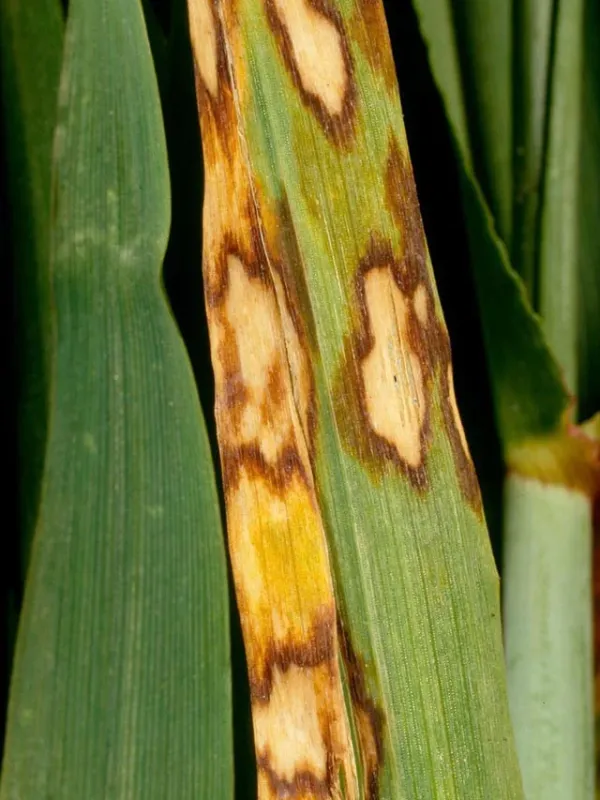
Description
Symptoms
Symptoms typically appear as distinct spots on leaves. Initially, these spots are small and water-soaked, but as the infection progresses, they expand and develop a brown or tan color with a clearly defined dark border.
As the tissue dies, the centers of the spots may become bleached or grey. In humid conditions, sporulation may occur within these necrotic lesions, appearing as a subtle fungal growth that can be observed with close inspection.
Pathogen
The disease is caused by the fungus Rhynchosphaeria, a type of ascomycete. This pathogen primarily attacks the leaves and stems of host plants, causing localized necrosis by secreting enzymes that break down plant cell walls.
The fungus survives the winter on crop debris in the form of mycelium or fruiting bodies. During the spring, spores are released and disseminated by wind or rain splash, landing on the foliage of susceptible host plants to initiate the new infection cycle.
Conditions for development
Rhynchosphaeria thrives in environments with cool to moderate temperatures, typically ranging from 15 to 22 degrees Celsius. High relative humidity, frequent rain showers, and heavy dews are critical factors that facilitate spore germination and infection.
Fields with dense canopy cover often maintain high moisture levels, which act as a catalyst for disease development. Improper field management, such as the retention of infected crop residues on the soil surface, significantly increases the pressure of the pathogen.
Why it matters
The primary damage caused by this disease is the reduction of the photosynthetic leaf area. This stress leads to reduced plant vigor, stunted growth, and impaired grain filling, which directly affects the overall crop yield.
In cases of severe infestation, the disease can cause premature leaf senescence and death. This not only lowers total grain weight but also negatively impacts the commercial quality of the harvest, making disease management essential.
Protection
Effective management requires an integrated strategy focused on both prevention and containment. Reducing the primary inoculum load is the most critical component of a successful control program.
- Planting resistant or tolerant crop varieties.
- Practicing long-term crop rotation to break the disease cycle.
- Incorporating crop residues into the soil through tillage.
- Applying foliar fungicides when environmental conditions favor disease outbreaks.
- Maintaining optimal planting densities to ensure adequate air circulation.
Discussion
No discussions yet — be the first.