
Tulip Rhizoctonia
Rhizoctonia tuliparum
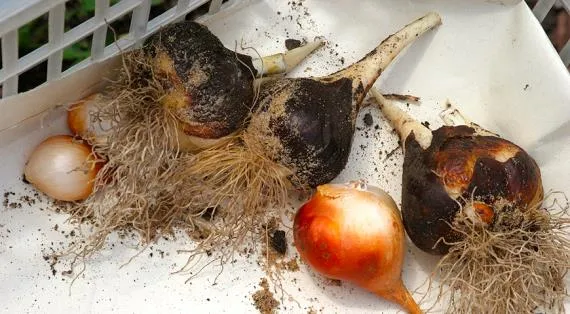
Description
Symptoms
Symptoms often emerge during early spring, characterized by a failure of bulbs to sprout or the appearance of stunted, distorted, and chlorotic leaves.
Visible signs on the bulbs include the presence of a white or brownish mycelial mat covering the outer scales, eventually leading to internal tissue breakdown.
The formation of hard, dark brown or black sclerotia on the surface of the bulb is the most diagnostic feature of this fungal infection.
As the rot progresses, the inner scales turn soft and spongy, often emitting a distinct musty odor as the biological tissues decompose rapidly.
- Lack of germination or poor emergence.
- White mycelial threads on the bulb surface.
- Presence of hard, dark sclerotia.
- Soft, decaying basal plate.
- Severe yellowing and wilting of emerging leaves.
Pathogen
The disease is caused by the fungus Rhizoctonia tuliparum, a soil-borne pathogen known for its high resilience in temperate climates. The fungus survives in the soil by forming sclerotia, which can remain dormant for several years.
This pathogen specifically attacks bulbs and developing shoots, often infiltrating the basal plate of the tulip during the colder months of early spring.
The life cycle of the fungus is closely linked to its ability to colonize host tissues effectively under conditions of high soil moisture and limited aeration.
In addition to tulips, the pathogen can impact other bulbous plants, making it a persistent challenge for gardeners who maintain diverse ornamental collections.
Transmission occurs primarily through contaminated soil, infected nursery stock, and farming tools that have been in contact with infested garden areas.
Conditions for development
Rhizoctonia development is highly favored by cool, damp soil conditions, especially during the transition from late winter to early spring.
Heavy clay soils that suffer from poor drainage provide the ideal, low-oxygen environment for the pathogen to thrive and attack dormant bulbs.
Planting depth also plays a role; bulbs planted too deeply in compacted soil are more susceptible to infection due to the reduced ability to sprout quickly.
Excessive organic matter or uncomposted residues in the planting bed can provide a temporary energy source for the fungus, accelerating its growth.
Temperature is a critical factor, with the pathogen remaining most active within a range of 5 to 15 degrees Celsius, matching the early growth phase of tulips.
Why it matters
Tulip Rhizoctonia is considered a significant threat because it can lead to complete loss of the entire bed within a single growing cycle.
Because the fungus is soil-borne and persistent, it makes the specific site unsuitable for further bulb cultivation for many consecutive years.
The economic impact on commercial bulb producers is substantial, as infected batches must be discarded entirely to prevent further contamination.
The pathogen's ability to remain dormant as sclerotia makes it nearly impossible to eradicate through simple manual weeding or standard maintenance.
Reduced aesthetic value and total crop failure pose significant challenges for landscape planning and professional flower production.
Protection
The cornerstone of management is strict crop rotation, ensuring that tulips are not returned to the same soil for at least four to five years.
Prior to planting, all bulbs must be carefully inspected, and any specimens showing signs of discoloration or surface fungus should be immediately destroyed.
Applying preventative fungicidal treatments or bulb dips is recommended, specifically those known to be effective against Rhizoctonia species.
Soil management, including the addition of sand or organic conditioners to improve drainage, is essential to minimize the window of opportunity for fungal growth.
In case of an outbreak, affected bulbs and the surrounding soil must be removed and disposed of away from the garden to prevent the spread of sclerotia.
Discussion
No discussions yet — be the first.