
Rhizocarpon
Rhizocarpon
Description
Symptoms
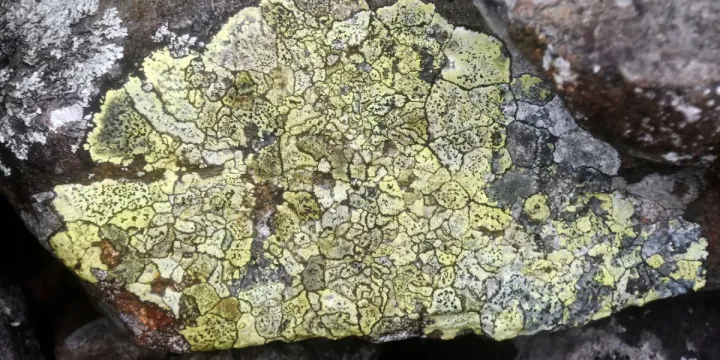
The primary symptom of Rhizocarpon is the presence of hard, crusty patches on stones and rocks. These patches are tightly integrated into the substrate surface.
The thallus often displays a yellow or greenish hue, marked with black, angular structures called apothecia. This creates a pattern that resembles a map, typical for the species Rhizocarpon geographicum.
There are no lesions, spots, or wilting on nearby vegetation. The effects of the organism are strictly confined to the mineral substrate it colonizes.
It cannot be brushed off easily; it is physically bonded to the mineral surface. This distinguishes it from fungal spores or powdery mildews that grow on leaves.
The absence of damage to surrounding plants confirms that Rhizocarpon is a harmless inhabitant of the landscape rather than a biological threat to agriculture.
Pathogen
Rhizocarpon is a genus of crustose lichens belonging to the family Rhizocarpaceae. It is not a plant pathogen and does not cause any diseases in agricultural crops.
The organism is a symbiotic association between a fungus and algae. It functions as an autotroph, producing its own energy, and does not depend on host plants for nutrients.
In the field, Rhizocarpon is exclusively found on rock surfaces or inorganic substrates. It has no mechanisms to invade, digest, or damage the tissues of higher plants.
Misidentifying this lichen as a pathogen can lead to unnecessary and ineffective chemical treatments. It is important to distinguish between parasitic fungi and epiphytic lichens.
Biological studies classify this organism as a rock-dwelling lichen. It has no role in the pathology of wheat, corn, or any other cultivated plants.
Conditions for development
Rhizocarpon requires stable, solid surfaces to grow, typically favoring rocks exposed to direct sunlight. It thrives in various climatic conditions, including alpine and cold environments.
This lichen is highly sensitive to air pollution. Its presence is often used as a bioindicator for clean air, as it cannot survive in areas with high sulfur dioxide levels.
Moisture is essential for its growth, which it absorbs directly from the atmosphere or rainfall. It does not extract water or nutrients from the soil.
The growth rate of Rhizocarpon is extremely slow, often taking decades to reach maturity. This longevity allows it to remain on the same rock surface for a long time.
It reproduces through spores or fragments of the thallus that are dispersed by wind or water to other suitable rocky surfaces.
Why it matters
Rhizocarpon poses zero threat to agricultural productivity. It does not compete with crops and does not secrete any harmful substances into the soil.
Any perceived harm is limited to the very slow weathering of rocks. It contributes to the natural breakdown of minerals into smaller particles over centuries.
It is not toxic to animals or beneficial insects. Its role in the ecosystem is that of a primary colonizer that builds up organic matter on barren rocks.
For an agronomist, Rhizocarpon is an environmental indicator rather than a pest. It does not require any form of chemical management or pest control.
Using pesticides to remove lichens is environmentally irresponsible and provides no benefit to the cultivation process or crop health.
Protection
There are no control measures for Rhizocarpon as it is not a plant pathogen. Management of this organism in an agricultural setting is entirely unnecessary.
If cosmetic removal is required, mechanical cleaning or high-pressure water washing can effectively remove the lichen from stone surfaces.
The use of fungicides is completely ineffective against lichens. Agronomists should focus resources on managing real threats like fungal blights or insect infestations.
Prevention is not necessary because the presence of Rhizocarpon on field rocks has no impact on crop yield, plant immunity, or harvesting efficiency.
Educating staff to recognize that Rhizocarpon is not a threat prevents the waste of labor and chemical inputs, promoting more sustainable farming practices.
Discussion
No discussions yet — be the first.