
Rhizina root rot
Rhizinaceae
Description
Symptoms
Initial symptoms include the yellowing and drooping of needles on young saplings, followed by severe wilting of the entire tree crown.
A thick, creamy-white layer of mycelium can often be found encircling the roots of infected conifers upon closer inspection.
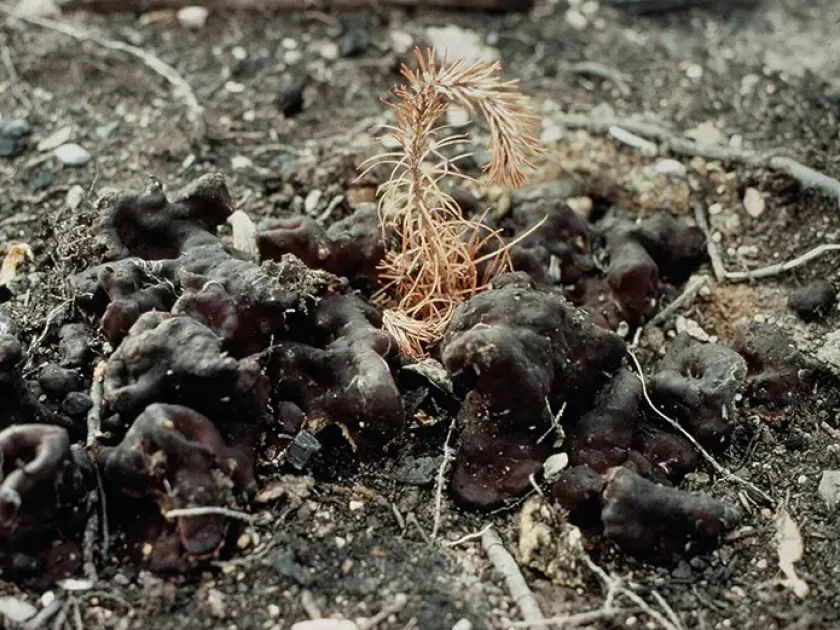
Clusters of wavy, disc-shaped fruiting bodies emerge on the soil around the base of affected trees, especially after rainfall.
The root system becomes brittle and darkened as the fungus destroys the vascular tissues, preventing nutrient and water uptake.
Groups of trees may die in circular patterns, with the damage spreading outward from the initial site of the infection.
Pathogen
The disease is caused by the fungus Rhizina undulata, a member of the Rhizinaceae family that specializes in parasitizing coniferous tree species.
The pathogen produces distinctive dark brown, wavy, or lobed fruiting bodies that often appear on the soil surface near infected trees.
It acts as a soil-borne parasite that colonizes the root systems of healthy hosts, leading to a rapid decline in tree health and eventual death.
The fungus is particularly noted for its ability to persist in the soil for several years after the death of the primary host.
Spore dispersal occurs primarily through air currents, while the expansion of the infection within a stand occurs via root-to-root contact.
Conditions for development
The primary trigger for the rapid development of this fungus is heat, particularly in soil areas where campfires have been burned.
It thrives in light, sandy soils where heat penetration is high, providing the thermal conditions required for spore germination.
Periods of high moisture, such as spring or late summer rains, significantly enhance the activity and spreading potential of the pathogen.
Fresh stumps and wood debris provide essential substrates for the fungus to establish itself before spreading to living trees.
Dense planting structures in commercial plantations create ideal pathways for the fungus to migrate between adjacent root systems.
Why it matters
This pathogen causes devastating mortality rates in young pine and spruce plantations, often wiping out entire forest patches.
The resulting gaps in the canopy disrupt ecosystem balance and reduce the long-term timber yield for forest owners.
Contaminated soil remains unfit for replanting with susceptible conifer species, necessitating costly site preparation or a change in crop species.
Infection leads to significant economic loss due to the high cost of sanitation logging and the failure of reforestation efforts.
The loss of tree cover contributes to increased soil erosion and reduced carbon sequestration capacity in the affected forest areas.
Protection
Strict regulation and prohibition of campfires in conifer forests are the most effective preventive measures against the introduction of this disease.
Thorough removal of stumps and root systems after logging operations is essential to reduce the availability of food sources for the fungus.
Physical isolation of infected sites, such as digging trenches, can prevent the underground spread of mycelium to healthy surrounding trees.
Biological control methods, including the application of antagonistic fungi, show potential for managing soil-borne inoculum levels.
Implementing mixed-species silviculture reduces the probability of rapid pathogen spread and improves overall forest resilience.
Discussion
No discussions yet — be the first.