
Resinicium
Resinicium
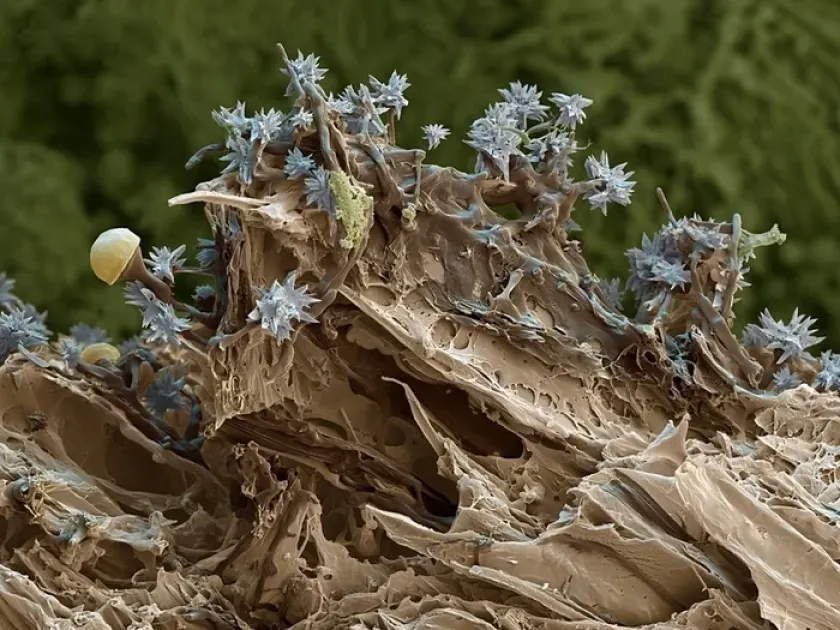
Description
Symptoms
The earliest visible sign of Resinicium infection is a structural change in the wood, which becomes soft, brittle, and fibrous as the rot advances.
The affected wood loses its natural color and develops a bleached or creamy white appearance, which is a classic symptom of white rot decay.
White or light-colored mycelial mats may appear on the surface of the bark or in cracks, particularly in damp and sheltered areas of the trunk or stump.
Trees showing signs of the disease often exhibit systemic stress, including thinning foliage, reduced annual growth, and early leaf drop.
As the infection progresses, deep fissures and decay pockets can form, significantly weakening the structural integrity of the affected wood.
Pathogen
The disease is caused by fungi belonging to the genus Resinicium, which are members of the Basidiomycota phylum. These fungi are primarily responsible for wood decay processes, specifically white rot.
Biologically, these fungi function as saprotrophs on dead wood, but they can act as opportunistic pathogens under favorable conditions, attacking living trees with weakened defenses.
The mycelium of the fungus penetrates the wood tissue, secreting specific enzymes such as laccase and peroxidases that break down complex lignin and cellulose molecules.
The fruiting bodies of the fungus are generally resupinate, appearing as thin, crust-like or spider-web patches on the bark or exposed wood, which serves as a key identifying characteristic.
Sporulation occurs primarily during periods of high humidity and moderate temperatures, facilitating the spread of the pathogen throughout the forest ecosystem.
Conditions for development
The development of Resinicium is highly dependent on high moisture levels; therefore, it thrives in damp, shaded forest environments with poor airflow.
Mechanical damage to the tree, such as wounds from pruning, storm debris, or wildlife activity, provides an essential entry point for the fungal spores.
Moderate temperatures during the growing season create an optimal climate for rapid mycelial expansion and colonization of the woody substrate.
Dense, unmanaged stands that lack proper ventilation trap moisture and spores, creating a hotbed for fungal colonization and infection spread.
The presence of large volumes of woody debris, such as stumps and fallen branches, maintains a reservoir of inoculum that threatens healthy trees in the vicinity.
Why it matters
The primary impact of Resinicium is the degradation of timber quality, which causes significant economic loss for forestry and timber industries.
Trees affected by wood rot are structurally unstable and prone to windthrow and stem breakage, creating hazards for forest workers and visitors alike.
The disease undermines the long-term productivity and health of forest stands by gradually killing trees that would otherwise reach maturity.
In nursery settings, this fungus can cause significant losses in seedling populations, impacting reforestation and forest management goals.
By weakening the host, the pathogen predisposes trees to secondary attacks by various wood-boring insects, further accelerating the decline of the forest.
Protection
Effective management begins with rigorous sanitary practices, including the regular removal of deadwood, stumps, and debris that could harbor fungal populations.
Minimizing mechanical injury to trees during thinning and logging operations is critical to preventing infection entry points from forming.
Thinning out dense stands helps improve air circulation and sunlight penetration, which discourages the growth of moisture-loving fungi.
Monitoring the forest for early signs of decay allows managers to implement targeted sanitation measures before the fungus reaches the epidemic stage.
In high-value areas or nurseries, the application of protective wound dressings or antifungal treatments can be used to prevent spore entry into damaged tissues.
Discussion
No discussions yet — be the first.