
Ramulariopsis leaf spot
Ramulariopsis glycines
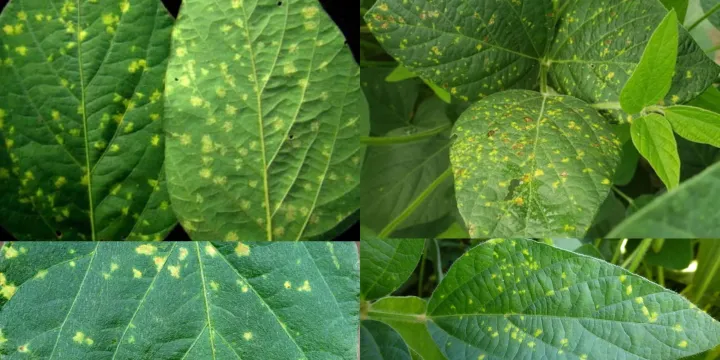
Description
Symptoms
The primary symptoms appear as angular, reddish-brown to grayish spots on the leaves, constrained by the leaf veins. A key diagnostic feature is the presence of a white or gray powdery mold on the underside of these spots, representing the fungus's sporulation.
As the disease progresses, the lesions may coalesce, leading to extensive necrosis of the leaf blade. This results in chlorosis followed by rapid drying and premature shedding of the leaves, starting from the lower canopy.
Stems and petioles can also be affected, showing elongated, dark-colored lesions or cankers. These cankers can physically restrict the transport of water and nutrients, further weakening the plant.
Under high-humidity conditions, the infection can spread to the pods. Small, dark, sunken lesions appear on the pod surface, which can interfere with normal pod development and lead to poor seed quality.
Severe infestations often result in total defoliation of the lower plant sections, significantly altering the microclimate within the canopy and affecting the final physiological maturity of the soybeans.
Pathogen
The causative agent of the disease is the fungus Ramulariopsis glycines (also known as Ramularia glycines). It is a hyphomycete that primarily infects the vegetative parts of soybean plants, causing significant foliar damage under favorable environmental conditions.
The pathogen survives in crop debris left in the field after harvest. It can also be transmitted through infected seeds, making seed quality and treatment essential steps in managing the disease spread within new production areas.
The fungus produces conidia, which serve as the primary inoculum. These spores are spread by wind, rain splashes, and movement of agricultural machinery, allowing the disease to move rapidly from initial foci across the field.
Host specificity is limited to Glycine max. In monoculture systems, the high density of host plants creates a bridge for the pathogen to thrive throughout the entire growing season.
The biology of Ramulariopsis glycines is strictly linked to high humidity. The fungus requires persistent moisture on the leaf surface to germinate and penetrate the epidermal tissues of the host plant.
Conditions for development
The development of Ramulariopsis leaf spot is heavily favored by cool to moderate temperatures and high humidity levels. An optimal range for mycelial growth is between 20°C and 25°C.
Rainy weather, heavy dew, and high atmospheric moisture are critical triggers for mass sporulation and secondary spread. Prolonged leaf wetness duration is the single most important environmental factor for infection success.
Densely planted soybean fields with poor air circulation create a conducive microclimate for the pathogen. In these pockets, humidity remains high for longer periods, allowing the fungus to colonize leaves effectively.
Improper crop rotation allows the inoculum to build up in the soil. Furthermore, fields with significant amounts of surface residue (such as those under conservation tillage) provide a stable environment for the fungus to overwinter.
Nutrient stress, particularly potassium deficiency, may increase plant susceptibility to the infection. Rapid, lush growth induced by excessive nitrogen fertilization can also make the leaves more prone to fungal penetration.
Why it matters
The primary impact of the disease is the reduction of total photosynthetic area. Loss of foliage directly limits the plant's ability to produce energy, resulting in stunted pod filling and decreased seed weight.
Premature defoliation shortens the grain-filling period, leading to lower yields and inferior seed quality. Seeds from heavily infected plants are often shriveled and possess low germination potential.
The reduction in protein and oil content in the beans lowers the overall market value of the crop. In severe cases, yield losses can range from 15% to 30%, depending on the timing of the onset of the disease.
Infected crops are more likely to suffer from secondary pathogen attacks, as necrotic lesions provide entry points for various saprophytic and opportunistic microorganisms.
The cost of intensive fungicide applications adds to the financial burden on farmers, significantly increasing the cost of production in areas where the disease is endemic.
Protection
Crop rotation remains the most effective long-term management strategy. Rotating soybeans with non-host crops like corn or wheat for at least three years helps to significantly deplete the soil inoculum levels.
The use of resistant or tolerant soybean cultivars is essential for minimizing damage. Selection of high-quality, treated seed is also vital to prevent early-season infections.
- Deep plowing or incorporation of crop debris to accelerate decomposition.
- Effective weed management to ensure optimal air circulation and remove potential hosts.
- Appropriate planting density to prevent canopy overcrowding.
Fungicide application is recommended during the flowering and pod-filling stages if disease pressure is high. Timely intervention before the canopy closes or at the first signs of symptoms is key.
Maintaining balanced soil fertility, especially adequate potassium levels, helps the plant build stronger cell walls, creating a natural barrier against fungal pathogens.
Discussion
No discussions yet — be the first.