
Ramularia leaf spot of Oxalis
Ramularia winteri
Description
Symptoms
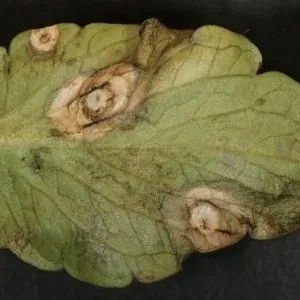
The primary symptom is the appearance of spots on the leaf blades. These spots are typically circular or angular, often constrained by leaf veins, giving them a distinct appearance.
The color of the affected areas varies from light brown to dark brown, frequently featuring a darker margin. Under high humidity, a characteristic whitish moldy growth appears on the underside of the leaves within the spot area.
As the disease progresses, the spots may coalesce, covering a significant portion of the leaf surface, which leads to premature wilting and drying of the foliage.
When petioles are affected, they often exhibit twisting, deformation, and eventual necrosis, significantly reducing the aesthetic value of the plant.
During dry weather, the spots may appear desiccated, but sporulation resumes immediately upon an increase in humidity or rainfall.
Pathogen
The causative agent of this disease is the imperfect fungus Ramularia winteri. It belongs to the class of deuteromycetes and specifically targets species of the Oxalis genus.
The fungus persists in infected plant debris, within the soil, or as mycelium inside the tissues of overwintering rhizomes. During the growing season, the infection spreads through conidia, which are dispersed by wind or water droplets.
The pathogen's mycelium penetrates the leaf epidermis, triggering necrotic processes and disrupting the physiological balance of the host plant.
The development of the fungus is tightly correlated with the physiological condition of the plant and environmental factors, which dictate the intensity of spore production.
A crucial part of the lifecycle is the ability to form conidial sporulation, which appears on the surface of infected tissues as a whitish or grayish powdery coating.
Conditions for development
Development of Ramularia leaf spot is favored by moderate temperatures (between +15 and +22 degrees Celsius) and high humidity.
Excessive watering, especially overhead irrigation, creates ideal conditions for spore germination and infection of healthy Oxalis tissues.
Crowded plantings with poor air circulation are a critical risk factor, as the moisture on leaves remains trapped within the dense canopy for longer periods.
Lack of sufficient sunlight weakens the plant's immune system, making it more susceptible to the pathogen Ramularia winteri.
Frequent fog, dew, and prolonged rainy spells during the summer often lead to significant outbreaks of the disease in garden collections.
Why it matters
The primary damage is a severe decline in the decorative quality of the Oxalis, rendering it unsuitable for landscaping or display purposes.
Leaf infection impairs photosynthesis, preventing the plant from accumulating necessary nutrients for successful overwintering.
Weakened plants are less resilient to environmental stressors, making them more prone to winter kill or secondary root rot infections.
In cases of severe infestation in collections, the entire aerial part of the plant may die back in the middle of the growing season.
Infected patches serve as constant sources of inoculum, allowing the fungus to spread spores to adjacent healthy plants throughout the garden.
Protection
The foundation of management is cultural practice: regular removal and destruction of infected plant debris, fallen leaves, and diseased shoots.
It is essential to avoid overhead irrigation, utilizing base-watering methods instead to prevent leaf surface saturation.
Maintaining spatial separation and ensuring proper spacing between plants is crucial for air circulation to prevent humidity build-up.
Upon detection of initial symptoms, applications of systemic or contact fungicides, particularly those containing copper, can be effective in suppressing the spread.
- Regular monitoring of plant health.
- Prompt removal of diseased foliage.
- Application of fungicides at the first sign of symptoms.
- Careful management of irrigation and humidity.
- Ensuring proper ventilation of garden beds.
Discussion
No discussions yet — be the first.