
Rhubarb ramularia leaf spot
Ramularia rhei
Description
Symptoms
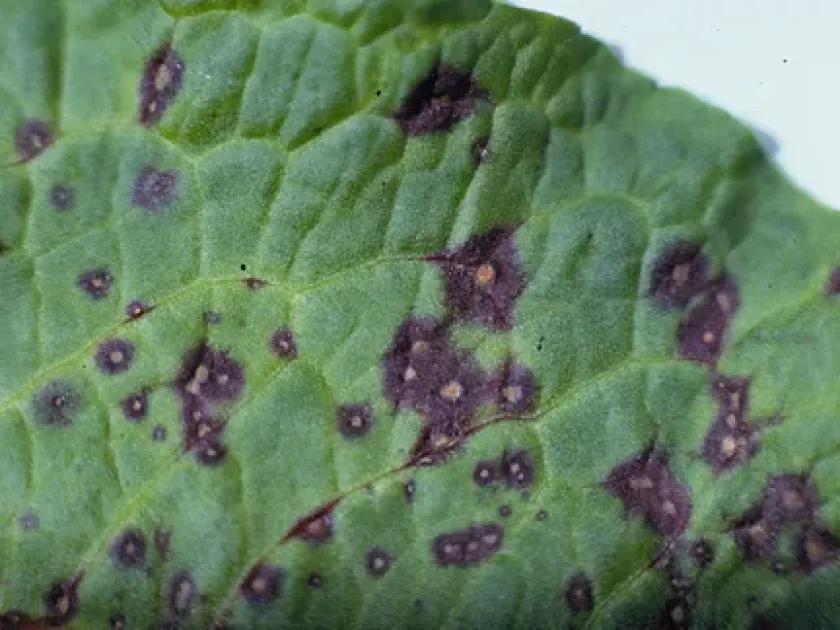
The first symptoms appear on the leaf blades as small, round, reddish-brown spots. Over time, these spots expand, often reaching 1–10 mm in diameter.
A key diagnostic feature is the light-colored center of the spot, surrounded by a distinct dark, often reddish-purple halo. This pattern helps distinguish ramularia leaf spot from other foliar diseases.
Under high humidity, a grayish-white, powdery growth appears in the center of the spots on the undersides of the leaves, representing the fungus's conidial production.
As the disease progresses, these spots can coalesce, covering large areas of the leaf blade, which eventually leads to premature wilting and tissue necrosis.
- Appearance of reddish-brown spots with light centers.
- Yellowing of tissue surrounding the infected areas.
- Lesions coalescing causing leaf necrosis.
- Grayish-white fungal sporulation under moist conditions.
Pathogen
The disease is caused by the imperfect fungus Ramularia rhei, which belongs to the class of Hyphomycetes. The pathogen is host-specific to rhubarb, overwintering on plant debris as mycelium or conidia.
During the growing season, the fungus spreads via conidia dispersed by wind, rain splashes, or insects onto healthy plant tissues. The infection can persist in the soil and on infected crowns, making eradication difficult.
The fungal mycelium develops within the leaf tissues, eventually rupturing the epidermis to release spore-producing structures. This results in the formation of distinct lesions visible on the leaf surface.
The biology of the pathogen is closely tied to environmental humidity, as conidia require free moisture to germinate effectively. The fungal lifecycle can repeat several times throughout the growing season.
The spores of Ramularia rhei are highly resilient, allowing them to survive harsh winter conditions within soil debris and plant residue, ready to infect new growth in the spring.
Conditions for development
Ramularia leaf spot development is favored by moderate temperatures ranging from 15 to 22 degrees Celsius and high relative humidity.
Prolonged rainy periods and heavy dews provide the ideal environment for spore germination and widespread infection. Excessive soil moisture can also stress the plant, making it more susceptible.
Overcrowded plantings with poor air circulation significantly increase the risk of disease spread, as leaf surfaces remain moist for extended periods.
Continuous cropping or planting rhubarb in the same location for many years leads to a heavy accumulation of inoculum in the soil and debris.
Lack of sufficient sunlight and shaded growing conditions contribute to higher humidity in the microclimate, further encouraging the proliferation of the fungus.
Why it matters
The primary damage results in a significant reduction of the leaf surface area available for photosynthesis, which decreases the plant's vigor and overall yield.
Severe infection causes premature leaf senescence and death, preventing the plant from storing sufficient energy in the crown for the following season's growth.
Market quality is severely impacted; spotted leaves make the produce aesthetically unappealing and generally unsuitable for culinary use.
Chronic infection weakens the root system over time, potentially leading to plant decline and the need for earlier-than-expected plantation renewal.
During years with favorable conditions for the disease, it can infect a majority of the foliage, significantly reducing the productivity and economic viability of the crop.
Protection
The most important control measure is the thorough removal and destruction of all plant debris in the autumn to eliminate the primary source of overwintering inoculum.
Implementing a strict crop rotation schedule, avoiding rhubarb planting on the same site for at least 4–5 years, is crucial for breaking the disease cycle.
It is essential to provide adequate spacing and ventilation in plantings to ensure that foliage dries quickly after rain or irrigation.
Early intervention by removing and disposing of infected leaves can help slow the spread of spores throughout the rhubarb patch.
If necessary, copper-based fungicides or other approved products can be applied post-harvest or early in the season to protect new, emerging foliage from primary infections.
Discussion
No discussions yet — be the first.