
Pythium snow mold
Pythium iwayamai
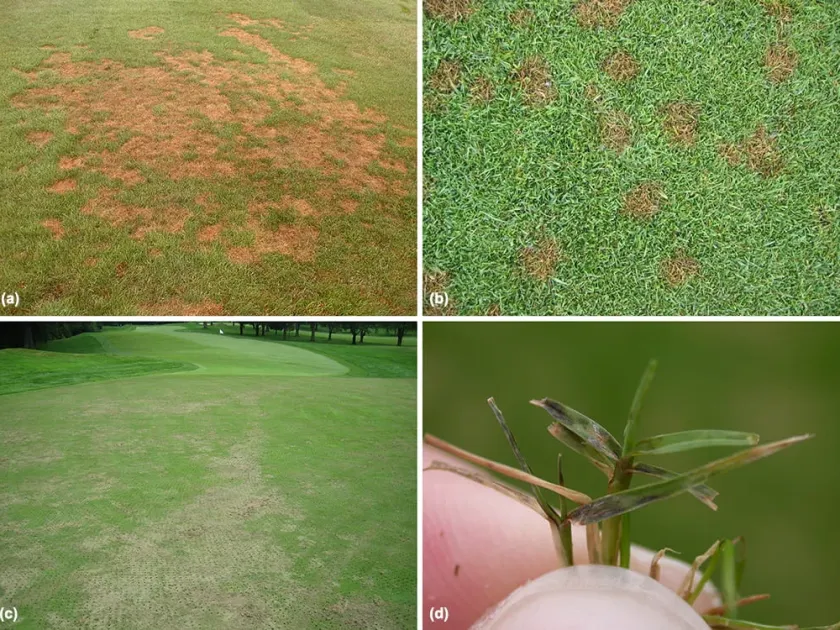
Description
Symptoms
Symptoms typically become visible immediately after the snow melts in early spring. Affected patches of plants are covered in a whitish, fluffy fungal-like mycelium that rapidly dissipates as the air dries, distinguishing it from other types of snow mold.
Infected leaf tissues become water-soaked and eventually turn brown or grey as they decay. The infection often progresses from the leaf surface down to the crown and root system, resulting in the death of individual tillers or the entire plant.
A hallmark of the disease is the appearance of irregular, thinned spots in the field where plants look rotted or «smothered.» These affected areas may exhibit a distinct odor of decay due to the destruction of root tissues.
The root system of infected winter cereals often shows significant browning and disintegration of fine root hairs. This root damage hinders the plant's ability to take up nutrients and water, leading to poor crop recovery when spring growth begins.
- Whitish mycelial growth on leaves after snowmelt.
- Water-soaked, rotting appearance of the crown area.
- Browning and decay of the root system.
- Poor spring growth and uneven stand establishment.
- Presence of dead tillers within the plant crown.
Pathogen
The causative agent of the disease is Pythium iwayamai, a fungus-like organism belonging to the oomycetes group. Unlike true fungi, this pathogen thrives in low-temperature environments, making it a severe threat to winter crops during the winter dormant season.
The pathogen survives in the soil through thick-walled resting structures known as oospores. These structures are highly resistant to environmental stress, allowing the organism to persist in agricultural fields for several years without a host.
Infection primarily occurs during the winter when snow cover provides insulation, keeping the soil temperature near freezing. Pythium iwayamai becomes active under these conditions, colonizing the plant tissue that is weakened by the lack of photosynthetic activity.
The pathogen spreads through the soil via motile zoospores that migrate toward plant roots and crowns. This water-dependent movement makes excessive soil moisture a critical factor for the widespread dispersal of the disease within a field.
Biological specialization allows this species to dominate in regions with long, wet winters and frequent freeze-thaw cycles, which are characteristic of its preferred ecological niche in northern temperate climates.
Conditions for development
The development of Pythium iwayamai is heavily dependent on prolonged snow cover on unfrozen or lightly frozen ground. This insulation creates a microclimate with temperatures between 0°C and 5°C, which is ideal for the pathogen's growth.
Excessive soil moisture in autumn and winter significantly promotes disease severity. Fields with poor drainage, low-lying areas, or compacted soils are at much higher risk for outbreaks compared to well-drained locations.
Late spring thaws or extended periods of cold, wet weather that delay the start of the growing season prolong the vulnerability of the crop. Stressed plants with depleted energy reserves are less capable of resisting the pathogen.
Agricultural practices such as No-Till farming can increase infection risks because crop residues left on the soil surface provide a substrate for oospore survival, thus increasing the inoculum pressure year after year.
Continuous cropping of winter cereals without proper rotation fosters the accumulation of the pathogen in the soil, eventually leading to severe crop damage if environmental conditions are favorable for the disease.
Why it matters
The primary economic impact of Pythium snow mold is the reduction of plant stands, often requiring spring reseeding. This adds significant costs in seed, fuel, and labor, reducing the overall profitability of the winter crop.
Even if plants survive, their physiological vigor is severely compromised due to root system damage. This results in fewer productive tillers and a lower number of grains per head, significantly reducing final harvest yields.
Infected plants are prone to secondary infections from other soil-borne diseases such as root rots, which further degrade crop health and exacerbate the loss of stand density during the critical early spring period.
Yield losses can be substantial, ranging from 20% to over 50% in severe outbreak years. The extent of damage is highly variable and depends on the duration of snow cover and the resistance level of the crop variety.
Seed production fields are particularly sensitive, as the disease can impair grain quality and germination vigor, making the resulting seed lots unsuitable for high-quality commercial use.
Protection
Crop rotation is the most effective cultural practice to reduce inoculum levels in the soil. Avoiding cereal monoculture for at least 2–3 years helps break the pathogen's life cycle and prevents mass buildup.
Seed treatment with fungicides specifically labeled for oomycetes (such as metalaxyl or other phenylamides) is essential for providing early-season protection to the germinating seed and the developing root system.
Improving field drainage to prevent water stagnation under snow cover is a proactive measure. Leveling fields and creating channels in low-lying areas can mitigate the risks associated with excessive moisture.
Selecting varieties with high winter hardiness and early-spring vigor helps plants recover faster from moderate infections and resist the stress associated with winter dormancy.
Strategic nitrogen fertilization in early spring encourages rapid root regeneration and helps the crop outgrow the effects of minor infections, provided the damage is not catastrophic to the crown.
Discussion
No discussions yet — be the first.