
Pyrenophora leaf spot
Pyrenophora polytricha
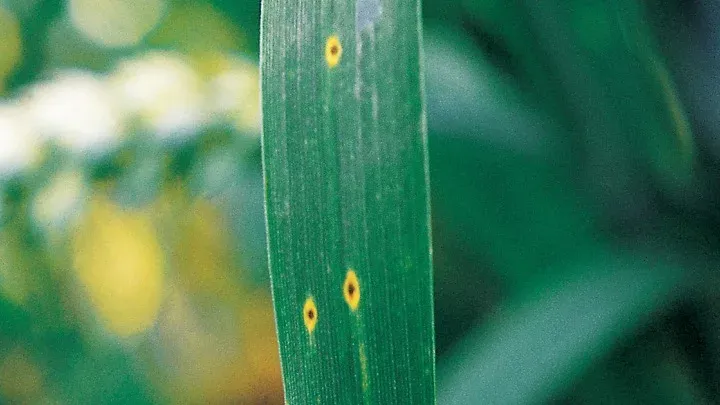
Description
Symptoms
Symptoms initially appear as small dark spots on the lower leaves. As the infection progresses, these spots expand and often develop into distinct oval or elongated lesions.
A characteristic yellow halo or chlorotic zone typically surrounds the spots. This symptom is caused by the toxins released by the fungus during the colonization of plant tissue.
Under humid conditions, the lesion centers may produce a grayish-olive velvety layer of fungal conidiophores and spores, which serves as a key diagnostic feature.
As the disease intensifies, the spots coalesce, covering large parts of the leaf surface, which eventually leads to the tissue turning brown and dying off.
- Small necrotic lesions on lower leaves
- Distinct yellow chlorotic halos around spots
- Grayish-olive fungal growth on lesions
Pathogen
The disease is caused by the fungus Pyrenophora polytricha (anamorph Drechslera dictyoides). It is a specialized fungal pathogen that affects the foliage of various cereal crops.
The life cycle of the pathogen involves both sexual and asexual stages. The fungus survives as mycelium or spores on crop debris, in the soil, and on infected seeds during the winter.
Infection begins when environmental conditions become suitable for spore dispersal. Wind and rain splash transport the conidia to the lower leaves of the developing plants.
The fungus demonstrates high environmental adaptability, allowing it to survive in diverse agro-climatic zones and reappear whenever host plants are present.
Biological studies suggest that the pathogen remains viable on straw and stubble for several years, which makes it a persistent threat in continuous cropping systems.
Conditions for development
High relative humidity, frequent rainfall, and dew are the primary drivers of disease development. These conditions are essential for the germination and penetration of the spores.
The optimum temperature for the growth of Pyrenophora polytricha is between 18°C and 25°C, providing an ideal window for rapid secondary infection cycles.
Continuous monoculture of susceptible cereal crops provides a bridge for the pathogen, leading to an increasing buildup of inoculum in the field over consecutive seasons.
Dense crop stands inhibit airflow and maintain higher humidity within the canopy, creating a perfect microclimate for the fungus to spread quickly.
Poor field hygiene and the presence of volunteer plants act as reservoirs for the fungus during the off-season, enabling early infection of new crops.
Why it matters
The primary economic impact of this disease is the reduction in grain yield caused by the destruction of the leaf area, which is vital for photosynthesis.
Infection restricts the flow of nutrients to the developing ear, resulting in shriveled, low-quality grain with poor milling characteristics and lower test weights.
Early defoliation, especially when the flag leaf is severely affected, significantly hinders the grain-filling process and reduces overall crop productivity.
The disease also weakens the plant, making it more susceptible to environmental stress and secondary infections by other opportunistic pathogens.
In severe cases, farmers can suffer yield losses ranging from 15% to 30%, especially in seasons where heavy rainfall coincides with the heading and grain-filling stages.
Protection
Crop rotation is the most effective cultural practice to manage the pathogen, as it breaks the infection cycle by depriving the fungus of its host.
Strategic tillage that ensures deep burial of crop residues accelerates decomposition and reduces the amount of primary inoculum available for the next season.
Application of systemic fungicides, particularly those containing triazoles or strobilurins, is crucial during the stem elongation and heading stages to protect yield.
Selecting and planting resistant cultivars is a cost-effective and environmentally friendly strategy to minimize the reliance on chemical control measures.
Seed treatment with professional fungicides is essential for early-season protection, ensuring that the crop starts without the pressure of seed-borne pathogens.
Discussion
No discussions yet — be the first.