
Pyrenophora leaf spot
Pyrenophora phaeocomes
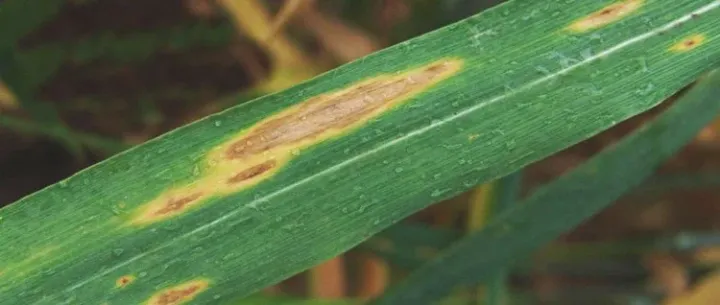
Description
Symptoms
Early symptoms appear as small, chlorotic spots on the lower leaves, which eventually evolve into distinct necrotic lesions surrounded by yellow halos.
The spots often take on an irregular or elongated shape, reflecting the growth pattern of the fungal mycelium within the leaf tissue.
Under conditions of high humidity, a greyish to olive-brown velvety layer may appear on the lesions, indicating active conidial sporulation.
As the disease progresses, necrotic areas may merge, causing extensive leaf death that reduces the overall photosynthetic capacity of the plant.
The infection typically moves upwards through the plant canopy, threatening the health of the flag leaf which is vital for grain filling.
Pathogen
The disease is caused by the fungus Pyrenophora phaeocomes, an ascomycete pathogen specifically known for infecting various grass and cereal species.
The life cycle of the pathogen begins with the development of pseudothecia on crop debris from the previous season, which act as the primary reservoir for infection.
The fungus is highly resilient, surviving harsh winter conditions in soil or plant residues, waiting for favorable spring conditions to restart its development.
Ascospores are dispersed by wind and rain splashes, leading to primary infections, while conidia produced on active lesions facilitate the secondary spread of the disease.
This pathogen exhibits a broad host range, allowing it to maintain its population even when primary crops are not present in the immediate vicinity.
Conditions for development
The development of the disease is highly dependent on extended periods of high humidity and rainfall, which provide the necessary moisture for spore germination.
Temperatures ranging from 18°C to 25°C are considered optimal for the rapid colonization of host tissues by the pathogen.
Dew and light rainfall play a crucial role in creating the surface moisture on leaves required for the fungus to successfully infect the plant host.
Dense plant stands with poor air circulation create a microclimate that remains humid, significantly accelerating the spread of the fungal infection.
Reduced tillage practices, while beneficial for soil health, can lead to the accumulation of pathogen-infected residues on the surface, increasing the risk of early-season infection.
Why it matters
The most significant impact of the disease is the destruction of leaf tissue, which drastically reduces the plant's ability to produce energy through photosynthesis.
Reduced energy production results in smaller grain size, lower test weights, and poor-quality grain, all of which directly affect the marketability of the harvest.
Severe infestations can lead to significant yield losses, potentially reducing total productivity by up to 30% in highly susceptible varieties.
Weakened plants are more susceptible to additional environmental stresses and secondary infections, further compounding the damage to the crop.
Economic losses are not only attributed to lower yields but also to the increased costs of fungicide applications required to keep the infection in check.
Protection
Effective management begins with cultural practices, such as incorporating crop debris into the soil to accelerate decomposition and reduce initial inoculum levels.
Crop rotation is a fundamental strategy, as breaking the cycle of cereal crops significantly restricts the build-up of the pathogen in the field.
Fungicide applications, particularly those containing triazoles or strobilurins, are effective tools for protecting crops during critical growth stages.
The use of resistant or tolerant cultivars is the most sustainable approach to managing the disease and minimizing the need for chemical intervention.
- Monitor fields for early signs of symptoms.
- Select resistant wheat and barley varieties.
- Ensure balanced fertilization to promote plant health.
- Implement strict weed control measures to eliminate reservoirs.
Discussion
No discussions yet — be the first.