
Pyrenophora fugax
Pyrenophora fugax
Description
Symptoms
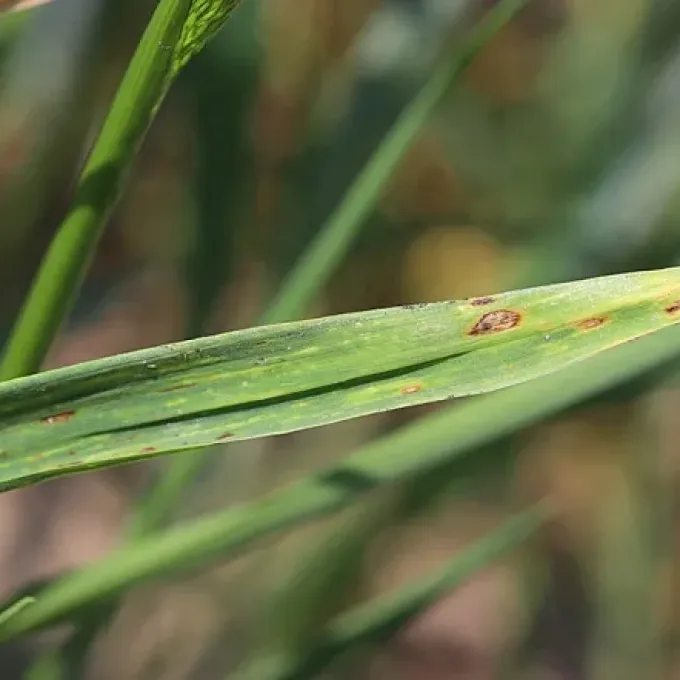
Initial symptoms manifest as small, chlorotic spots on the lower leaves, which eventually turn dark brown as the infection develops.
Characteristic necrotic lesions appear as elongated or oval spots, often accompanied by a distinct yellow halo caused by fungal toxins.
Under high humidity conditions, a subtle greyish velvety mold may appear on the lesions, indicating active sporulation of the fungus.
As the disease progresses, these individual spots coalesce, covering large parts of the leaf area and eventually causing total tissue death.
- Brown necrotic lesions on leaves.
- Yellow halos surrounding the spots.
- Premature yellowing and desiccation of leaves.
- Reduced vitality of the plant canopy.
Pathogen
The causative agent of the disease is the fungus Pyrenophora fugax (anamorph Drechslera fugax), which primarily attacks the leaves of cereal crops.
The pathogen overwinters as mycelium or conidia on infected crop residues left in the field after harvesting, serving as a primary source of inoculum.
During the growing season, the fungus produces spores that are easily disseminated by wind currents, rain splashes, or mechanical operations.
The fungus penetrates plant tissues, colonizing the intercellular spaces and secreting enzymes that lead to cell wall degradation and necrosis.
The ability of this pathogen to persist in both the soil and seeds makes it a recurring threat in intensive cereal production systems.
Conditions for development
Warm and humid weather conditions are the primary drivers for the development and spread of the pathogen in cereal fields.
Optimal temperatures for spore germination and mycelial growth generally fall within the range of +18°C to +25°C with high relative humidity.
Dense crop stands create a microclimate with reduced airflow and increased moisture retention, which significantly accelerates disease spread.
Continuous cropping of cereals increases the pathogen load in the soil, making fields more prone to severe outbreaks each season.
Frequent rainfall or persistent morning dew provides the necessary free moisture on the leaf surface for the fungus to initiate successful infection.
Why it matters
The disease significantly reduces the photosynthetic capacity of the plants by destroying the leaf tissue and decreasing the green surface area.
Reduced photosynthetic efficiency leads to inadequate grain filling, resulting in shriveled kernels and lower test weight of the harvested crop.
Plants severely affected by Pyrenophora fugax suffer from nutrient deficiencies and are less capable of coping with environmental stress factors.
Yield losses can be substantial, often ranging from 15% to 30%, depending on the crop growth stage at the time of infection and environmental conditions.
Poor quality of the harvested grain, caused by premature ripening and reduced grain size, significantly decreases its market value and utility.
Protection
Crop rotation is the most effective cultural practice, as it disrupts the life cycle of the pathogen by removing its host plants.
Proper management of plant residues through deep tillage or burial can help reduce the primary inoculum pressure for the subsequent growing season.
The application of systemic fungicides during the vegetative stage is essential to prevent the spread of the infection during favorable weather conditions.
Seed treatment with effective fungicidal products ensures early protection of seedlings and supports stronger overall crop establishment.
Monitoring the field for early symptoms and choosing resistant crop varieties are critical steps in managing the disease in an integrated pest management program.
Discussion
No discussions yet — be the first.