
Barley leaf stripe
Pyrenophora erythrospila
Description
Symptoms
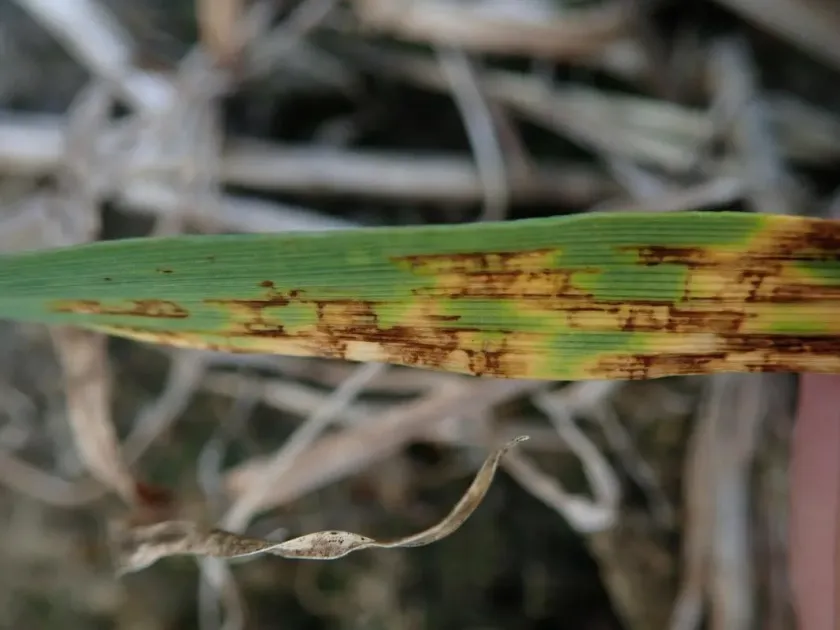
The first symptoms of barley leaf stripe caused by Pyrenophora erythrospila appear as small, reddish-brown spots on the leaves during the early vegetative growth stages.
These spots gradually expand into oval or elongated lesions, usually surrounded by a distinct chlorotic halo, which is a characteristic feature of the infection.
In high humidity conditions, the surface of the lesions often develops a velvet-like appearance due to the formation of the fungus's conidial spores.
As the disease progresses, the infected leaves begin to wither and die prematurely, which significantly reduces the effective green leaf area of the barley plants.
Severe infection on the flag leaf is particularly detrimental, as it directly restricts the plant's ability to fill the grain, leading to poor yield outcomes.
Pathogen
The causal agent of this disease is the ascomycete fungus Pyrenophora erythrospila, which specifically targets barley as its primary host.
The fungus survives the winter primarily in crop residues left in the field, where it forms sexual fruiting bodies known as pseudothecia.
During the growing season, the asexual stage (anamorph Drechslera erythrospila) produces conidia that are easily dispersed by wind and splashing rain to infect healthy tissues.
The pathogen is highly adapted to the host, capable of maintaining its population on wild grasses when commercial barley is not present in the field.
Its biological cycle is strictly dependent on moisture levels, as the infection process requires prolonged leaf wetness to allow spore germination and penetration.
Conditions for development
The disease thrives in cool and humid weather conditions, with an optimal temperature range for development typically between +15 and +20 degrees Celsius.
Frequent fog, heavy morning dews, and persistent rainy spells during the spring are the primary triggers for significant disease outbreaks in barley fields.
Dense crop stands can create a microclimate with high relative humidity, which provides an ideal environment for the rapid secondary spread of the fungal spores.
Poor crop rotation practices, such as continuous barley cultivation, lead to a high accumulation of the pathogen's inoculum in the soil and on surface debris.
Plants under physiological stress, such as those with nutrient imbalances or nitrogen over-application, are significantly more susceptible to successful pathogen colonization.
Why it matters
The primary economic harm caused by this disease is the drastic reduction in photosynthetic capacity, leading to lower grain filling and reduced overall yield.
In addition to yield loss, the quality of the harvested grain is often compromised, showing lower test weight and overall grain size, which lowers market value.
In extreme cases of early infection, yield losses can range from 15 to 30 percent, depending on the cultivar susceptibility and the favorability of weather conditions.
The premature senescence of the foliage forced by the fungus shortens the grain filling duration, preventing the plant from reaching its full genetic potential.
Affected fields may also show increased vulnerability to secondary opportunistic pathogens, further complicating the plant health management in the field.
Protection
Effective management begins with robust crop rotation, ensuring that barley is not planted in the same field for at least two to three consecutive years.
Thorough mechanical incorporation of crop residues through deep plowing helps accelerate the decomposition of infected material, effectively reducing the inoculum load.
Selecting and planting resistant barley cultivars is the most sustainable strategy for minimizing the risk of severe disease outbreaks and reducing dependency on chemicals.
Fungicide application during the early onset of symptoms using triazoles or strobilurins can provide effective control and protect the crop during critical growth phases.
Balanced fertilization, particularly ensuring adequate potassium levels, plays a vital role in strengthening plant immunity and improving resistance to fungal attacks.
Discussion
No discussions yet — be the first.