
Pyrenophora leaf spot of barley
Pyrenophora dematioidea
Description
Symptoms
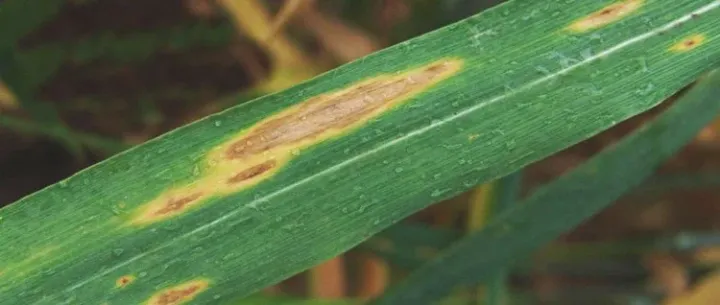
Initial symptoms are characterized by small, dark brown spots on the leaves, which often develop a distinct yellow chlorotic halo around the necrotic tissue.
As the disease progresses, these spots expand into elongated, oval, or irregular blotches that can merge and cover large portions of the leaf surface.
In humid environments, a dark olive-grey moldy growth appears on the necrotic spots, representing the mass production of conidiophores and conidia.
Severe infection results in the premature senescence and rolling of lower leaves, effectively reducing the green leaf area available for photosynthesis.
In advanced stages, the infection may spread to the leaf sheaths and occasionally the glumes, causing grain shriveling and reducing the overall quality of the harvest.
Pathogen
The causative agent of the disease is the fungus Pyrenophora dematioidea, which is known to survive as mycelium or pseudothecia on infected crop debris, straw, and within the soil.
This pathogen specifically targets cereals, with barley being one of the most susceptible hosts, leading to significant yield losses in favorable conditions.
The fungus produces conidia, which serve as primary and secondary inoculum, spreading across fields through wind dispersal and rain splashes during the growing season.
The biological cycle is well-adapted to survive dormant periods, making Pyrenophora dematioidea a persistent threat that can remain viable for several seasons in undisturbed soil.
Pathogen populations can exhibit variability in virulence, which complicates the effectiveness of resistant crop varieties over large geographical areas.
Conditions for development
The development of the disease is strictly dependent on high humidity and rainfall, which are necessary for spore germination and successful fungal penetration into the host.
Optimal temperatures for the fungus range from 18°C to 25°C, creating a high-risk environment during late spring and early summer months.
No-till or reduced tillage practices often exacerbate the disease by keeping infected crop residues on the soil surface, providing a ready source of inoculum.
Dense crop stands promote higher canopy humidity and reduced airflow, factors that facilitate the rapid spread of the pathogen between individual barley plants.
Prolonged wet periods, such as heavy morning dew or frequent showers, are the primary triggers for secondary cycles of infection within a barley crop.
Why it matters
The disease causes a reduction in total leaf area, which directly correlates to decreased grain filling, lower test weight, and reduced overall grain yield.
Economic damage also stems from the deterioration of grain quality, making it unsuitable for specific industrial uses, such as the malting industry.
Infected barley plants exhibit reduced vigor, which increases susceptibility to lodging and other biotic stresses like insect infestations or secondary pathogens.
The cumulative effect of yield loss and the high costs associated with fungicide applications makes this disease a significant economic challenge for barley growers.
Effective control is essential to maintain profitability, as untreated fields can experience rapid defoliation and severe harvest reduction under favorable conditions.
Protection
Integrated pest management, including crop rotation and deep burial of infected stubble, remains the first line of defense to reduce the initial pathogen load.
Seed treatment with systemic fungicides is crucial to protect seedlings during the early stages of development and prevent seed-borne infection.
Foliar application of fungicides, such as triazoles or strobilurins, should be timed based on field scouting and local weather forecasts to ensure optimal protection.
Utilizing resistant or tolerant barley cultivars helps to minimize the reliance on chemical inputs and provides a more sustainable long-term solution.
- Implementing proper sanitation to remove weed hosts from field borders.
- Optimizing seeding density to ensure better light and air penetration.
- Monitoring weather trends to trigger proactive fungicide applications.
Discussion
No discussions yet — be the first.