
Pycnoporellus
Pycnoporellus
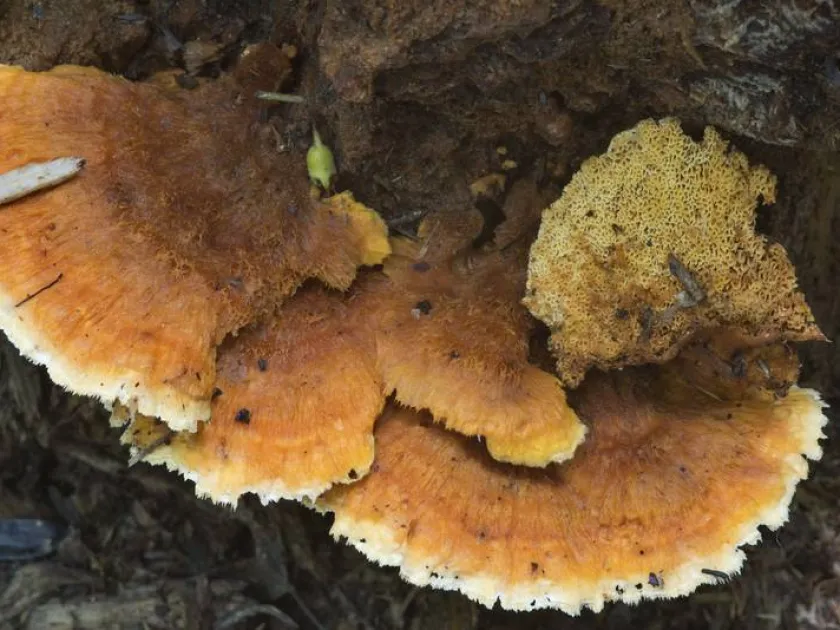
Description
Symptoms
The most prominent sign of infestation is the transition of wood color to a deep brown or reddish-brown hue. Infected wood loses its load-bearing capacity and tends to crack into brittle cubes.
Vibrant orange, velvety, or smooth-surfaced fruiting bodies appearing on tree trunks are clear indicators of the pathogen. The underside of these brackets features a tubular structure characteristic of this fungus.
As the rot progresses, deep longitudinal fissures appear on the trunk, signaling significant internal decay. This structural weakness often leads to tree failure, particularly during windstorms or heavy snowfall.
A distinct, earthy smell of wood decay often accompanies areas of active fungal growth within the stem. This sensory cue is frequently used by field pathologists to detect internal infection early.
Externally, the tree might appear normal until the advanced stages of decay. However, the presence of these fungi on standing trees is a definitive sign of serious underlying structural degradation.
Pathogen
Pycnoporellus (specifically Pycnoporellus fulgens) is a basidiomycete fungus known for causing destructive brown rot in wood. It belongs to the Polyporaceae family and is highly efficient at degrading cellulose and hemicellulose.
While often acting as a saprotroph in nature, it can behave as a parasite on weakened or overmature conifer species. The fungal mycelium penetrates deep into the heartwood, fundamentally altering the wood's structural integrity.
The life cycle involves the formation of annual, vibrant orange or reddish fruiting bodies. These structures typically emerge from bark cracks or wounds, serving as the primary source of spore production.
Reproduction is facilitated by basidiospores that are dispersed by wind across forested areas. Once these spores land on exposed wood or fresh wounds, they germinate rapidly, initiating the colonization process.
The fungus is primarily associated with coniferous hosts like spruce, pine, and fir. It plays a significant ecological role in nutrient cycling, but its presence is generally viewed negatively in commercial forestry.
Conditions for development
Pycnoporellus thrives in high-humidity environments and moderate temperatures, frequently found in boreal and temperate forest regions. It prefers shaded areas where moisture is consistently maintained.
The primary prerequisite for infection is the presence of physical wounds. Frost cracks, animal damage, or logging injuries provide the entry points necessary for fungal spores to establish colonies.
Overmature or stressed stands are significantly more susceptible to colonization. As trees age, their natural chemical defenses weaken, making them easier targets for wood-decaying fungi.
Forest stands with high tree density often maintain a microclimate with stagnant air and elevated humidity, which is highly conducive to the development of fungal pathogens.
An abundance of coarse woody debris, such as fallen logs and stumps, provides a massive reservoir of inoculum. This keeps the spore pressure high, increasing the likelihood of neighboring trees becoming infected.
Why it matters
The primary economic harm caused by Pycnoporellus is the severe reduction of timber quality. Infected wood is rendered useless for construction or structural purposes due to its structural fragmentation.
The fungus contributes to premature tree death, causing significant loss of timber volume. In managed forests, this leads to unexpected gaps in the canopy and reduces overall productivity.
Infected standing trees become serious safety hazards. Because the internal structure is compromised, trees can snap suddenly, posing risks to forest workers, hikers, and infrastructure.
The decay process often invites colonization by secondary pests, such as wood-boring beetles. This synergy accelerates the degradation process and complicates salvage operations.
The pathogen can persist in the environment for many years, making it difficult to eradicate once a forest area is heavily infested without resorting to significant silvicultural interventions.
Protection
Sanitation is the cornerstone of control. Regularly removing dead, dying, or infected trees helps minimize the volume of spores released into the environment, protecting healthier stands.
Implementing careful logging practices to avoid damaging the bark of residual trees is crucial. When wounds occur, they can be treated with protective coatings to deter spore germination.
Regular forest health monitoring programs are essential for early detection. Identifying infected trees while the fungus is still in the early stages of development allows for targeted removal.
Maintaining proper stand density and thinning helps improve airflow and reduce humidity levels, creating a less hospitable environment for wood-decaying fungi.
- Selective removal of infected trees.
- Cleaning up logging slash and woody debris.
- Promoting tree vigor through appropriate silvicultural practices.
- Using fungicide treatments on high-value ornamental trees.
Discussion
No discussions yet — be the first.