
Pucciniosiraceae rusts
Pucciniosiraceae
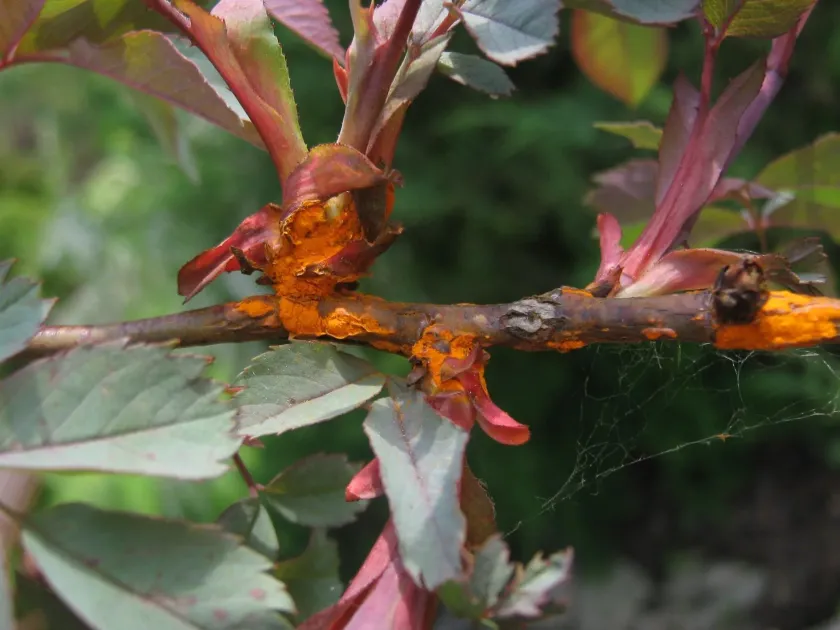
Description
Symptoms
The most recognizable symptoms of rust disease are the formation of pustules on leaves, stems, and sometimes fruit. These pustules appear as powdery deposits that are typically yellow, orange, or reddish-brown in color.
As the infection progresses, these pustules often coalesce, covering large portions of the leaf surface. The host epidermis ruptures as the spores erupt, which dramatically increases water loss and promotes premature wilting of plant parts.
Towards the end of the season, the color of the pustules may transition to a dark brown or black shade. This change indicates the development of teliospores, which are the resting stage of the fungus designed to survive harsh winters.
Infected plants exhibit a characteristic chlorotic appearance. Leaves yellow prematurely, curl, and wither, which significantly reduces the leaf area available for photosynthesis and limits overall plant vigor.
Severe infections lead to morphological deformation of plant organs, including twisted stems and stunted growth. In many cases, the reduction in size and quality of fruit or seeds makes the harvest commercially inviable.
Pathogen
The causative agents of this disease are fungi belonging to the family Pucciniosiraceae, within the order Pucciniales. These organisms are highly specialized obligate parasites, meaning they can only complete their life cycle on living host plant tissues.
The life cycle of these fungi is complex, often involving different stages of sporulation. Many species are heteroecious, requiring two distinct host plants to complete their full life cycle and genetic recombination processes.
These pathogens produce various types of spores, including aeciospores, urediniospores, and teliospores. Each spore type serves a specific purpose in the fungus's strategy for colonization, dispersal, and survival during unfavorable environmental conditions.
The fungal mycelium penetrates the host tissues, growing intercellularly and extracting vital nutrients through specialized structures called haustoria. This invasive growth drains the host of energy, disrupting its normal metabolic processes.
Asexual reproduction is the primary method of spread, enabling the rapid colonization of large fields when conditions are optimal. This contributes to the quick buildup of inoculum during the growing season.
Conditions for development
The development of Pucciniosiraceae rusts is heavily dependent on moisture and temperature. Free moisture, such as dew or rain on the leaf surface, is an absolute requirement for spore germination and successful infection.
Optimal temperatures for most of these pathogens range between 15 and 22 degrees Celsius. Warm, humid weather during the spring and early summer provides the ideal environment for rapid disease outbreaks.
Spore dispersal occurs primarily through wind, which can carry the inoculum over vast distances. This allows the disease to spread across regions even without direct physical contact between infected and healthy plants.
Dense crop stands and poor field ventilation create a microclimate with persistently high relative humidity. These stagnant conditions accelerate the infection process and make the plant canopy highly susceptible to fungal growth.
Failure to implement crop rotation and the presence of alternative hosts (such as weeds or nearby woody plants) allow the fungus to persist in the field and initiate new infections early in the season.
Why it matters
The damage caused by rusts manifests as a significant reduction in both crop yield and quality. By diverting nutrients to the fungal infection site, the pathogen stunts the development of grains, fruits, and overall plant mass.
The loss of photosynthetic efficiency causes the formation of shriveled seeds with low viability. This negatively impacts the potential for future crops and reduces the overall market value of the harvested products.
Plants weakened by rust are significantly more susceptible to secondary infections from other pathogens. In extreme cases, severe rust infestations can lead to total crop failure, rendering the fields unfit for harvest.
The produce quality suffers as well, as infected items have shorter shelf lives and may contain mycotoxins or other contaminants. This limits their suitability for fresh consumption or industrial processing.
Economic losses include not only the direct loss of yield but also the high costs associated with chemical disease management. Farmers must invest in expensive fungicide programs to keep the pathogen population below economic damage thresholds.
Protection
The most effective strategy for managing rust is the use of resistant crop varieties. Breeding for resistance remains the cornerstone of integrated disease management because it requires the least amount of external input.
Agronomic practices, such as proper crop rotation and the removal of crop residues, help break the life cycle of the pathogen. Eliminating nearby alternative weed hosts reduces the early-season inoculum pressure.
Regular field scouting is essential to identify disease outbreaks early. When conditions are conducive to spread, the application of systemic or contact fungicides can prevent a localized infection from becoming an epidemic.
Balanced fertilization is also important; excessive nitrogen application can make plant tissues soft and more vulnerable to infection. Maintaining optimal crop health helps plants better withstand the pressure of fungal invasion.
- Use of disease-resistant plant varieties
- Proper crop rotation cycles
- Removal of infected crop debris
- Monitoring of weather for fungicide timing
- Chemical control using systemic fungicides
Discussion
No discussions yet — be the first.