
Garlic rust
Puccinia verruca
Description
Symptoms
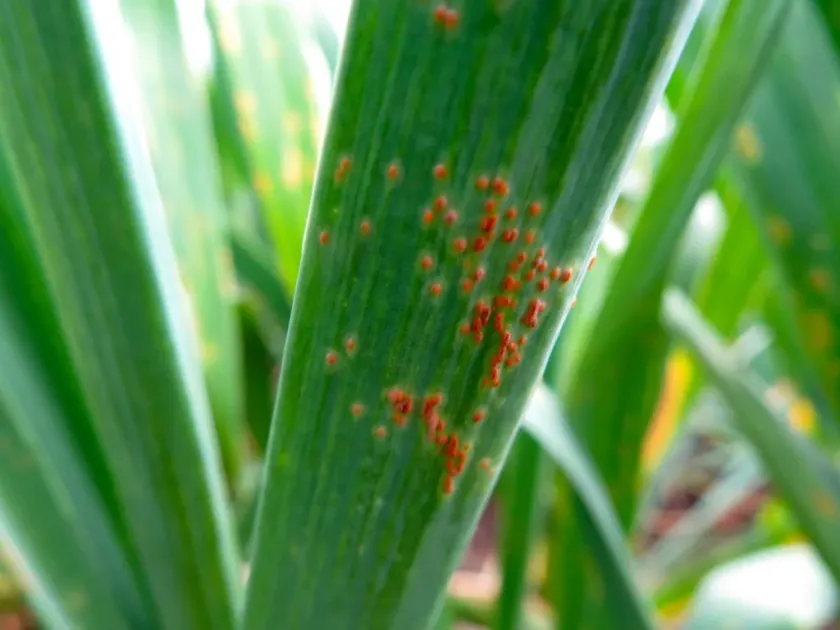
The most prominent symptom of garlic rust is the appearance of small, yellow to orange-brown, raised pustules on the leaves. These pustules represent the fruiting structures where masses of spores are produced.
As the infection progresses, these pustules multiply and enlarge, frequently merging to cover large sections of the leaf surface. Severely infected leaves take on a distinct rusty appearance, often leading to chlorosis and curling.
Over time, the affected foliage begins to wither and die prematurely. The dieback process typically starts with the older, lower leaves and gradually moves upward, significantly reducing the plant's capacity for photosynthesis.
Towards the end of the season, the color of the pustules often darkens to a deep brown or black. This color change indicates the production of teliospores, which are thicker-walled spores designed for survival during harsh conditions.
In humid conditions, a fine, powdery dust of spores can be seen surrounding the lesions. Plants infected during the early vegetative stage usually exhibit stunted growth, reduced vigor, and a weak root system.
Pathogen
The causative agent of this disease is the fungus Puccinia verruca, a highly specialized biotrophic pathogen belonging to the Basidiomycota phylum. It primarily affects plants within the Allium genus, including garlic, onions, and leeks.
As an obligate parasite, the fungus depends entirely on living plant tissue for its survival and nutrient supply. It penetrates the leaf epidermis to access nutrients, causing cellular damage and disrupting plant physiological functions.
The fungal life cycle involves multiple spore stages, primarily urediniospores, which can initiate secondary infection cycles rapidly. This allows the disease to spread across an entire field within a short period under favorable environmental conditions.
The pathogen typically overwinters on infected plant debris left in the soil or on volunteer plants. During spring, these overwintering spores germinate and produce the primary inoculum that infects new emerging shoots.
The dispersal of spores is largely facilitated by wind currents, rain splash, and overhead irrigation. High relative humidity and mild temperatures (15–20°C) are the ideal conditions for successful germination and infection.
Why it matters
Garlic rust is highly detrimental because it prematurely reduces the total green leaf area required for bulb filling. A diminished photosynthetic surface area directly correlates to smaller bulb size and lower overall yields.
The resulting bulbs are often underdeveloped, which lowers their market quality and commercial value. Furthermore, infected plants are structurally weakened, making them susceptible to secondary rot pathogens during storage.
Heavy infections can cause total crop loss in severe scenarios. This economic impact is compounded by the costs of applying fungicides and the potential need to discard infected produce that fails to meet quality standards.
Stressed plants become more prone to environmental pressures, such as drought or heat. The lack of proper nutrient storage in the bulbs means the harvested garlic will have poor post-harvest durability and shelf life.
The persistence of the pathogen in the soil and on crop debris creates a long-term risk for future plantings. Therefore, fields with a history of rust require strict management to prevent recurring infections in subsequent seasons.
Protection
Effective management begins with robust crop rotation practices. Planting garlic in the same field should be avoided for at least 3–4 years to allow time for the inoculum levels in the soil to naturally decline.
Sanitation is a critical control measure. All infected plant materials, including foliage and discarded bulbs, must be removed from the field and destroyed by burning or deep burial to minimize carry-over of spores.
Chemical control involving systemic fungicides is recommended when the first symptoms appear. Active ingredients from the triazole or strobilurin classes are often effective, provided they are applied according to local agricultural guidelines.
Agronomic management should emphasize balanced fertilization. High nitrogen levels encourage excessive succulent leaf growth, which is more susceptible to infection. Potassium and phosphorus are essential for thickening cell walls and increasing plant resilience.
- Use certified disease-free planting material to avoid introducing the pathogen.
- Select resistant or tolerant garlic varieties if available in your region.
- Implement drip irrigation rather than overhead sprinklers to keep foliage dry.
- Ensure adequate spacing between plants to improve airflow and reduce humidity around the leaves.
Discussion
No discussions yet — be the first.