
Tulip rust
Puccinia tulipae
Description
Symptoms
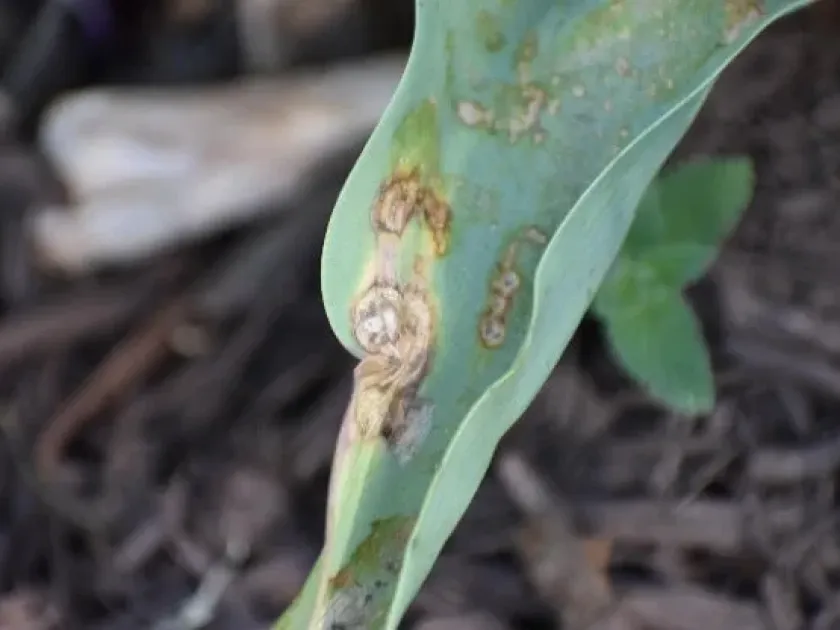
Initial symptoms are characterized by small, yellowish or light-brown spots that appear on the leaves and stems. These spots soon develop into raised pustules containing rusty-orange spore masses.
As the disease progresses, the pustules rupture, releasing a fine, rust-colored powder. This powder is easily spread by water splashes, tools, or gardening equipment.
Heavily infected leaves begin to yellow, curl, and wither prematurely. This loss of foliage significantly disrupts the plant's photosynthetic capacity, leading to weaker bulb development.
The disease also affects the flower stems, causing them to twist or bend. If the infection is severe, the flower buds may fail to open or may dry out before blooming.
- Appearance of chlorotic spots on the foliage.
- Formation of raised rust-colored pustules.
- Premature yellowing and drying of leaves.
- Distortion and bending of flower stalks.
- Overall reduction in plant vigor and health.
Pathogen
The causative agent of this disease is the fungus Puccinia tulipae. It belongs to the order Pucciniales and is a specialized parasite that targets members of the Liliaceae family, particularly tulips.
The fungus completes its life cycle by forming specialized reproductive structures within the leaf tissue. It survives in plant debris and soil, waiting for favorable conditions to release its spores.
The pathogen is highly dependent on environmental humidity to germinate and penetrate the plant's host tissue. Once inside, it develops a mycelium that drains nutrients from the plant to fuel its own sporulation.
Dissemination is primarily through airborne urediniospores, which can travel significant distances under windy conditions. This makes tulip rust a highly contagious disease in large garden settings.
The fungus is distinctively host-specific, meaning it focuses its resources solely on tulip species, which leads to rapid localized outbreaks when control measures are ignored.
Conditions for development
Puccinia tulipae thrives in conditions of high relative humidity and moderate temperatures. Rainy spring seasons with persistent moisture on foliage are particularly dangerous for tulip beds.
Dense planting schemes that prevent airflow are major risk factors. Stagnant air allows moisture to remain on the leaves for longer periods, facilitating spore germination.
Inadequate soil drainage leads to plant stress and prolonged leaf wetness. Plants growing in waterlogged or heavy, poorly aerated soil are much more susceptible to fungal infections.
Excessive nitrogen fertilization creates soft, lush, and succulent leaf tissue. These tissues are physically weaker and provide an easy entry point for the invading fungal hyphae.
Temperature fluctuations and cool nights, which lead to significant morning dew, provide the essential moisture layer required for the pathogen to establish a new infection cycle.
Why it matters
The primary damage caused by tulip rust is the inhibition of nutrient storage in the bulbs. Because the leaves wither prematurely, the plant cannot store enough energy for the next growing season.
This leads to smaller, weaker bulbs that are prone to rot during storage. Over time, an infected population will show signs of decline, with fewer blooms and smaller, stunted plants.
From an aesthetic standpoint, the disease ruins the visual appeal of flower displays. The rusty pustules and withered foliage make the plants unattractive for landscaping or floral use.
If not managed, the disease can cause a total crop loss in a single season. The speed of the spread makes it difficult to manage once it has become established across a large bed.
Weakened plants are also more vulnerable to secondary infections, including botrytis or various bulb rots, which further complicate the recovery and survival of the tulip population.
Protection
Good sanitation is the most critical control measure. Remove and destroy any infected plant material immediately upon detection to prevent the spread of spores to healthy plants.
Ensure proper spacing when planting to improve air circulation within the flower bed. A dry environment is a natural deterrent to the development of fungal rust.
Preventative application of fungicides, such as copper-based sprays or systemic triazoles, is highly effective if applied early. Follow the label instructions for proper dosage and timing.
Practice crop rotation by not planting tulips in the same spot for at least three to four years. This allows the spore population in the soil to decline naturally.
Maintain balanced soil nutrition, focusing on phosphorus and potassium to strengthen cell walls. Healthy plants have a much stronger innate resistance to fungal penetration.
Discussion
No discussions yet — be the first.