
Canna rust
Puccinia thaliae
Description
Symptoms
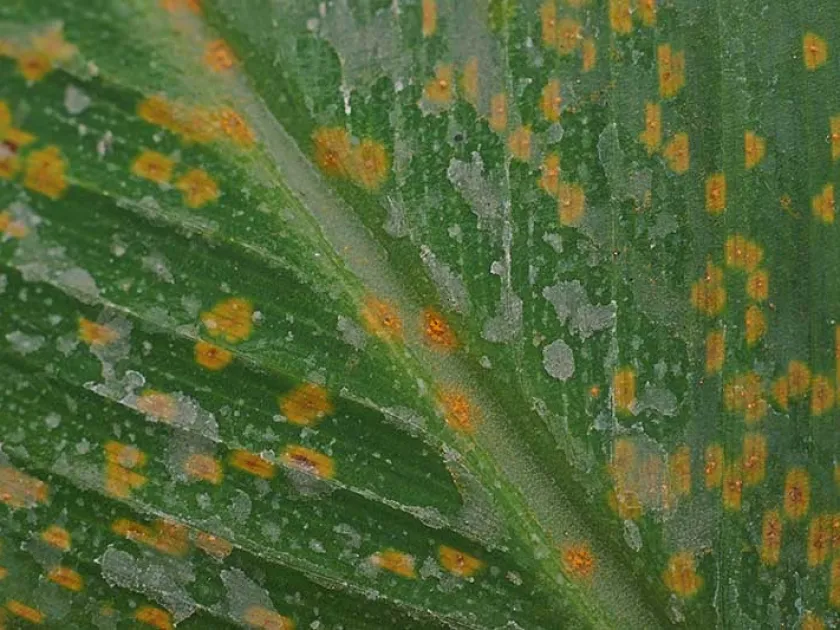
The primary symptom of Canna rust is the appearance of small, bright yellow or orange spots on the surface of the leaves, which darken over time.
As the disease progresses, small pustules containing masses of rust-colored spores develop on the undersides of the leaves.
These spots often coalesce, covering large areas of the foliage, which leads to premature yellowing, browning, and eventual death of the leaf tissues.
Severe infections can cause significant leaf distortion, curling, and a general loss of ornamental value, making the plants look stunted and unhealthy.
If left untreated, the infection may spread to the stems and flower stalks, reducing the overall vitality and visual appeal of the Canna lily.
Pathogen
The disease is caused by the pathogenic fungus Puccinia thaliae, which is classified as a basidiomycete responsible for various rust diseases.
This fungus is a host-specific pathogen that primarily targets plants within the Cannaceae family, along with certain members of the Marantaceae family.
It survives as an obligate parasite, feeding on nutrients from the host plant's cells, which significantly drains the plant's metabolic energy.
Reproduction is driven by urediniospores, which are easily disseminated by wind currents, splashing rain, or contact with contaminated garden tools.
The fungus overwintering occurs primarily on plant debris or within dormant rhizomes if they have been infected during the active growing season.
Conditions for development
Canna rust thrives in environments with high humidity, which is a critical environmental requirement for spore germination on the leaf surface.
The optimal temperature range for the pathogen's development and spread is between +18°C and +25°C, corresponding to peak summer conditions.
Overcrowded plantings that lack proper air circulation create a microclimate of trapped moisture, significantly increasing the likelihood of infection.
Overhead irrigation, which keeps foliage wet for extended periods, is a major factor in the rapid transmission of spores between healthy and sick plants.
Plants under stress from poor lighting or excessive nitrogen fertilizer application exhibit reduced natural defenses, making them more susceptible to attack.
Why it matters
The primary harm caused by Canna rust is the destruction of the plant's aesthetic value, which is crucial for ornamental and landscape gardening purposes.
The pathogen disrupts photosynthetic activity, depriving the plant of the energy needed for growth, flower production, and storage of reserves in rhizomes.
Premature leaf loss weakens the plant's structural integrity and ability to survive harsh winter conditions or re-sprout vigorously the following spring.
In nursery settings, Canna rust can cause massive crop loss, resulting in significant economic damage to growers and ornamental plant suppliers.
Chronic infections weaken the plant's immune system, making it more prone to secondary diseases and further damage from various garden pests.
Protection
Management begins with strict sanitation, including the prompt removal and destruction of all infected plant parts to limit the spread of spores.
The application of systemic fungicides containing active ingredients like azoxystrobin, mancozeb, or propiconazole is effective in controlling the disease.
Cultural practices, such as proper plant spacing, are essential to ensure adequate airflow and quick drying of the foliage after rain or dew.
- Water plants at the base to avoid wetting the foliage.
- Apply phosphorus and potassium-rich fertilizers to boost plant resilience.
- Disinfect all pruning tools after contact with infected plant material.
Early-season preventive treatments with copper-based products can help protect the plants and suppress the initial development of the fungal colonies.
Discussion
No discussions yet — be the first.