
Puccinia singularis
Puccinia singularis
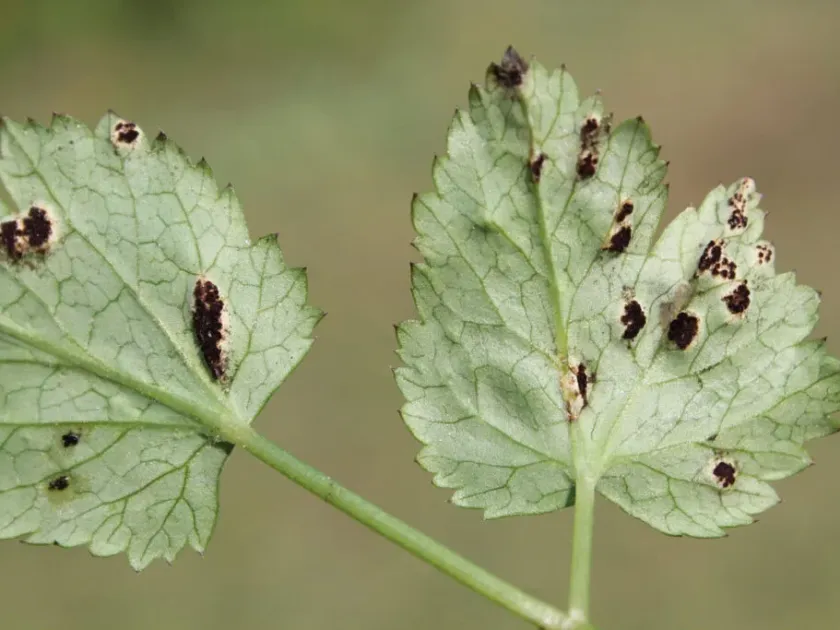
Description
Symptoms
The primary symptom of infection is the emergence of small, reddish-brown or rust-colored pustules, known as uredinia, which develop on leaves, petioles, and stems.
Initially, small chlorotic spots appear on the surface of leaves. As the disease progresses, these spots develop into ruptured pustules releasing a mass of powdery spores.
Severe infections lead to significant leaf senescence, premature yellowing, and eventual defoliation, which severely limits the plant's ability to photosynthesize.
Stem infections can cause tissue distortion and cracking, creating entry points for secondary pathogens and impairing the structural integrity of the plant.
Visually, infected plants exhibit stunted growth and loss of vigor, reflecting the internal stress caused by the parasitic colonization of their vascular systems.
Pathogen
The causal agent of this disease is the fungus Puccinia singularis, a member of the Basidiomycota division. It is a highly specialized obligate parasite that requires living plant tissue to complete its life cycle.
This pathogen utilizes haustoria, specialized hyphal structures, to penetrate the plant cells and extract nutrients, which weakens the host without necessarily killing it immediately.
The life cycle involves the production of distinct spore stages, which allow the fungus to adapt to different environmental conditions and ensure survival throughout the year.
Spores are efficiently dispersed by wind, rain splashes, and insects, allowing the pathogen to move between plants and fields with great ease under favorable conditions.
Although frequently identified in natural habitats, Puccinia singularis poses a recognized risk to various plant species, necessitating careful monitoring in agricultural and botanical settings.
Conditions for development
Favorable development of Puccinia singularis requires high relative humidity, typically exceeding 80%, combined with free water on the leaf surface for spore germination.
The disease thrives in moderate temperatures, generally between 15°C and 22°C, making it particularly prevalent during cool, wet spring or autumn seasons.
Poor aeration in dense plant populations creates an ideal microclimate where moisture is trapped, facilitating rapid spore germination and successful host infection.
Plant debris from previous seasons serves as a critical inoculum source, providing a location for the fungus to overwinter and initiate new infections in the spring.
Weakened plants, whether due to nutrient imbalances or environmental stress, are significantly more susceptible to successful colonization by the fungal hyphae.
Why it matters
The economic impact of this pathogen is primarily due to the severe loss of photosynthetic area, which directly correlates to reduced biomass and final crop yields.
Infection redirects vital metabolic energy from productive processes, such as fruit or seed development, into the survival and reproduction of the parasitic fungus.
Increased vulnerability to environmental stressors, such as drought or frost, is a major secondary harm, as the plant's defense mechanisms are already overwhelmed.
Product quality can be significantly compromised, leading to smaller, misshapen, or damaged produce that fails to meet market standards for aesthetic appeal.
The rapid rate of spread, especially in favorable weather, can lead to widespread crop loss within a short timeframe, requiring costly and urgent intervention measures.
Protection
Integrated disease management begins with the selection of resistant cultivars, which provides the most sustainable defense against rust infections.
Implementing proper cultural practices, such as wide spacing for improved airflow and strict crop rotation, is essential for reducing the overall pathogen pressure.
Chemical control using systemic fungicides, specifically those in the triazole or strobilurin groups, provides effective protection by preventing further spore germination.
Regular field scouting is critical for early detection; timely application of protective measures can prevent the disease from reaching epidemic proportions.
- Sanitation by removing and destroying heavily infected plant material.
- Balanced fertilization to ensure plant tissue strength.
- Ensuring proper soil drainage to manage humidity levels.
Discussion
No discussions yet — be the first.