
Wheat leaf rust
Puccinia rubiginosa
Description
Symptoms
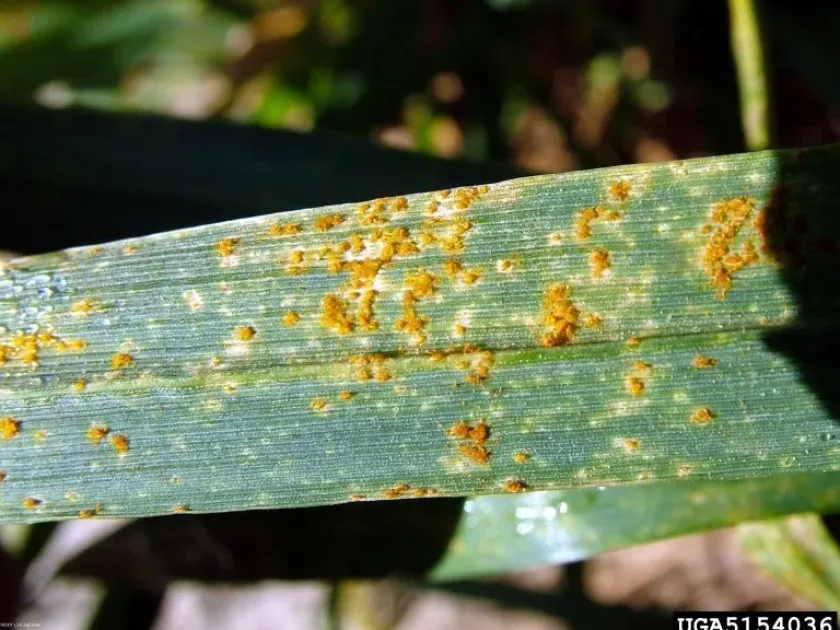
The first symptoms appear as small, circular to oval-shaped uredinia (pustules) that are orange-brown in color. These are usually randomly scattered across the upper surface of the wheat leaves.
As the infection progresses, the epidermis of the leaf ruptures, releasing a mass of powdery urediniospores. If you touch a heavily infected leaf, a rust-colored dust will easily transfer to your fingers, confirming the presence of the pathogen.
Towards the end of the season, the fungus transitions into the telial stage. The pustules turn dark brown or black, containing teliospores. This marks the end of the active infection cycle as the fungus prepares for survival during unfavorable periods.
Infected leaves exhibit significant damage, starting with chlorosis and eventually progressing to necrosis. The loss of leaf area directly impacts the plant's photosynthetic efficiency and overall vigor.
- Appearance of orange-brown pustules on leaves.
- Rupture of leaf epidermis.
- Powdery spore masses on foliage.
- Premature yellowing and drying of leaves.
- Reduced grain fill and shriveled kernels.
Pathogen
The causal agent of this disease is the obligate biotroph fungus Puccinia triticina. This highly specialized pathogen has a complex life cycle and is known for its extreme physiological diversity, which allows it to adapt to new wheat genotypes effectively.
The fungus produces various types of spores, with urediniospores being responsible for the rapid spread during the growing season. These spores are wind-borne and can travel long distances, facilitating the disease's movement across regions.
As a biotroph, the fungus relies entirely on living host tissues to survive and propagate. It maintains its presence in the field by infecting volunteer wheat or winter wheat plants during the off-season, serving as a continuous source of inoculum.
The genetic plasticity of the pathogen is a major concern for agronomists worldwide. It frequently forms new races capable of overcoming the resistance genes introduced by plant breeders, leading to the breakdown of resistance in previously tolerant wheat cultivars.
The lifecycle typically includes multiple cycles of asexual reproduction. Under ideal conditions, the fungus can produce new generations of spores in as little as one week, causing rapid and widespread infection throughout the wheat crop.
Conditions for development
Wheat leaf rust thrives in moderate temperatures ranging between 15°C and 25°C. These temperatures are optimal for spore germination and the infection process within the host plant tissue.
Moisture is a critical factor for the disease. Dew, light rain, or high humidity provide the necessary water films on leaf surfaces that allow urediniospores to germinate and enter the plant through the stomata.
High humidity and mild weather accelerate the incubation period, enabling the fungus to spread rapidly. During periods of favorable weather, the infection can escalate from minor spotting to severe infestation in a short timeframe.
High nitrogen fertilization rates can contribute to denser canopies, which hold moisture longer and create a more favorable microclimate for the development and survival of the fungus.
Early planting of winter wheat can provide a bridge for the pathogen. If the fungus establishes itself in the autumn, it can survive the winter and start causing damage as soon as the plant resumes growth in the spring.
Why it matters
Leaf rust is one of the most destructive diseases affecting wheat globally. Severe epidemics can lead to yield losses ranging from 20% to over 50%, primarily because the disease kills the flag leaf, which is vital for grain filling.
The physiological stress caused by the fungus disrupts the plant's ability to transport carbohydrates to the developing kernels. This results in poor grain weight, low test weight, and reduced milling quality of the wheat.
The weakened plants are also more susceptible to other biotic and abiotic stresses. Infections can make the crop more prone to lodging and less capable of recovering from drought or cold stress.
Economic damage is substantial, encompassing both the loss of yield and the increased costs associated with chemical fungicide applications necessary to control the disease and maintain quality standards.
In addition to yield reduction, the disease can affect the overall health of the wheat field, reducing the reliability of the grain supply and forcing farmers to adopt more expensive crop management practices.
Protection
The primary control strategy is the use of resistant wheat varieties. Planting cultivars that have multiple genes for resistance is the most sustainable way to manage the disease and mitigate the risk of pathogen adaptation.
Integrated management practices, including the removal of volunteer wheat and weeds, help reduce the initial inoculum load in the field. Proper crop rotation also plays a role in disrupting the disease cycle.
Chemical control with systemic fungicides is highly effective if applied at the first signs of disease. Monitoring fields is essential to determine the optimal timing for fungicide applications to prevent significant damage.
Seed treatments can provide early-season protection, which is particularly beneficial when early planting of winter wheat is practiced, helping the young seedlings establish stronger growth.
Field scouting and advisory services are crucial for successful management. Farmers should monitor for early symptoms and apply fungicides proactively, especially during critical growth stages like stem elongation and heading.
Discussion
No discussions yet — be the first.