
Alpine plant rust
Puccinia rhaetica
Description
Symptoms
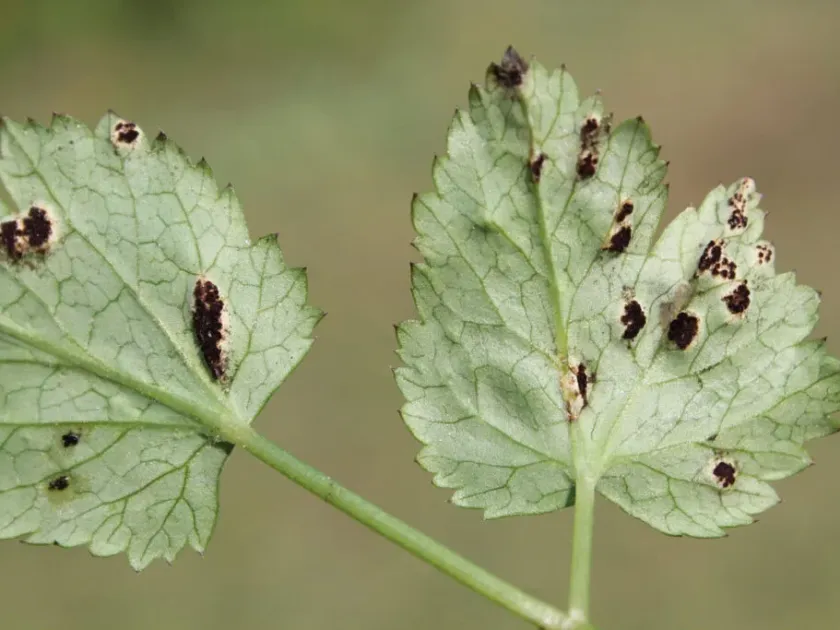
The primary symptom is the appearance of bright orange or rusty-brown pustules on the underside of leaves or along the stems of affected plants.
As the infection progresses, chlorotic spots form on the upper side of the leaf, often accompanied by the drying and curling of leaf margins.
Severe infestations cause stunted growth and a significant reduction in the plant's overall aesthetic and ornamental quality.
Under magnification, the characteristic spore masses (uredinia and telia) become clearly visible as powdery deposits that easily detach when disturbed.
Plants severely weakened by the fungus often fail to flower and may experience premature senescence, leading to partial or total dieback of the specimen.
Pathogen
The causal agent of this disease is the highly specialized fungus Puccinia rhaetica, which belongs to the Basidiomycota phylum and the order Pucciniales.
This pathogen acts as an obligate parasite, primarily infecting specific species of flora native to alpine and high-altitude environments.
The life cycle of the fungus is complex, involving various spore stages that allow it to adapt and survive within the host plant tissue throughout the year.
The fungus penetrates the plant epidermis, establishing a mycelial network that actively draws nutrients from the host, leading to cellular degradation.
Dissemination is achieved through wind-borne spores that can travel considerable distances, finding new susceptible hosts in alpine garden settings.
Conditions for development
The development of the disease is strictly dependent on high humidity levels, particularly in environments prone to heavy mountain mists and dew.
Optimal temperatures for spore germination and infection are generally moderate, typical of the cool alpine climate during the growing season.
Dense planting configurations that restrict air circulation significantly increase the susceptibility of plants to fungal outbreaks.
The presence of free water on leaf surfaces is a prerequisite for the infection process, making rainy weather periods particularly critical.
Stressed or nutritionally deficient plants are more likely to succumb to the infection compared to vigorous, well-maintained specimens.
Why it matters
The greatest danger posed by Puccinia rhaetica is the rapid loss of ornamental value, which is detrimental to specialized alpine gardens.
The disease impairs the plant's ability to undergo photosynthesis, leading to energy starvation and reduced hardiness during winter dormancy.
Mass outbreaks can lead to the widespread death of rare alpine species, making it difficult to maintain biological diversity in collections.
Infection cycles contribute to the buildup of inoculum in the soil and surrounding environment, increasing the risk for subsequent growing seasons.
Without intervention, the pathogen can permanently damage plant populations, eventually killing the entire affected collection.
Protection
Integrated management is essential, focusing on enhancing air circulation and maintaining high standards of garden hygiene to prevent spore buildup.
Early identification and the removal of symptomatic foliage are critical steps in preventing the spread of the pathogen to neighboring plants.
The application of approved fungicides, particularly systemic triazoles or copper-based sprays, can effectively curb infection in decorative gardens.
Watering practices should be adjusted to ensure the foliage remains dry, with irrigation applied directly to the root zone instead of overhead.
- Removing and destroying infected plant debris.
- Using immune-boosting foliar fertilizers to improve resistance.
- Selecting naturally resistant or resilient alpine plant varieties.
Discussion
No discussions yet — be the first.