
Puccinia leveillei
Puccinia leveillei
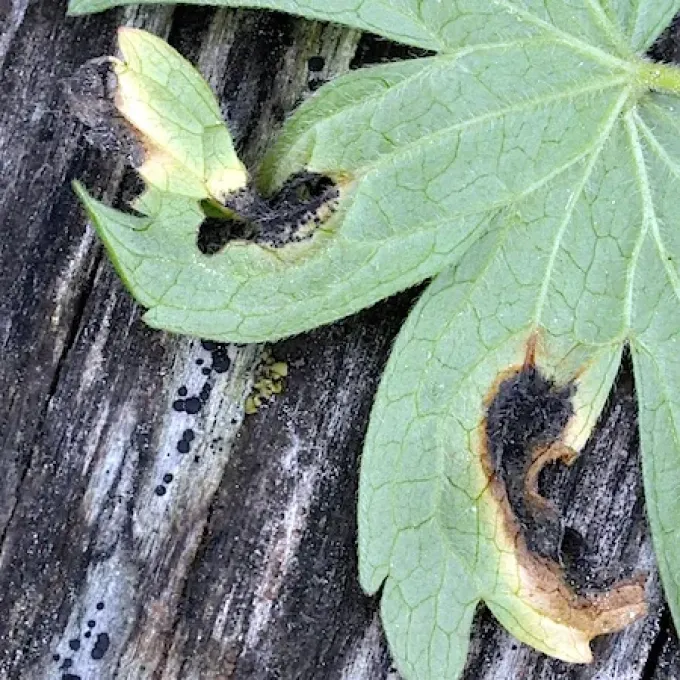
Description
Symptoms
The characteristic symptom of Puccinia leveillei is the development of small, raised pustules (uredinia) on the undersides of leaves, ranging from orange to dark brown in color.
As the infection progresses, these pustules rupture the leaf cuticle, releasing a powdery mass of spores that can easily spread to other parts of the plant upon physical contact.
Heavily infected leaves often develop chlorotic spots around the pustules, eventually leading to yellowing, necrosis, and premature senescence or leaf drop.
In severe cases, the fungus may also colonize petioles and stems, causing localized tissue distortion and stunted growth of the affected plant parts.
Early identification is crucial, as the distinctive appearance of "rusty" dust on leaves is a hallmark sign that confirms the presence of the pathogen.
Pathogen
Puccinia leveillei is a microscopic fungal pathogen belonging to the order Pucciniales. As an obligate biotroph, it requires living host tissue to complete its complex life cycle, which typically involves several spore stages.
The fungus is highly specialized, primarily affecting members of the Geraniaceae family. Its mycelium grows within the intercellular spaces of the host, eventually erupting through the epidermis to produce reproductive structures.
Survival of the pathogen between growing seasons often occurs through dormant spores or perennial mycelium in infected plant tissue, ensuring its persistence in the environment.
Dissemination is largely wind-borne or facilitated by splashing water, allowing spores to travel significant distances to infect neighboring plants under appropriate environmental conditions.
Due to its high adaptability, this fungus represents a persistent challenge for plant breeders and growers, requiring constant monitoring of plant health status.
Conditions for development
High humidity and the presence of liquid water on leaf surfaces are the primary environmental requirements for Puccinia leveillei spore germination and infection.
Temperatures between 15°C and 22°C (approximately 60°F–72°F) provide the most favorable environment for the pathogen to thrive and propagate rapidly within a crop.
Poor ventilation, overcrowding of plants, and improper irrigation techniques that keep foliage wet for extended periods create an ideal microclimate for the disease to flourish.
Periods of overcast, rainy weather combined with moderate temperatures frequently trigger disease outbreaks in both nursery and outdoor garden settings.
Stressors such as poor light or nitrogen imbalances can weaken the host plant's resistance, making it significantly more susceptible to infection by the rust fungus.
Why it matters
The economic impact of Puccinia leveillei is significant, as the reduction in healthy leaf surface area directly impairs the plant's photosynthetic capacity and overall vigor.
Infected plants exhibit reduced aesthetic value, which is particularly detrimental for commercial ornamental production where visual quality is the primary market factor.
The pathogen diverts nutrients from the plant to support its own growth, leading to stunted development, fewer flowers, and a general decline in plant vitality.
Total loss of individual specimens can occur in sensitive varieties if the disease is left unchecked, leading to direct financial losses for nurseries and gardeners.
Management costs, including the application of chemical control agents and the labor required for sanitation, further increase the burden of dealing with this pathogen.
Protection
Sanitation is the first line of defense; growers should promptly remove and destroy all infected plant material to reduce the total inoculum load in the area.
Improving the growing environment is essential: increase plant spacing for better airflow and utilize sub-irrigation or drip systems to keep the foliage dry.
Chemical control involving systemic fungicides, particularly those containing triazoles or strobilurins, can be effective in suppressing the disease when applied preventatively or at early symptom onset.
- Regular monitoring for early symptoms of rust.
- Quarantine of new plant material before introduction.
- Disinfecting pruning tools to prevent mechanical transmission.
- Selecting resistant varieties where available.
Integrated pest management strategies that emphasize sanitation and environmental control significantly reduce the reliance on intensive chemical applications.
Discussion
No discussions yet — be the first.