
Oxeye daisy rust
Puccinia leucanthemi
Description
Symptoms
The most prominent symptom is the appearance of small, rusty-brown or reddish-orange pustules, primarily on the undersides of leaves. These structures eventually rupture the surface to release masses of fungal spores.
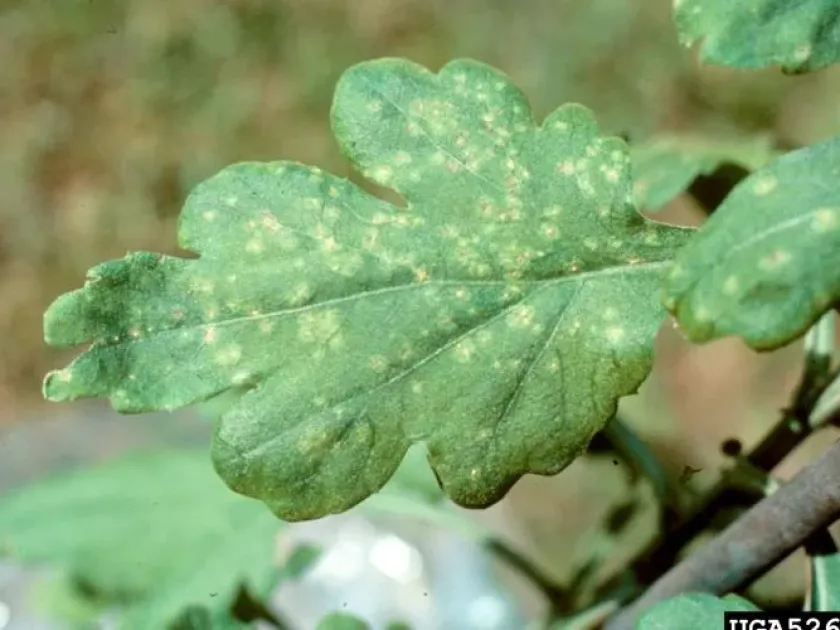
On the upper side of the leaf, pale yellow or green spots correspond to the infection sites underneath. Over time, these spots can coalesce, leading to severe chlorosis and leaf necrosis.
Heavy infection results in premature yellowing, drying, and leaf drop. The aesthetic quality of the plants declines rapidly, often leading to a stunted and sickly appearance.
In severe cases, pustules can appear on stems and petioles, disrupting nutrient and water transport within the plant and overall weakening its structural integrity.
The characteristic rust-colored dust, which easily rubs off on fingers, is a primary diagnostic marker for identifying this fungal rust disease in a garden setting.
Pathogen
The causative agent of this disease is the highly specialized fungus Puccinia leucanthemi, which belongs to the Basidiomycota division. This pathogen is known to primarily target plants of the Leucanthemum genus.
The life cycle of the fungus includes the formation of several types of spores, allowing it to survive through winter in plant debris or within the tissues of perennial plants. It is an obligate parasite, meaning it relies entirely on living host tissue to complete its development.
Infection is spread via urediniospores, which can be dispersed over long distances by wind, rain splashes, or through improper handling of infected plant material. The pathogen invades leaf tissue, eventually erupting through the epidermis.
The fungus is tightly linked to the vegetative phase of its host. Therefore, the peak of disease activity typically occurs in mid-to-late summer when weather conditions favor spore germination and colonization.
Due to its high host specificity, oxeye daisy rust is a significant concern for commercial nurseries and domestic gardens where Leucanthemum species are grown in monocultures.
Conditions for development
The development of the disease is heavily dependent on moisture. High humidity and the presence of water films on leaf surfaces—caused by rain, heavy dew, or overhead irrigation—are essential for spore germination.
Optimal temperatures for the progression of the infection range from 15 to 22 degrees Celsius (59–72°F). Within this range, the pathogen's incubation period is significantly shortened.
Crowded planting schemes that lack adequate airflow create a stagnant, humid microclimate, which is the perfect environment for the fungus to thrive and spread rapidly between host plants.
Plants that are weakened due to nutrient deficiency or drought stress are significantly more susceptible to Puccinia leucanthemi compared to healthy, well-nourished specimens.
Greenhouse environments, if poorly ventilated, can see rapid disease outbreaks due to the consistent availability of favorable temperatures and high relative humidity.
Why it matters
Oxeye daisy rust causes severe damage to the aesthetic value of the plants, which is the primary concern for ornamental horticulture and landscaping.
The disease significantly impairs the photosynthetic capacity of the leaves. This reduction in energy production negatively affects the plant's ability to store reserves for overwintering.
Infected plants show reduced winter hardiness, often resulting in high mortality rates or poor regrowth during the following spring season.
Flowering quality is severely degraded when the infection reaches the flower stalks and buds, often leading to deformation or complete failure to bloom.
For growers and nurseries, this disease can lead to significant economic losses, as infected stock is often rejected by consumers due to its poor visual appearance and health status.
Protection
Effective management begins with proper cultural practices. Avoid high-density planting to ensure good air circulation, which helps keep foliage dry and discourages fungal growth.
Sanitation is critical; all infected plant material should be removed and destroyed at the end of the season to reduce the primary inoculum load in the garden.
Change your watering method to avoid wetting the foliage. Utilizing drip irrigation or watering directly at the base of the plant is highly effective in preventing the spread of rust spores.
- Removal and proper disposal of all infected leaves and stems.
- Preventive application of copper-based fungicides.
- Systemic fungicide treatment upon the first appearance of symptoms.
- Selection of rust-resistant varieties or hybrids for new plantings.
- Implementation of proper spacing to facilitate quick leaf drying.
If chemical intervention is required, ensure that fungicides are approved for ornamental use and always follow the label instructions regarding dosage and frequency to prevent the development of resistance.
Discussion
No discussions yet — be the first.