
Nipplewort rust
Puccinia lapsanae
Description
Symptoms
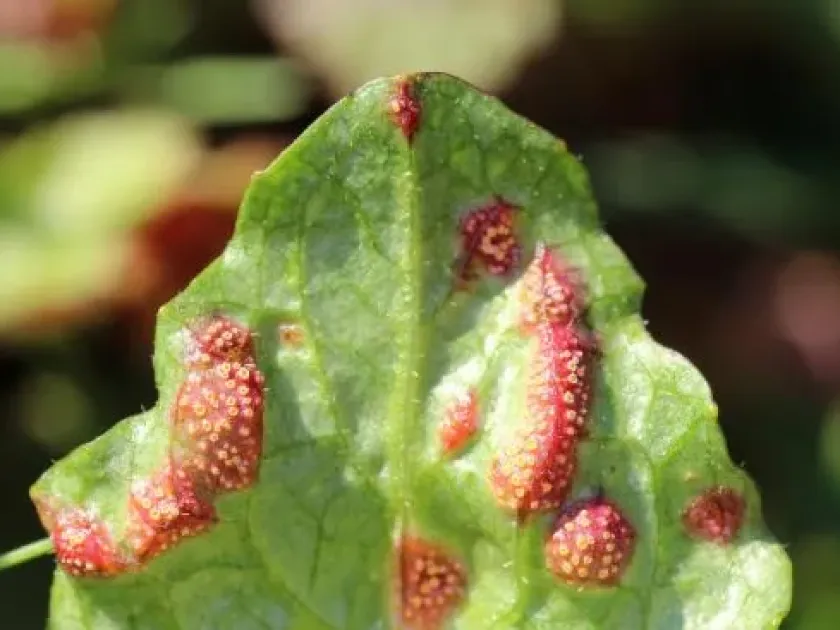
The primary symptom of Nipplewort rust is the development of characteristic pustules on the leaf surface of the infected plant. Initially, small pale spots appear, which eventually transform into noticeable raised structures.
During the active sporulation phase, these pustules develop a distinctive reddish-brown or rusty color. They are often arranged in groups, clustering along leaf veins or spreading evenly across the leaf blade.
As the infection progresses, the affected tissues start to yellow prematurely and then desiccate. In severe cases, leaf deformation occurs, significantly reducing the plant's total photosynthetically active leaf area.
A distinctive feature of the disease is the rupture of the leaf epidermis, through which masses of fungal spores are released. By the end of the growing season, darker, almost black pustules containing teliospores may form on the infected plant parts.
The disease is most easily diagnosed during morning hours when high humidity makes sporulation more visible. Symptoms can appear on both the underside and the upper surface of the leaves, depending on the severity of the infection.
Pathogen
The pathogen responsible for this disease is Puccinia lapsanae, a highly specialized parasitic fungus belonging to the Basidiomycota division. It is an obligate biotroph, meaning it requires living host tissue from the Lapsana genus for survival and reproduction.
The fungal mycelium develops within the plant tissues, penetrating the intercellular spaces and absorbing nutrients through specialized structures known as haustoria. This process gradually depletes the host plant's metabolic resources.
The life cycle of Puccinia lapsanae involves multiple spore stages, allowing it to adapt effectively to seasonal environmental changes. Urediniospores are responsible for secondary infections throughout the growing season, facilitating rapid spread.
Teliospores serve as the overwintering stage, allowing the pathogen to survive on crop residues or fallen plant material in the soil until favorable conditions return in the following spring.
These biological characteristics make the fungus an efficient colonizer, and its ability to rapidly produce new generations of spores ensures its persistence within local weed populations.
Conditions for development
The development of Nipplewort rust is heavily dependent on moisture levels and air temperature within the ecosystem. The most intense infection cycles occur during periods of prolonged rainfall, heavy dew, or fog.
The optimal temperature range for the germination of fungal urediniospores is between 15 and 22 degrees Celsius. Under these conditions, the pathogen can complete its cycle from initial infection to the production of new pustules in a very short time.
Dense vegetation or high weed density creates a specific microclimate with limited air circulation and stagnant moisture, which accelerates the spread of spores via wind or rain splash.
Critical periods for disease development typically occur during spring and early summer, when significant diurnal temperature fluctuations favor the condensation of water on leaves, a prerequisite for spore germination.
The activity of the fungus is significantly hindered by drought conditions or extreme heat, which can cause spores to lose viability and die off quickly when exposed to direct sunlight.
Why it matters
The main harm caused by Nipplewort rust is the disruption of physiological processes within the host plant. The fungus competes for carbohydrates, proteins, and minerals intended for the plant's growth and seed production.
Infected plants exhibit stunted growth and reduced vigor, making them less competitive. In severe cases, the weed may fail to bloom or produce viable seeds due to the metabolic stress imposed by the infection.
Leaf damage leads to a decrease in photosynthesis intensity, negatively affecting the overall metabolic balance. This weakens the plant, rendering it more susceptible to secondary pathogens and abiotic stress factors.
While nipplewort is often considered a weed, the widespread presence of Puccinia lapsanae increases the overall inoculum pressure in the field, which may pose a risk to nearby susceptible crops.
Agricultural monitoring is essential because this rust can serve as an indicator of the phytosanitary status of an area, signaling environmental conditions that may also support other harmful rust pathogens.
Protection
Effective control of Nipplewort rust relies primarily on integrated weed management practices. Regular removal and destruction of Lapsana species before they set seed help reduce the inoculum reservoir in the soil.
Deep plowing and proper management of crop residues in the autumn are crucial to encourage the decomposition of plant material and reduce the number of overwintering teliospores.
Improving field air circulation and controlling weed density can help maintain a microclimate less conducive to fungal development. Avoid excessive irrigation that promotes surface moisture accumulation.
Chemical control specifically targeting this rust is rarely practiced because the host is a weed. However, in cases where the disease threatens the integrity of high-value crops, systemic fungicides may be employed as part of a broader strategy.
Biological control methods, such as the use of natural antagonists, are an area of potential development. Furthermore, balanced fertilization is recommended to avoid excessive nitrogen, which can lead to lush, soft tissues that are more susceptible to fungal invasions.
Discussion
No discussions yet — be the first.