
Hawkweed rust
Puccinia hieracii
Description
Symptoms
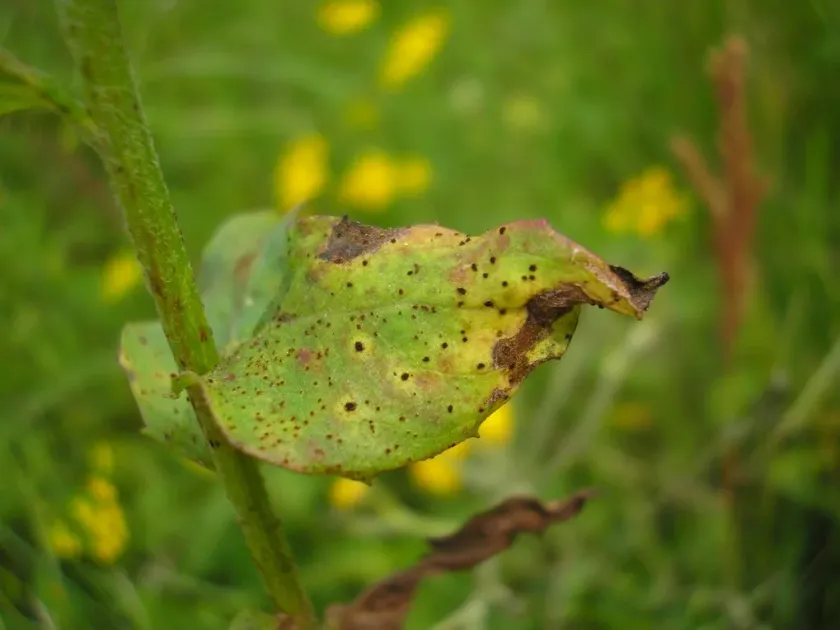
The first visible signs of hawkweed rust are small, powdery pustules appearing on the underside of the leaves. These pustules are typically rust-brown or cinnamon-colored, marking the sites of spore production.
As the disease progresses, yellow or chlorotic spots often develop around the infection sites. In cases of severe infestation, the leaves may become distorted, dry out, and eventually drop prematurely.
Stems can also be affected by these pustules, which disrupts the transport of water and nutrients throughout the plant. This leads to weakened growth, stunted development, and poor flowering performance.
The infection typically spreads from the lower leaves upwards. Under humid conditions, the spore production becomes so dense that it covers nearly the entire leaf surface, significantly impairing the plant's health.
- Appearance of rusty-brown powdery pustules on leaves.
- Chlorosis and necrosis of tissues surrounding the infection sites.
- Premature yellowing, drying, and leaf drop.
- Stunted plant growth and visible distortion of stems.
Pathogen
The causal agent of this disease is the obligate parasite fungus Puccinia hieracii, which belongs to the order Pucciniales. This pathogen is highly host-specific, primarily targeting plants within the Asteraceae family, particularly the Hieracium genus.
The life cycle of the fungus is complex and includes the formation of several spore stages, such as urediniospores and teliospores. This variety allows the fungus to survive under different conditions and spread rapidly across host populations.
The fungus overwinters on plant debris or in the infected tissues of perennial host plants. As temperatures rise in spring, the fungal mycelium becomes active, initiating the primary infection of new leaf growth.
Infection occurs when spores land on the leaf surface, germinate in the presence of moisture, and penetrate the plant tissue. The fungus then establishes itself in the intercellular spaces, drawing nutrients from the host and causing visible damage.
Understanding the specific biological requirements of Puccinia hieracii is essential for creating effective management strategies, as its ability to rapidly cycle through spore stages makes it a persistent challenge.
Conditions for development
The development of hawkweed rust is highly favored by high humidity and moderate temperatures, typically between 15°C and 20°C. Free moisture on the leaf surface is a critical requirement for spore germination.
Poor airflow, often caused by overly dense planting, creates a microclimate that allows moisture to persist on the leaves for longer periods. This significantly increases the risk of rapid disease spread.
Spores are easily dispersed by wind, splashing water from irrigation or rain, and by physical contact. This rapid movement allows the disease to propagate quickly throughout a garden or field.
Warm and rainy weather during the late summer often triggers disease outbreaks. During these periods, the pathogen can complete its cycle rapidly, leading to widespread infection within a short window of time.
Dry conditions may temporarily slow down the spread of the fungus, but the pathogen often remains dormant, waiting for favorable moisture levels to resume its development.
Why it matters
The primary damage caused by rust is the reduction of the plant's photosynthetic capacity. By damaging the leaf tissue, the fungus reduces the plant's ability to produce necessary energy through photosynthesis.
Infected plants are aesthetically unpleasing and exhibit reduced vigor. This susceptibility can leave the host plant vulnerable to other secondary pests and diseases, further weakening its overall vitality.
Large-scale infections can lead to significant biomass loss, potentially killing the above-ground portion of the plant. In agricultural or medicinal contexts, this significantly reduces the yield and quality of the harvest.
Persistent rust infections can deplete the root system's energy reserves, making it difficult for perennial plants to survive the winter and re-emerge healthily in the following season.
The accumulation of spores in the soil and on residual plant material maintains a persistent infection pressure that can plague future plantings for years if not managed properly.
Protection
The most effective management strategy begins with sanitation. Regularly removing and destroying infected plant debris reduces the overwintering inoculum and prevents the disease from returning next season.
Ensuring proper spacing between plants is crucial for improving airflow and reducing leaf wetness. Watering at the base of the plant rather than overhead helps keep the foliage dry, discouraging spore germination.
If an outbreak occurs, the application of appropriate systemic fungicides can help control the spread. Timing is key; treatments should be applied as soon as the first symptoms are noticed.
Improving the plant's overall health through proper nutrition and balanced fertilization can enhance its natural defense mechanisms against rust pathogens.
Selecting resistant cultivars or species is the best long-term strategy for managing hawkweed rust. Integrating these cultural practices helps minimize the reliance on chemical control methods.
Discussion
No discussions yet — be the first.