
Helianthella rust
Puccinia helianthellae
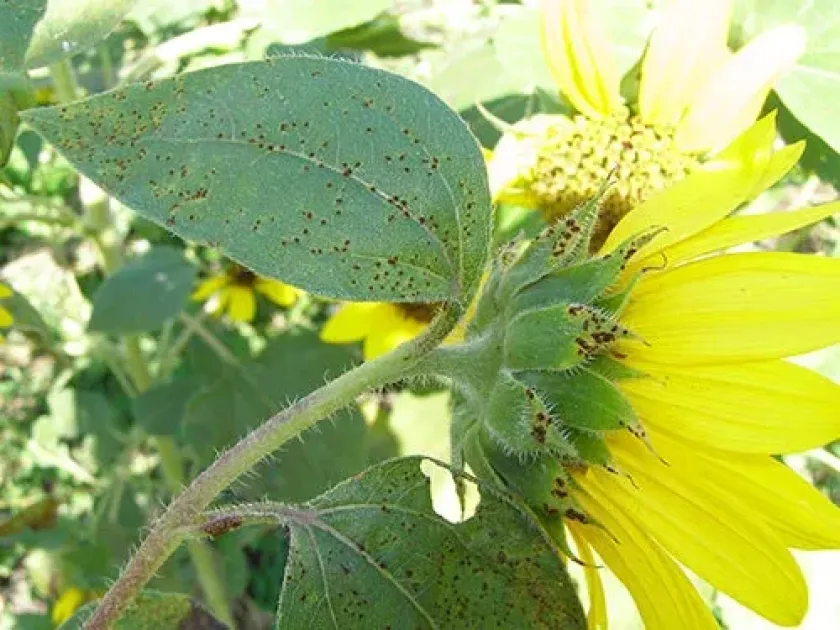
Description
Symptoms
The initial signs of rust infection appear as small chlorotic spots on leaves, which gradually develop into distinct pustules. These pustules are filled with masses of rusty-brown or ocher-colored spores.
Pustules are primarily located on the undersurface of the leaf blade. As the spores mature, the host's epidermis ruptures, releasing the powdery spore mass into the surrounding environment, which is a diagnostic feature of the rust disease.
Massive infection leads to premature yellowing and necrosis of leaf tissues. The leaves lose turgor, curl up, and eventually die, significantly reducing the overall vigor and aesthetic value of the plant.
If the infection is severe, pustules can also develop on stems and petioles, causing structural deformation and stunted growth. The plant appears visibly weakened and distressed.
Diagnosis is performed by identifying the characteristic powdery, rust-colored spore clusters. A simple inspection with a hand lens can confirm the presence of the pathogen’s reproductive structures on the leaf tissue.
Pathogen
The causative agent of this disease is the microscopic fungus Puccinia helianthellae, belonging to the order Pucciniales (rust fungi). It is a highly specialized biotroph that exclusively infects plants within the Asteraceae family, particularly those of the genus Helianthella.
The life cycle of this pathogen involves multiple spore stages, which is typical for rust fungi. As an obligate biotroph, it relies entirely on living host tissues to obtain nutrients, forming haustoria that penetrate host cells without killing them immediately.
Infection spreads through spores that can be dispersed by wind currents over long distances. During the growing season, the fungus produces urediniospores, which facilitate rapid secondary infection of neighboring plants.
The fungus overwinters as teliospores or mycelium on plant debris or in the plant crown. When favorable conditions return in the spring, the dormant pathogen activates and begins a new cycle of colonization on fresh growth.
The biology of Puccinia helianthellae is intricately linked to the physiology of its host, allowing the fungus to effectively adapt and thrive within both natural populations and cultivated plantings.
Conditions for development
High relative humidity is the most critical environmental factor for the development of Puccinia helianthellae. Humidity levels exceeding 80% provide the necessary conditions for spore germination and successful host penetration.
Optimal temperatures for the infection process typically range between 18 and 24 degrees Celsius. These conditions are commonly encountered during spring and early summer when plant growth is most active.
The presence of free moisture, such as dew, fog, or rainfall, is essential for the activation of spores. This moisture film allows the germ tubes to emerge and penetrate the host tissue effectively.
Dense planting patterns that restrict airflow create a microclimate with stagnant, humid air, which significantly increases the risk of rapid disease outbreak and spread within a stand.
Nutritional deficiencies or other abiotic stressors that weaken the plant's natural immunity make the host more susceptible to initial infection by the rust fungus.
Why it matters
The primary damage caused by rust is the substantial reduction of the photosynthetic leaf area. By destroying chlorophyll-containing tissues, the fungus prevents the plant from accumulating necessary carbohydrates for development.
Premature leaf drop induced by the disease disrupts the plant's metabolic processes. This leads to long-term weakening, which is especially detrimental to perennial plants that rely on nutrient reserves for winter survival.
The infection impairs the plant's water balance, as damaged tissues cannot effectively regulate transpiration. This makes the host significantly more vulnerable to drought and other environmental stresses.
In cases of heavy infestation, flower production is reduced, and inflorescences may become deformed. This results in decreased reproductive success and lower ornamental or economic value.
Chronic annual infection can lead to the gradual decline and eventual death of individual plants, potentially threatening the long-term stability of the population if not managed correctly.
Protection
Integrated management begins with cultural practices, such as the removal and destruction of infected plant debris at the end of the season to eliminate primary inoculum sources.
Maintaining proper spacing between plants is crucial to ensure good ventilation. Improved air circulation reduces surface moisture and creates an unfavorable microclimate for fungal spore germination.
The use of resistant or tolerant cultivars is the most sustainable approach to managing the disease, minimizing the need for chemical intervention and promoting consistent plant health.
In cases of significant outbreaks, systemic fungicides, particularly those belonging to the triazole or strobilurin classes, are effective in inhibiting mycelial growth and reducing new spore production.
- Regular monitoring of the site for early symptoms
- Prompt rogueing and disposal of heavily infected plants
- Balanced fertilization to support host immune defenses
Discussion
No discussions yet — be the first.