
Geranium rust
Puccinia granularis
Description
Symptoms
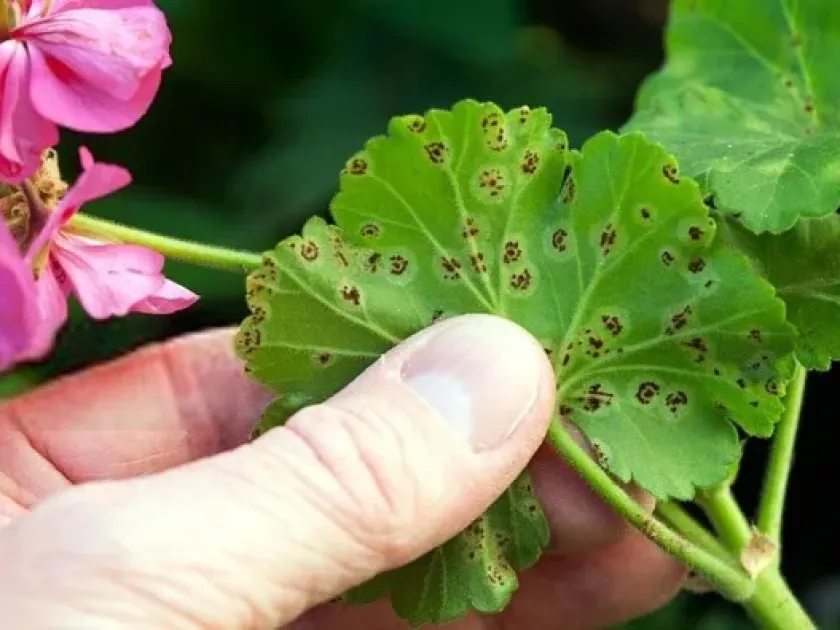
The initial signs of infection include small yellow or light-green spots on the upper surfaces of leaves, which are often overlooked in the early stages.
As the disease progresses, distinctive circular, rust-colored pustules form on the underside of the leaves, filled with millions of microscopic spores.
Leaves affected by the fungus eventually yellow, curl, and wither, often leading to significant defoliation and a decline in overall plant vitality.
If left untreated, the pustules can spread to the petioles and stems, resulting in severe structural damage and stunted growth of the entire plant.
- small yellow chlorotic spots;
- powdery rust-colored pustules;
- leaf curling and distortion;
- premature leaf drop;
- reduced flower production.
Pathogen
The disease is caused by the fungal pathogen Puccinia granularis, an obligate parasite that specifically targets members of the Pelargonium genus.
This fungus survives by invading plant cells, extracting nutrients, and eventually breaking through the epidermis to produce new generations of spores.
The life cycle of the pathogen is well-adapted to the growth habits of geraniums, allowing it to persist throughout the growing season under favorable conditions.
As a biotrophic pathogen, it relies on the host's living tissue to reproduce, making early detection vital for effective management of the fungus.
The fungus spreads via airborne spores or through physical contact with contaminated tools, water splashes, and infected neighboring plants.
Conditions for development
High humidity and stagnant air are the primary drivers for Puccinia granularis outbreaks, particularly in greenhouse or indoor environments.
The fungus thrives in moderate temperatures, typically between 15°C and 22°C, which are common in many residential and garden settings.
Frequent overhead watering creates moisture films on the leaf surface, which are essential for spore germination and rapid penetration into plant tissues.
Crowded planting conditions prevent proper airflow, maintaining high localized humidity that protects the fungus from desiccation and promotes infection.
Plants weakened by poor light, over-fertilization with nitrogen, or environmental stress are significantly more susceptible to successful fungal colonization.
Why it matters
Geranium rust severely reduces the photosynthetic surface area of the leaves, starving the plant of the energy required for healthy growth and flowering.
Constant nutrient depletion by the parasite weakens the plant's immune system, making it vulnerable to secondary infections and pest infestations.
Severe infestations can lead to complete defoliation, which causes total loss of decorative value and may eventually lead to the death of the specimen.
The rapid spread of spores makes this disease highly contagious, potentially ruining an entire collection if a single infected plant is not managed quickly.
The loss of vigor affects root system development, leaving the plant unable to recover even if environmental conditions subsequently improve.
Protection
The most effective strategy involves strict sanitation, including the immediate removal and destruction of any leaves showing signs of rust pustules.
Improving cultural practices, such as ensuring adequate spacing between plants and avoiding overhead irrigation, is essential for disease prevention.
Fungicidal treatments utilizing systemic products, such as those containing myclobutanil or similar active ingredients, are effective if applied upon early detection.
Disinfecting all pruning tools with a 70% alcohol solution between plants is critical to prevent the mechanical transmission of fungal spores.
Promoting overall plant health through balanced nutrition and proper lighting can increase the plant's natural resistance to initial fungal establishment.
Discussion
No discussions yet — be the first.